If the last few years taught us anything, it’s that workspace hygiene isn’t just a luxury; it’s a baseline requirement. In a workspace like coworking, people from varied cultures, interests, backgrounds, industries and experiences come and work together on their independent projects.
With such a diverse group of people, health and hygiene concerns become more pronounced due to the varied needs and practices. Coworkers share workspace, furniture, meeting rooms, equipment, mugs and mostly every tangible thing present in a shared office space. Public places are the prime areas that could boost or harm the health of the community and when we talk about coworking, “community” is synonymous.
While working from a shared space people can have a lot of safety and security concerns and it’s very natural. A coworking space can add to the utmost safety at work for their clients in various ways. Safety is not confined only to health and hygiene but also other factors like secure access control, emergency preparedness, data protection, and overall workspace security.
Here are the critical measures every space should implement:
1. Internet and Data Security
Because the internet is shared amongst the members in the flexible workspace, there are chances that viruses and malware can enter into systems and attack the data and sources outside premises.
We promote strong password policies, multi-factor authentication, and regular software updates to shield your data from threats.
2. Member safety and Monitoring
A coworking space in Noida, for say, would have the CCTV cameras installed at all possible corners of the place to keep everything scrutinized. Anyone can exihibit misconduct that cannot be tolerated.
3. Physical safety Measures
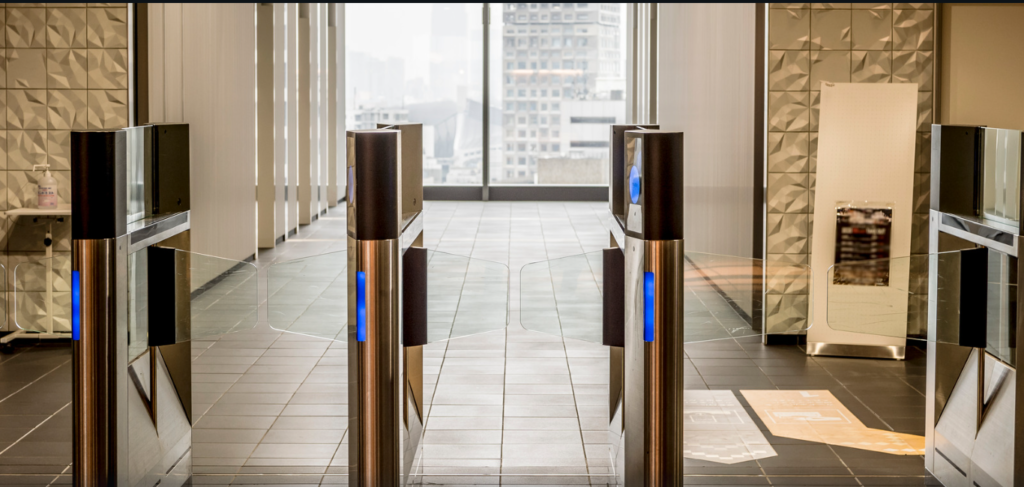
It’s not about the likelihood of an attack but rather ensuring your safety within the premises through measures like lighting in the place, fire alarms and security guards gates and entry on identity.
We’ve also introduced occupancy sensors in meeting rooms and common areas, helping us manage capacity in real-time and avoid overcrowding — especially critical during peak hours or health alerts.
4. Material safety
When you come to work, you bring things and equipment to keep them at your workstation. Now, this can be a showpiece, a mug, a photograph or even some technical equipment.
Nothing bad should happen to your stuff and it is the responsibility of the space provider.
5. Event safety
Every coworking space has an event space they offer as a service wherein the members can have the space for the product launch, campaigns, seminars or any public gathering.
Ensuring that everything runs smoothly and no one is harmed are key concerns during an event, alongside making sure that all client requests and requirements are fully met.
6. Visitor Safety
Not anyone can be allowed inside the workspace due to various reasons. A proper visitor management system is maintained to keep a record of who entered and who left.
A badge is assigned for the authentication and the members should explain who they have called and why.
7. Hygiene & Automated Environmental Controls
Post-Covid, hygiene isn’t a checklist — it’s a commitment. Our workstations, handles, and shared spaces are sanitized multiple times daily, and our staff is equipped with gloves and masks.
Sanitizer dispensers are placed throughout the facility, and contactless temperature screening is performed at entry points.
We’ve also implemented automated environmental controls — our air conditioning, lighting, and air purification systems adjust in real time based on room usage and occupancy data, ensuring optimal air quality and comfort while minimizing energy waste.
8. Predictive Analytics for a Smarter Space
We don’t just react — we predict and plan ahead. Using real-time data analytics, we monitor how frequently certain areas are used, what times see the most traffic, and where sanitation or staffing needs are highest.
This helps us deploy resources efficiently and give members a seamless, safe experience every day.
How Coworking Space are Leading to Safe & Productive Future
As flexible working grows, the need for dependable, secure, and smart coworking spaces is more relevant than ever. Let’s Connect offers professional meeting rooms that outperform cafés and noisy restaurants — not just in function, but in overall experience.
Our virtual office services give freelancers and remote teams a professional address, mail handling, and client meeting spaces — without needing to be present on-site.
Are Let’s Connect Implementing Safety Measures for Their Members?
If this coworking is on your list, don’t give it another thought because everything we discussed above is taken care by them particularly and meticulously. Every possible step has been taken in this regard to ensure utmost safety for the members:
- Desks are regularly sanitized, the cleaning staff is always with gloves, hand-rubs are placed at all corners and temperature is checked before entering.
- Safety cameras that record all the activities to avoid and record every event.
- Lockers are totally safe, members are given unique credentials for safety reasons.
- Customized plans, complete transparency, no hidden charges.
Why Our Support Doesn’t Stop at the Front Desk?
Serving clients in Noida, Greater Noida, Noida Expressway and now in Delhi, this coworking has been supporting new entrepreneurs by guiding them as mentors on their financial steps and chalking out a better business plan to execute.
- Acts as incubator for the seed funding and other necessary coaching.
- Our support staff is always there to assist you as required.
- The 24×7 availability helps you round the clock with a professional environment thereby not restricting you with the work time.
- The parking and cafeteria facility is another plus along with on request medical and stationery items.
At Let’s Connect Coworking Space, we’ve built our reputation on the one thing that matters most: the trust of our members.”
Frequently Asked Questions
1. Who is liable for the theft of personal equipment in a coworking space?
Most spaces provide security measures that includes CCTV and lockers but it is the individuals responsibility for their own high-value items. The professionals should provide scrutinized environment and secure access to minimize the risk of theft or damage to member property.
2. Are coworking networks safe for handling sensitive financial or legal data?
Public Wi-Fi can be risky, but professional coworking space operate on enterprise-grade security. This means implementing firewalls, private VLANs which helps teams to access protected areas and multi-factor authentication.
3. What happens if an emergency occurs during non-staffed hours?
“Remote Monitoring” is a critical safety measure for spaces offering 24/7 access. This involves integrating alarm systems, emergency exit lighting, and panic buttons or direct lines to security services, so that members are protected even when the community management team is not available.
4. How do coworking spaces verify the identity of short-term visitors?
Security starts at the front desk. For verification guest need to provide ID, digital signin, and wait for permanent members to “call them in.” This prevents unauthorized access and ensures that every person inside the premises is accounted for.
5. How does a “Community-First” approach improve workplace safety?
Safety is often a collective effort. When a space fosters a professional community, members naturally look out for one another and their belongings. A transparent environment where people know their neighbors acts as a psychological deterrent to misconduct and enhances the overall security of the workspace.