For modern enterprises, the physical workplace is no longer just a backdrop for daily operations; it is an active participant in business strategy. As organizations scale, decision-makers in operations, facilities, HR, and finance face a persistent challenge: balancing overhead costs with the need to provide an environment that supports productivity, security, and employee well-being.
Increasingly, the solution lies in transitioning from traditional leased spaces to technology-enabled workspaces. However, as the real estate market evolves, distinguishing between standard managed setups and genuinely “smart” infrastructure is critical. A smart office leverages automation, Internet of Things (IoT) connectivity, and real-time data to optimize how a space functions, directly addressing operational pain points.
This guide is designed to help business leaders understand the tangible impact of intelligent workspace technology. By examining how automation, energy management, and data-driven space utilization improve the bottom line, organizations can confidently evaluate whether adopting a smart office sector 136 Noida aligns with their long-term growth and operational needs.
What Constitutes a “Smart Office” vs. Managed/Serviced Offices?
The commercial real estate vocabulary has expanded rapidly, making it necessary to clarify what you are actually leasing when you explore flexible workspace options.
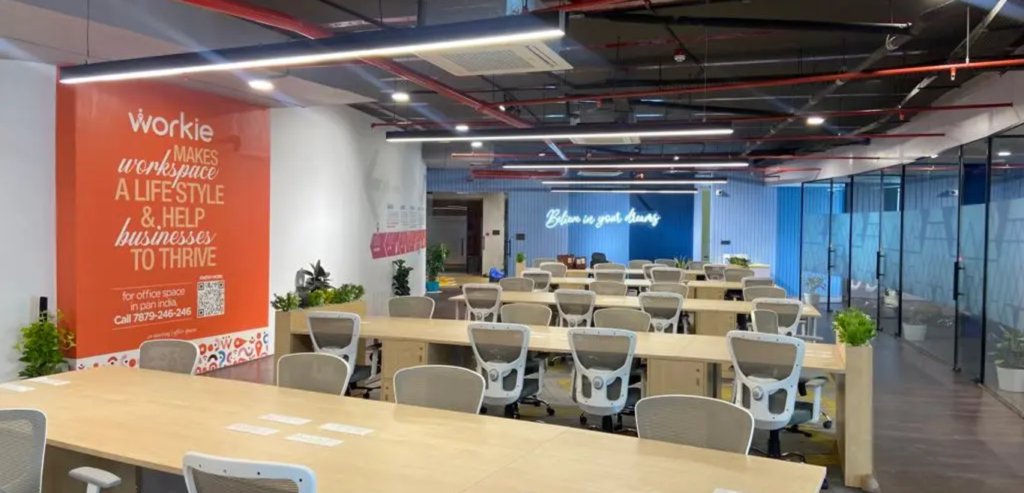
A traditional lease provides a bare-shell space where the tenant is responsible for all capital expenditures, fit-outs, and facility management. To bypass these upfront costs, many businesses opt for a furnished office space sector 136 noida, which provides the physical desks, chairs, and basic infrastructure.
Taking this a step further, a managed or serviced office adds an operational service layer. The provider handles cleaning, basic security, utility payments, and front-desk management. It removes the burden of day-to-day facility administration from your internal teams.
A smart office, however, introduces a technology infrastructure layer that transforms a static workspace into a dynamic, responsive environment. While a managed office relies on human services to run the space, a smart office utilizes embedded technology to automate and optimize it.
The core differentiators of a smart office include:
- IoT Sensors: Devices embedded throughout the office that monitor occupancy, temperature, and lighting in real-time.
- Automation Platforms: Software that automatically adjusts physical environments (like HVAC and lighting) based on the sensor data, without requiring manual intervention.
- Cloud Connectivity: Integrated systems that allow facilities managers and employees to interact with the building via smartphones or centralized dashboards.
While many smart offices are also managed offices, not all managed offices are smart. A true smart office uses technology to solve complex business problems, rather than just providing a place to sit.
Key Takeaways
- Furnished and managed offices focus on physical fit-outs and administrative services.
- A smart office integrates IoT, automation, and cloud connectivity to make the physical space responsive and data-driven.
- The primary value of a smart office lies in its technological infrastructure, not just its service amenities.
Key Smart Office Systems and Their Business Applications
When evaluating a tech-enabled workspace, it is essential to look past the novelty of the technology and focus on its practical business applications. The infrastructure in a smart office should directly support security, efficiency, and usability.
Access Control and Security Monitoring
Traditional keycards are often lost, shared, or forgotten, creating security vulnerabilities and administrative headaches. Smart offices utilize biometric access, smartphone-enabled credentials, and cloud-based visitor management systems.
For an operations director, this means access permissions can be granted or revoked instantly from a remote dashboard, creating a precise, auditable log of who enters the premises and when.
HVAC and Energy Management
Climate control is a common source of workplace friction. Smart HVAC systems use environmental sensors to monitor ambient temperature and occupancy levels. Instead of cooling an empty conference room or allowing a fully occupied open-plan floor to overheat, the system automatically adjusts airflow based on real-time utilization.
This targeted approach prevents energy waste while maintaining ambient comfort.
Lighting and Space Utilization Analytics
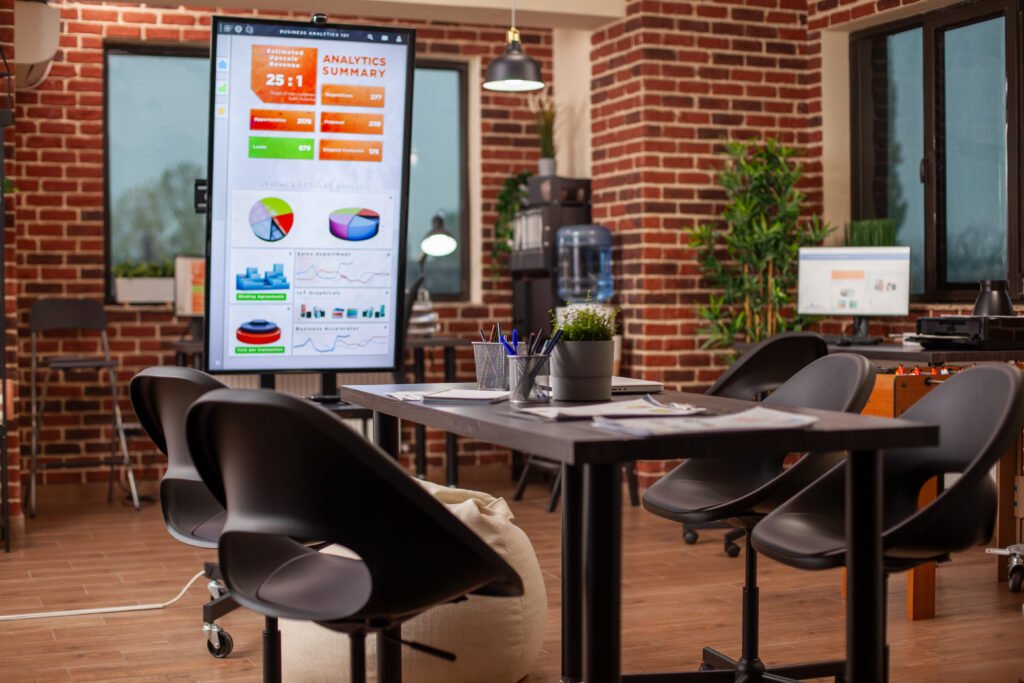
Smart lighting systems are linked to motion sensors, ensuring lights are only active when a zone is in use. Beyond illumination, these sensors collect anonymized data on space utilization.
Facilities managers can analyze this data to understand which areas of the office are consistently underutilized, informing future layout adjustments or real estate footprint decisions.
Meeting Room and Desk Booking Systems
In hybrid work models, managing desk and meeting room availability is crucial. Smart offices feature integrated booking software—often accessible via a mobile app—that allows employees to reserve resources before they arrive.
Digital displays outside meeting rooms show real-time availability, and sensors can automatically release a booked room if no one shows up within a designated timeframe.
Network Infrastructure and Connectivity
The backbone of any smart office is enterprise-grade network infrastructure. High-speed, secure, and redundant Wi-Fi networks are required to ensure that IoT devices function seamlessly alongside standard business operations.
Built-in IT support and dedicated bandwidth management help prevent network bottlenecks.
Key Takeaways
- Access control systems modernize security and provide auditable entry logs.
- Automated HVAC and lighting systems adjust based on real-time occupancy, optimizing energy use.
- Desk and room booking software eliminates scheduling conflicts and supports hybrid work models.
Driving Operational Efficiency Through Technology
The integration of smart office technology translates directly into operational efficiency. For mid-level and senior decision-makers, the appeal of a tech-enabled space is its ability to reduce hidden overhead costs and streamline daily facility management.
Reduced Overhead Costs Through Automation
Manual facility management is resource-intensive. By automating core functions like lighting, climate control, and access management, businesses reduce the administrative burden on internal teams.
Systems power down automatically during off-hours or in vacant zones, ensuring that utility consumption strictly aligns with actual usage rather than an arbitrary schedule.
Space Optimization and Utilization Insights
Real estate is typically one of the largest fixed costs on a company’s balance sheet. Without concrete data, businesses often lease more space than they need. Smart office analytics provide a factual basis for evaluating space requirements.
If utilization data reveals that large conference rooms are rarely at capacity, a business can redesign its layout to favor smaller collaboration pods or huddle rooms, optimizing the return on their leased square footage.
Faster Issue Resolution and Maintenance Response
In a traditional office, facilities teams often react to issues only after an employee complains about a broken asset or an uncomfortable temperature. Smart office sensors can monitor equipment performance and environmental conditions in real time, alerting management to anomalies before they disrupt the workday.
This proactive approach minimizes downtime and ensures the workspace remains operational.
Key Takeaways
- Automation reduces administrative burden and aligns utility usage with actual occupancy.
- Data analytics help organizations right-size their real estate footprint by identifying underutilized spaces.
- Proactive monitoring enables faster, data-driven maintenance responses.
Elevating Employee Experience and Productivity
While operational cost control is critical, the modern workplace must also function as a tool for talent retention and productivity. Smart office systems contribute to a superior employee experience by removing minor but frequent points of friction.
Seamless Booking and Conflict Resolution
Few things hinder daily productivity more than the search for an available meeting room or dealing with double-booked spaces. Integrated booking systems empower employees to secure the resources they need effortlessly.
When an employee knows they have a dedicated desk or a guaranteed meeting room prior to arriving at the office, their daily experience becomes predictable and stress-free.
Ambient Comfort and Environmental Controls
Employee comfort directly influences focus and output. Automated environmental controls maintain optimal lighting and temperature levels, reducing the discomfort that often plagues older, static office buildings.
In some advanced setups, employees can use centralized apps to log climate requests, allowing the system to find an ambient median that satisfies the majority of the floor.
Enabling Flexibility and Hybrid Work
As companies embrace hybrid work, the office must adapt to fluctuating daily headcounts. Smart office systems are the technological foundation that makes hot-desking and dynamic seating arrangements viable.
Employees can navigate fluidly between remote work and the physical office, relying on digital tools to locate colleagues, book collaborative spaces, and maintain continuous productivity.
Key Takeaways
- Frictionless booking systems save time and reduce workplace frustration.
- Automated environmental management maintains a comfortable, focus-friendly atmosphere.
- Technology is essential for making dynamic seating and hybrid work models functional on a daily basis.
Integration, Scalability, and Data Security
For growing organizations, evaluating a smart office requires looking beyond current needs and assessing how the technology infrastructure will scale over time.
Ecosystems vs. Siloed Solutions
The most effective smart offices operate as integrated ecosystems rather than a collection of siloed gadgets. When access control, booking software, and environmental management communicate through a unified platform or via robust APIs, the operational benefits multiply.
Decision-makers should evaluate whether a smart office’s technology can interface smoothly with the company’s existing HR, scheduling, or IT systems.
Scalability for Growing Teams
As a company expands, its space and technology needs change. A primary advantage of cloud-connected smart office infrastructure is its scalability.
Additional sensors, access credentials, or digital booking licenses can typically be added without overhauling the core system. This allows businesses to seamlessly upgrade their technology footprint as their headcount grows.
Data Security and Compliance
Because smart offices rely heavily on interconnected networks and continuous data collection, information security is paramount. The systems are continuously gathering data on employee movements, space utilization, and access logs.
It is vital that this data is anonymized, encrypted, and stored in compliance with relevant data protection regulations. Organizations must ensure that the smart office provider utilizes enterprise-grade firewalls and network segregation to protect internal corporate data from IoT-related vulnerabilities.
Key Takeaways
- Integrated technology ecosystems offer more value than disconnected systems.
- Smart office infrastructure should scale seamlessly alongside organizational growth.
- Robust network security and responsible data handling are mandatory considerations.
Why Sector 136, Noida is a Prime Hub for Smart Workspaces
Location is a crucial factor when selecting an operational base. The geography must align with workforce accessibility and industry trends. When looking for a managed office sector 136 noida, it becomes clear why this specific corridor is attracting forward-thinking enterprises.
High-Level Connectivity and Infrastructure
For tech-enabled businesses, employee commute times are an operational concern. According to NMRC, Sector 136 is highly accessible. It is situated directly along the Noida-Greater Noida Expressway and is serviced by the Noida Metro Aqua Line, with the nearest station located at Sector 137.
This infrastructural connectivity makes it an ideal location for a modern workforce, ensuring that the commute to a smart office is as efficient as the technology inside it.
Alignment with IT/ITeS Industry Trends
The area’s development aligns closely with the shifting preferences of the corporate sector. Research from Colliers India indicates that the Noida Expressway micro-market is a primary driver of commercial office leasing in Noida.
Notably, IT/ITeS and engineering companies are increasingly shifting their preference toward flexible, managed, and tech-enabled office spaces rather than traditional bare-shell leasing.
The abundance of modern commercial real estate in this corridor makes it highly suitable for businesses seeking pre-integrated smart office infrastructure without the capital expenditure of building it themselves.
Key Takeaways
- Sector 136 offers prime connectivity via the Noida-Greater Noida Expressway and the Aqua Line metro.
- The broader Noida Expressway micro-market is a recognized hub for commercial office leasing.
- IT and engineering firms in this sector strongly prefer flexible, tech-enabled workspaces over traditional leases.
The Implementation and Transition Process
Moving into a smart office involves more than just changing physical addresses; it requires thoughtful change management to ensure employees adopt the new systems.
What to Expect During Transition
The initial phase of transitioning into a tech-enabled workspace involves onboarding employees onto the new platforms. This typically includes registering biometric data or digital credentials for access control, downloading relevant space-booking applications, and integrating corporate networks with the facility’s secure IT infrastructure.
The Learning Curve and Change Management
While smart office tools are designed for user-friendliness, there is an inevitable learning curve. Employees transitioning from dedicated desks to automated hot-desking, for example, will need to build new daily habits.
Leadership must communicate the “why” behind the technology—emphasizing how it improves their daily work life rather than just focusing on corporate efficiency.
Support and Training
A successful transition requires ongoing support. Quality smart office providers offer comprehensive onboarding sessions and dedicated on-site or remote IT support to troubleshoot early connectivity or software access issues.
Ensuring that team members know exactly who to contact if a system fails is critical for maintaining business continuity during the early weeks of occupancy.
Key Takeaways
- A successful transition relies heavily on structured employee onboarding for new digital tools.
- Change management is required to help employees adapt to dynamic booking and automated systems.
- Reliable IT support from the facility provider is crucial during the initial move-in phase.
Evaluating Providers and Solutions in Sector 136
As the demand for high-quality serviced office solutions sector 136 grows, decision-makers must rigorously evaluate potential providers to ensure they deliver genuine technological value.
Assessing Provider Capabilities
When touring a space, look past the aesthetic design and inquire deeply about the technological backbone. Are the environmental controls truly automated via sensors, or are they manually operated from a central desk? What redundancies are in place for the internet connection?
Local providers such as Let’s Connect India supply coworking spaces and customized managed office solutions in Noida. Their facilities offer practical, tech-enabled infrastructural features such as biometric access control, high-speed internet, dedicated IT support, and automated operational amenities. Identifying providers that integrate these specific functionalities ensures you are investing in a genuinely smart environment.
Key Questions to Ask Providers
During the evaluation process, operations and IT leaders should ask:
- How is our corporate network segregated from the building’s IoT and public Wi-Fi networks?
- Can your space management software integrate with our existing calendar systems (e.g., Google Workspace, Microsoft 365)?
- How is sensor data regarding occupancy and access stored, and who has ownership of that data?
- What are the guaranteed service level agreements (SLAs) for network uptime and IT support response?
Red Flags to Avoid
Be cautious of providers who use “smart office” as a marketing buzzword without the infrastructure to back it up. If a facility lacks independent, secure enterprise networks, or if “automation” merely means digital thermostats without integration, it is essentially a standard furnished office.
Additionally, unclear data privacy policies regarding employee access logs should be treated as a significant compliance risk.
Key Takeaways
- Evaluate spaces based on infrastructure capabilities like biometric access, network redundancy, and IT support.
- Ask targeted questions about data security, system integrations, and SLA guarantees.
- Avoid providers who lack clear data privacy policies or enterprise-grade network segregation.
Frequently Asked Questions (FAQs)
1. How much more expensive is a smart office compared to a traditional managed office, and what’s the ROI timeline?
While smart offices often command a premium over standard managed spaces due to the advanced technology stack, they typically offset this through operational efficiencies. The ROI timeline varies by business size but is generally realized through reduced administrative overhead, optimized energy usage, and more efficient use of real estate footprint, preventing the need to lease excess space.
2. Can smart office systems integrate existing company software, or do we need to replace everything?
High-quality smart office systems are designed with interoperability in mind. Most enterprise-grade desk and room booking platforms offer API integrations that sync seamlessly with standard calendar applications like Microsoft Outlook or Google Workspace, meaning you do not have to replace your core operational software.
3. What happens to our data when sensors and systems collect information about space usage and employee movement?
Reputable smart office providers ensure that space utilization data is anonymized, meaning it tracks movement and occupancy without linking it to specific individuals. Access control logs are generally encrypted and stored securely. Always review the provider’s data privacy policies to ensure compliance with enterprise security standards.
4. How do smart office systems support hybrid and flexible work models?
They provide the necessary digital infrastructure for fluid work arrangements. Through integrated mobile apps, employees can book desks for the specific days they are in the office, check room availability in real time, and locate colleagues on-site, making the hybrid experience organized and predictable.
5. What level of technical expertise do our employees need to use smart office features day-to-day?
Very little. The goal of a smart office is to remove friction, not add complexity. Daily interactions typically involve tapping a smartphone or ID card at a turnstile, or using an intuitive mobile app—similar to common consumer applications—to reserve a workspace.
6. If we outgrow our current smart office space, can we take the technology with us or is it locked into the facility?
This depends on the lease structure. In a fully managed or serviced smart office, the hardware (sensors, biometric scanners) is usually owned by the facility provider. However, the data insights you gained regarding your team’s space utilization can be taken with you to inform the design and requirements of your next workspace.
7. What ongoing maintenance and support do smart office systems require, and who is responsible for it?
In a managed smart office setting, the workspace provider is entirely responsible for the maintenance, software updates, and hardware troubleshooting of the building’s technology systems. Tenants typically receive access to an IT support team provided by the facility.
8. Are smart office solutions suitable for smaller teams, or are they only cost-effective for large enterprises?
They are highly suitable for smaller teams. Coworking and managed smart spaces allow small to mid-sized businesses to access enterprise-grade technology—like high-level security protocols and premium network infrastructure—without the heavy upfront capital investment required to build it themselves.
9. What is the difference between a bare-shell lease and a smart office lease?
A bare-shell lease provides only the physical space; the tenant must build out all infrastructure, HVAC, networks, and interiors. A smart office lease provides a fully fitted, operational environment embedded with automated technologies, IT support, and managed services, allowing for immediate move-in and operation.
10. How does location connectivity impact smart office selection in Noida?
Location impacts operational efficiency as much as the technology itself. Selecting a hub like Sector 136 ensures employees have easy access via the Noida-Greater Noida Expressway and the Aqua Line metro, minimizing commute stress and maximizing the productivity benefits of the modern workspace.
Conclusion
Transitioning to a smart office sector 136 is a strategic move that goes far beyond acquiring modern office furniture. By integrating IoT sensors, automated environmental controls, and data-driven management platforms, a smart office actively supports business operations. It reduces the manual burden of facility management, ensures space is utilized efficiently, and removes daily friction for employees, enabling them to focus on high-value tasks.
As the Noida Expressway micro-market continues to evolve into a preferred destination for IT, engineering, and tech-enabled companies, the availability of highly connected, intelligent workspaces has never been better.
If your organization is navigating growth, adopting hybrid work models, or seeking to optimize real estate expenditures, evaluating a tech-enabled workspace is a logical next step. Assess your current facility bottlenecks, consult with key operational stakeholders, and begin exploring providers that offer the robust, secure, and scalable infrastructure necessary to support your business’s future.