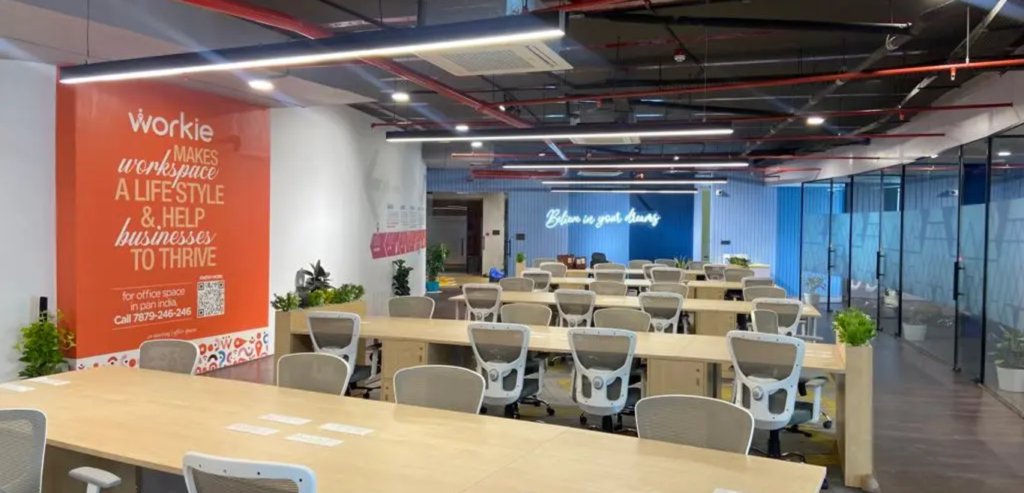

Companies are increasingly preferring Sector 136 for expanding operations or relocating to the Noida Expressway belt. This commercial zone offers excellent connectivity, infrastructure and business amenities. From flexible coworking setups to long-term lease models, you can choose your ideal office type.
However, the CFOs of growing businesses must also evaluate the tax impact, besides the cost of office space in sector 136 Noida. This is because choosing between leasing and subscription models can really affect the budgeting, depreciation deductions and GST liabilities of a company.
Why Should CFOs Reassess Office Leasing and Subscription Models?
When you go for leasing, you get ownership-like control and it’s easy to predict long-term costs. On the other hand, subscription-based offices are often part of serviced office space and offer flexibility, shared facilities and scalability benefits.
In Sector 136, you will find coworking, managed offices, as well as traditional leased buildings. Now, CFOs have to weigh each option because the office model you choose will affect profit margins and tax efficiency.
This is a very important decision because:
- There are different tax laws for lease payments and subscription models.
- GST is imposed on the basis of how the property is used.
- There are different accounting rules for depreciation and maintenance costs.
- Subscription models are often classified as operational expenses and not capital costs.
What is the Financial Difference Between Lease and Subscription?
Before getting into calculating taxes, CFOs need to know the financial structure of both:
Leasing: Here, the tenant enters a formal agreement that is usually for 3–9 years. The rent is paid monthly or quarterly. All the office interiors, furniture, fittings and other basic fixes are often taken care of by the tenant only.
Subscription or Serviced Office: Under this model, you often go on a month-to-month basis. The furniture, maintenance, internet and utilities are all managed by the space provider. The tenant has to pay just a single fee (service expense).
The biggest advantage of subscription arrangements is the flexibility. This is the most important requirement for fast scaling companies. Learn more about this in “Office Types in 136 That Are Helpful for People Scaling from 10 to 100 Employees“.
What Are the Main Tax Considerations for Leased Offices?
Leased spaces are common among those companies that have their setup in a corporate office in Noida for long-term stability. From the tax point of view, here’s what the CFOs should keep in mind:
- Depreciation: Tenants cannot claim depreciation on the rented workspace. It only applies to owned furniture or any installed fitouts.
- GST Input Credit: If you use the office for your business operations, you can claim back the GST paid on the rent.
- TDS: Under section 194-I of the Income Tax Act, TDS applies to lease rent payments.
- Maintenance & Security Deposits: While these usually can’t be deducted, they still appear in the company’s balance sheet.
Leasing gives predictability but it also requires upfront capital and binds up in longer commitments. This can restrict startups or fast-growing teams.
How are Subscription-Based or Serviced Offices Taxed?
Subscription-based workspaces like plug and play office space and serviced spaces are treated as service transactions and not rent payments.
These are some of the tax implications for CFOs:
- Service Expense Deduction: Because it’s an operational cost, the subscription amount is fully deductible as a business expense.
- No Depreciation Claim: The company doesn’t own the assets or the property and hence, depreciation doesn’t apply.
- GST on Services: GST is charged on the service invoice. A GST-registered business can claim it as an input tax credit.
- Lower Compliance Load: Under Section 194-I, there is no TDS and this simplifies monthly accounting.
This is an ideal model for companies that prefer serviced office space in Noida or coworking setups to adapt to their team size.
Which Model Offers Better Tax Efficiency: Lease or Subscription?
Actually, the answer depends on the goals of your company:
- Leasing: Firms that want to make the most of their capex and want long-term control and asset stability should lease traditionally.
- Subscription: Companies that need flexibility, lower compliance, and cost efficiency in the short term must go for it.
If we see purely from a tax point of view, expense deductions and GST handling are a lot simpler with subscription models. However, leasing is suitable for companies that want to invest in upgrading their property or plan to create long-term assets.
CFOs evaluating office leasing in Noida should also consider Which Submarket Delivers Better ROI before signing long contracts.
What Factors Should CFOs Consider Other Than Taxation?
Yes, tax planning is extremely crucial but a good CFO should also evaluate these points:
- Scalability: It shouldn’t be hard to increase or reduce the area when needed.
- Cash Flow: Large upfront deposits or all-inclusive monthly payments, what suits you?
- Ownership: How much control would you have over layout, branding and overall infrastructure.
- Load of Compliance: Managing different accounts, GST adjustments and filing TD.
There are many practical scenarios where companies start with subscriptions and later shift to leasing once their team size stops fluctuating.
Conclusion
Whether it’s a lease or subscription model, your office space in Sector 136 Noida should align with the growth stage and financial goals of your company. You get the comfort of permanence with leasing but subscription gives you the required flexibility.
As CFOs, you need to balance tax control, ease of compliance and scope of scalability. The ideal option will support the future of your business. This is what Let’s Connect offers!
FAQs
- Are there depreciation benefits on leased or subscribed offices?
No. This is because depreciation applies only to owned assets. If you are leasing an office, depreciation may be claimed only on what’s yours. In a subscription, you can’t make depreciation claims at all.
- Should CFOs prefer leasing or subscription for better tax efficiency?
For flexibility and easy tax handling, CFOs can go for subscription models. However, for long-term asset creation and depreciation benefits, leasing it is. It all depends on your business goals and accounting plan.
- How does GST apply to leased vs subscription offices?
GST applies in both cases. When leasing, GST on rent can be claimed as an input credit. In subscriptions also it’s claimed as an input credit because it’s applied as service tax
- Are lease payments fully deductible as business expenses?
Yes. Lease rentals are deductible as business expenses. But it has to be ensured that the space is used only for business purposes.