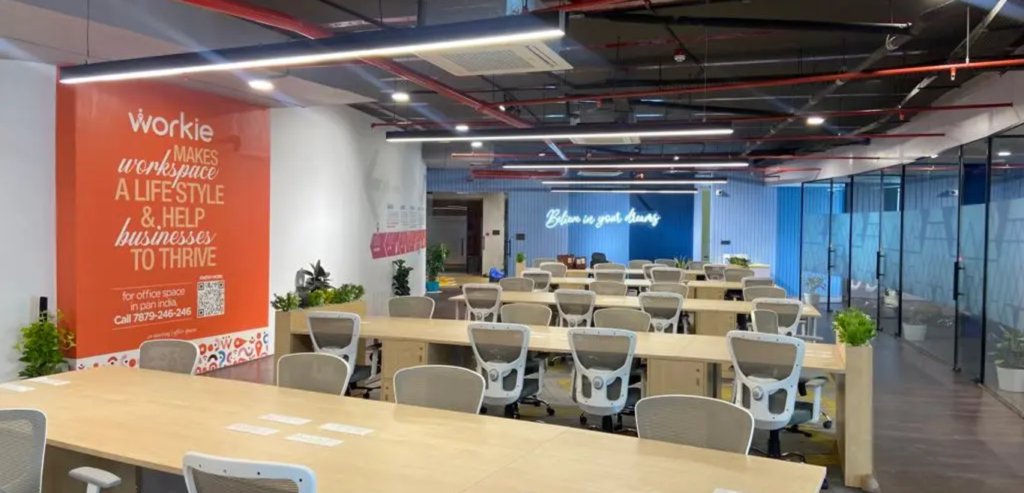
Operating a startup is an inherently complex endeavor, but managing a startup that houses multiple distinct brands under a single corporate umbrella introduces a unique set of operational and logistical challenges. A multi-brand architecture—whether a “house of brands” with entirely separate identities or a “branded house” with varying sub-brands—requires an agile approach to workspace management. Traditional, long-term commercial real estate leases often lack the flexibility necessary to accommodate the rapid, disproportionate growth that different brands within a single startup might experience.
To solve this spatial puzzle, innovative founders are turning to versatile, fully managed real estate solutions. Business Centres for multi branded startups have emerged as a strategic asset, allowing parent companies to centralize core administrative functions while providing separate, branded environments for their distinct product or service teams.
By consolidating back-office operations and distributing distinct brand teams across modular office suites, startups can optimize their real estate expenditure without sacrificing brand identity.
This comprehensive guide explores the operational mechanics, architectural advantages, and strategic considerations involved in selecting the ideal workspace. From navigating the balance between an affordable coworking space and a premium private suite, to evaluating specific geographic hubs like finding an office space for rent in sector 136 noida, we will examine how modern workspace providers, including networks like Lets Connect India, support the complex needs of multi-brand ecosystems.
The Unique Real Estate Needs of Multi-Branded Startups
A multi-branded startup operates on a structural model that demands both profound integration and strict segregation. On the backend, these organizations rely on centralized human resources, legal, accounting, and executive leadership teams. On the frontend, however, each brand may require distinct marketing, sales, and product development pods.
The Challenge of Spatial Identity
For an organization running two or more brands, placing all employees in an open-plan office can create a chaotic environment. For illustrative purposes, imagine a startup that operates a luxury consumer lifestyle brand alongside a highly technical B2B enterprise software platform. The sales team for the lifestyle brand may require a vibrant, highly collaborative space filled with visual mood boards, while the B2B software team might need a quiet, highly secure environment focused on technical development and confidential client calls.
Bridging the Gap Between Isolation and Collaboration
Traditional office leases require the tenant to design and build out these complex subdivisions from scratch, absorbing significant capital expenditure. Business centres resolve this by offering modular spaces. A startup can rent a cluster of private, lockable office suites situated along the same corridor, ensuring that different brand teams remain physically separate to maintain distinct corporate cultures, while still allowing leadership and shared services to move seamlessly between them.
Key Takeaways: The Unique Real Estate Needs
- Multi-branded startups require a balance of centralized administration and segregated operational teams.
- Distinct brands often possess conflicting cultural and spatial requirements that are difficult to accommodate in a single open floor plan.
- Modular office structures allow teams to maintain unique identities while sharing core back-office resources.
Defining the Modern Business Centre
To fully leverage flexible real estate, it is vital to understand what differentiates a business centre from a conventional office lease or a standard open-plan coworking floor.
Fully Serviced Infrastructure
A business centre is a professionally managed commercial facility that provides fully furnished and equipped office suites. Unlike traditional leases where the tenant is responsible for everything from internet installation to janitorial services, business centres operate on a “plug-and-play” model. The facility management team handles security, reception, utilities, internet connectivity, and maintenance.
Tailored for Corporate Complexity
While an open-plan environment might serve a single-brand early-stage startup well, a multi-brand entity typically requires the elevated privacy of a business centre. These facilities offer private office suites, dedicated enterprise wings, and customizable floor plans.
They feature centralized, shared amenities—such as high-end boardrooms, cafeterias, and wellness rooms—which are accessible to all tenants. For a multi-branded startup, this means they can pay only for the private desk space their individual brand teams require, while still granting all employees access to enterprise-grade amenities.
Professionalizing the Visitor Experience
When clients or investors visit a multi-branded startup, the initial impression is critical. Business centres typically feature a professionally staffed reception area. A centralized reception desk can seamlessly handle visitor management for multiple entities, ensuring that a guest arriving for “Brand A” is greeted properly and directed to the correct suite, without confusing them with the branding or personnel of “Brand B.”
Key Takeaways: Defining the Modern Business Centre
- Business centres provide fully managed, plug-and-play private office suites.
- They eliminate the burden of facility management, allowing leadership to focus on core operations.
- Shared, premium amenities provide enterprise-level resources without the associated capital expenditure.
- Professional reception services effortlessly handle visitor management for multiple distinct brands.
Cost Efficiency and Capital Allocation
For startups, preserving capital is a fundamental principle of survival and growth. Real estate typically represents one of the largest fixed costs on a company’s balance sheet.
Shifting CapEx to OpEx
Traditional commercial real estate requires substantial Capital Expenditure (CapEx) for architectural build-outs, furniture procurement, and IT infrastructure installation. Furthermore, traditional leases require long-term commitments, locking startups into spaces that may become obsolete as their brand portfolio evolves.
Business centres shift this financial burden to Operating Expenditure (OpEx). Startups pay a predictable, all-inclusive monthly fee that scales precisely with their space utilization.
Optimizing the “House of Brands” Model
Operating a multi-branded startup inherently involves testing new products and sunsetting unsuccessful ones. If a startup launches a third brand, they can easily lease an additional office suite within the same business centre.
If a brand is acquired or phased out, the startup can simply release that specific suite back to the operator at the end of a short-term agreement. This modular scalability prevents the organization from ever paying for dead, unused space, which is a common pitfall in conventional long-term leasing.
Shared Services Economy
By sharing a centralized hub, multi-brand startups avoid duplicating costs. Instead of building three separate meeting rooms, three separate kitchenettes, and hiring three separate receptionists for three different brands, the organization utilizes the shared infrastructure of the business centre.
Key Takeaways: Cost Efficiency and Capital Allocation
- Business centres convert heavy upfront capital expenditures into predictable operating expenses.
- Modular leasing allows startups to scale office space up or down dynamically as individual brands grow or contract.
- Utilizing shared facility infrastructure eliminates the need to duplicate amenities across different brand teams.
Navigating the Search: Affordable Coworking Space vs. Premium Business Centres
As founders evaluate their real estate strategy, they often find themselves comparing different tiers of flexible workspaces. Understanding the nuance between an affordable coworking space and a premium business centre is critical to aligning real estate with operational goals.
The Role of Affordable Coworking
An affordable coworking space is primarily designed around shared, open-plan environments. These spaces prioritize community, networking, and cost reduction above all else. For a very early-stage multi-branded startup, utilizing dedicated desks in a coworking environment might serve as a temporary launchpad.
However, as the distinct brands mature, the lack of acoustic and visual privacy in a purely open-plan coworking space can become a liability, particularly when dealing with proprietary product development or distinct brand marketing strategies.
The Hybrid Solution
Many modern workspace operators offer a hybrid model that blends the vibrancy of an affordable coworking space with the security of a business centre. In these environments, the multi-branded startup can lease secure, glass-enclosed private offices for their core teams, while providing “hot desk” memberships to their decentralized or remote workers who only visit the office occasionally. This hybrid approach ensures data privacy and brand separation for essential operations, while maintaining strict cost controls.
Aligning Space with Brand Perception
The physical workspace is an extension of brand identity. A high-end financial technology brand within the startup’s portfolio may require the sophisticated, corporate aesthetic of a premium business centre to host institutional clients. Conversely, a grassroots, community-driven sub-brand might thrive in a more casual, affordable coworking environment. Startups must evaluate the specific client-facing needs of each brand when selecting a facility.
Key Takeaways: Navigating the Search
- Affordable coworking spaces prioritize community and low costs but may lack necessary acoustic and visual privacy for multi-brand separation.
- Hybrid workspace models allow startups to blend secure private suites with flexible open-desk memberships.
- The aesthetic and professional tone of the workspace should align with the client-facing requirements of the startup’s most critical brands.
Location Strategy: Establishing a Hub in Noida Sector 136
The geographic location of a headquarters dictates talent acquisition, client accessibility, and daily operational efficiency. For organizations evaluating the National Capital Region (NCR) in India, finding an office space for rent in sector 136 noida represents a highly strategic real estate decision.
Proximity to the IT and Corporate Ecosystem
Sector 136 is situated along the Noida-Greater Noida Expressway, a major arterial corridor that has developed into a dense hub for technology, IT-enabled services (ITES), and multinational corporations. For a multi-branded startup, establishing a presence in this corridor places them in immediate proximity to a mature corporate ecosystem. This facilitates easier networking, potential B2B client acquisition, and vendor partnerships.
Accessibility and Talent Attraction
A multi-branded startup requires a diverse array of talent—from creative marketing professionals for lifestyle brands to robust engineering talent for tech-driven brands. Sector 136 benefits from excellent connectivity to residential hubs across Noida, Greater Noida, and South Delhi. A workspace that is easily accessible via major expressways and public transit networks significantly enhances a startup’s ability to recruit and retain top-tier professionals across different disciplines.
Infrastructure and Urban Planning
The areas along the Noida Expressway have been developed with modern urban planning principles, featuring wide roads, reliable power infrastructure, and integrated commercial complexes. When searching for an office space for rent in sector 136 noida, startups can expect commercial real estate that supports high-speed internet protocols, robust physical security, and ample parking facilities—essential elements for smooth daily operations.
Key Takeaways: Location Strategy in Noida
- Sector 136 Noida offers strategic positioning along a major commercial and technological expressway.
- Accessibility to diverse residential hubs allows multi-brand startups to attract varied talent pools.
- The modern infrastructure of the region supports the robust technological and operational demands of growing startups.
Essential Technical and Spatial Features
When auditing potential business centres for multi branded startups decision-makers must look past the aesthetic appeal of the lobby and evaluate the core technical and spatial infrastructure.
Advanced Network Architecture
Different brands within the same startup may have entirely different compliance and data security requirements. It is vital that the workspace provider can support advanced IT configurations. The business centre should offer the ability to establish Virtual Local Area Networks (VLANs), allowing the startup to segment its network traffic securely. This ensures that the data from the healthcare tech brand remains entirely isolated from the data of the e-commerce retail brand, even though both share the same physical building.
Meeting Room Diversity
A multi-branded startup will have a high demand for meeting spaces, ranging from one-on-one interview rooms for HR, to highly equipped boardrooms for investor pitches, to casual huddle rooms for creative brainstorming. The ideal workspace will feature a diverse inventory of meeting rooms equipped with seamless audio-visual technology and unified booking systems.
Agile Physical Security
Managing access control for employees working across different brands requires an agile security system. Modern business centres utilize keyless entry systems via smart cards or mobile applications. This allows the startup’s central HR team to instantly grant, modify, or revoke access permissions. For example, an executive might be granted access to all brand suites, while an intern is restricted only to the suite of the specific brand they are assigned to.
Key Takeaways: Essential Features
- Robust IT infrastructure, including the ability to segment networks via VLANs, is critical for data security across different brands.
- A diverse array of meeting rooms is necessary to support the varied functional needs of a multi-brand ecosystem.
- Granular, agile access control systems ensure physical security and operational privacy between different teams.
Synergizing Operations Through Unified Workspace
While the physical separation of brands is important for focus and identity, the primary operational advantage of housing a multi-branded startup in a single business centre is the synergy of centralized services.
Centralized Leadership and Back-Office
By placing all sub-brands in the same facility, the executive suite—CEOs, CFOs, and COOs—can seamlessly oversee operations without commuting between different city locations. Furthermore, shared back-office teams such as accounting, human resources, and internal legal counsel can act as an internal agency, servicing each brand efficiently.
Cross-Pollination of Ideas
Even when brands operate independently, there is immense value in the cross-pollination of institutional knowledge. A successful marketing tactic utilized by one brand can be casually discussed and adapted by the marketing team of another brand during a shared lunch break in the business centre’s cafeteria. The physical proximity fosters an organic exchange of best practices that is impossible to replicate in isolated, remote, or geographically scattered environments.
Unified Vendor Management
Managing multiple brands often means managing multiple software subscriptions, supply chains, and service providers. Consolidating the physical workspace allows the startup to unify vendor management. Deliveries, mail processing, and physical IT troubleshooting are centralized to a single geographic point, dramatically reducing administrative friction.
Key Takeaways: Synergizing Operations
- A unified workspace allows executive leadership and back-office teams to efficiently service multiple brands simultaneously.
- Physical proximity between distinct brand teams fosters the organic sharing of best practices and institutional knowledge.
- Centralizing operations simplifies logistics, mail handling, and physical IT management.
Designing Brand Identity Within Shared Walls
One of the nuanced challenges of utilizing business centres for multi-branded startups is cultivating a unique cultural identity for each brand within a facility managed by a third-party operator.
Customizing the Modular Suite
While the external hallways and shared amenities of a business centre carry the aesthetic of the workspace provider, the interior of a private suite is a blank canvas. Startups should seek providers that allow internal customization. For illustrative purposes, the private suite of an eco-friendly consumer goods brand can be customized with biophilic design elements, living walls, and sustainable furniture. Down the hall, the suite for a fintech sub-brand can be styled with sleek, minimalist, corporate-grade decor.
Creating Micro-Cultures
The physical environment significantly influences employee behavior and company culture. By intentionally designing the interior of each separate brand’s suite, founders can cultivate distinct micro-cultures. The shared central areas (cafes, lounges) act as the neutral, unifying ground where the overarching corporate identity is celebrated, while the private suites are sanctuaries for the specific brand’s mission.
The Role of Brand Ambassadors
Within the workspace, clear wayfinding and internal branding help employees and visitors orient themselves. Startups can utilize digital signage outside their designated suites to clearly demark which brand operates in which space, preventing operational overlap and reinforcing brand pride among the team members.
Key Takeaways: Designing Brand Identity
- Startups should choose business centres that allow for the internal customization and branding of private suites.
- Tailoring the internal aesthetic of a suite helps cultivate distinct micro-cultures for different brands.
- Shared communal areas serve as neutral ground to celebrate the overarching parent company’s culture.
Ecosystem Enablers and Workspace Providers
The success of a multi-branded startup’s real estate strategy heavily depends on the operational competence of the workspace provider. The relationship between the startup and the business centre operator should be viewed as a strategic partnership rather than a traditional landlord-tenant dynamic.
Partnering for Growth
Operators that manage comprehensive workspace networks understand the volatile nature of startup growth. Entities and platforms like Lets Connect India serve as vital ecosystem enablers. They provide not just the physical desks and chairs, but the underlying operational support—such as community management, tech support, and facility maintenance—that allows a multi-brand entity to function without friction.
Community and Networking Benefits
Beyond the physical space, established business centre networks curate an ecosystem of professionals. By locating within a well-managed hub, a startup automatically gains access to networking events, industry workshops, and potential B2B synergies with other tenant companies. This environment is highly conducive to business development, allowing the startup’s various brands to find new clients or partners within the building itself.
Flexibility in Contracts
The hallmark of an excellent workspace provider is contractual flexibility. Multi-brand startups should look for partners that offer agile agreements, allowing them to upgrade to larger suites, downgrade space, or seamlessly transfer leases between different buildings within the provider’s network as geographic needs shift.
Key Takeaways: Ecosystem Enablers
- Workspace providers act as strategic partners, handling facility management so founders can focus on business growth.
- Engaging with dynamic workspace ecosystems provides access to valuable networking and business development opportunities.
- Contractual flexibility is essential for accommodating the unpredictable growth trajectories of multiple distinct brands.
Future-Proofing Your Startup’s Real Estate Strategy
A proactive approach to workspace planning is required to ensure that a multi-branded startup remains agile in the face of market fluctuations and rapid scaling.
Forecasting Space Utilization
Founders must regularly audit how their brand teams are utilizing the space. The rise of hybrid work models means that a brand with 50 employees may only require 30 physical desks on any given day. By utilizing digital space-management tools and analyzing badge-swipe data, startups can right-size their footprint within the business centre, ensuring maximum cost efficiency.
Phased Expansion Plans
When a new brand is added to the portfolio, it is prudent to start with a conservative real estate footprint. A startup might initially place a new brand’s skeleton crew in an affordable coworking space on the same floor as their main business centre suites. As the new brand achieves product-market fit and expands its headcount, the startup can smoothly transition the team into a dedicated, private suite.
Building Resilience
Ultimately, leveraging a flexible business centre model builds operational resilience. By avoiding rigid, ten-year commercial leases, the parent company insulates itself from catastrophic overhead costs if one of its sub-brands underperforms. Conversely, it retains the rapid scalability required to support a brand that experiences explosive, unexpected growth.
Key Takeaways: Future-Proofing Strategy
- Regular audits of space utilization and hybrid work patterns ensure startups do not overpay for unused space.
- Phased expansion allows new brands to start in flexible environments before committing to dedicated private suites.
- The modular nature of business centres builds operational resilience against market volatility.
Frequently Asked Questions (FAQ)
1. What defines a multi-branded startup?
A multi-branded startup is a parent organization that operates two or more distinct brands, products, or services. These brands often target different demographics or industries but share the same overarching corporate leadership, financial backing, and back-office resources.
2. Why is a traditional office lease difficult for multi-branded startups?
Traditional leases usually require long-term commitments (often 3 to 5 years minimum) and high upfront costs for interior build-outs. Because individual brands within a startup can grow or contract at unpredictable rates, a rigid traditional lease often results in either a severe shortage of space or paying for empty, unused square footage.
3. How do business centres provide privacy for different brands?
Business centres offer modular, lockable private office suites. A multi-branded startup can rent several separate suites along the same corridor, ensuring that each brand team has visual and acoustic privacy to protect proprietary information and maintain its unique culture.
4. What is the difference between an affordable coworking space and a business centre?
An affordable coworking space generally features open-plan seating, shared desks, and a highly collaborative, communal atmosphere geared toward freelancers and early-stage entrepreneurs. A business centre is geared toward established teams and corporate entities, offering premium private suites, enhanced security, and professional reception services.
5. Can a startup use both coworking spaces and business centres?
Yes. Many workspace operators offer hybrid models. A multi-branded startup might house its executive and highly confidential technical teams in a secure business centre suite, while purchasing flexible coworking passes for its remote sales staff or part-time consultants.
6. Why is Noida Sector 136 a popular location for office spaces?
Noida Sector 136 is strategically located along the Noida-Greater Noida Expressway. It offers excellent connectivity to residential areas, a robust corporate infrastructure, and proximity to major IT and multinational company hubs, making it an ideal location for talent acquisition and B2B networking.
7. How does a shared reception benefit a multi-branded startup?
A professional, shared reception desk in a business centre handles visitor management for the entire facility. When clients arrive for distinct brands, the central receptionist can greet them and notify the appropriate team members seamlessly, providing a highly professional corporate image without the startup needing to hire separate receptionists for each brand.
8. Is it secure for different brands to share the same IT infrastructure in a business centre?
Yes, provided the business centre has advanced IT capabilities. Professional workspace providers can configure Virtual Local Area Networks (VLANs) and dedicated bandwidth, ensuring that the digital traffic and data of one brand are completely isolated and secure from the others, even within the same building.
9. Can we customize the interior of our suite to match our brand identity?
In many cases, yes. While the external architecture and common areas are managed by the workspace provider, many business centres allow tenants to customize the interior of their private suites with brand-specific colors, logos, and layouts to cultivate a distinct team culture.
10. How do business centres help optimize a startup’s operational budget?
By shifting real estate costs from Capital Expenditure (CapEx) to Operating Expenditure (OpEx). Startups do not need to invest capital in building meeting rooms, cafeterias, or IT server rooms, as these are provided as shared amenities. They pay a predictable monthly fee only for the private space they utilize.
Conclusion
Navigating the real estate landscape as a multi-branded startup requires a strategic balance of integration and separation. To foster distinct brand identities while maintaining cohesive executive oversight, founders need a real estate solution that is as agile as their business model. Business Centres for multi branded startups offer the perfect equilibrium—providing the acoustic privacy and security of a traditional office alongside the modular scalability of a modern flexible workspace.
Whether you are seeking an affordable coworking space to incubate a newly launched sub-brand, or looking for a premium office space for rent in sector 136 noida to serve as your corporate headquarters, partnering with comprehensive ecosystem providers like Lets Connect India can transform your real estate from a static liability into a dynamic asset. By leveraging shared amenities, optimizing capital expenditure, and tailoring modular suites, multi-branded organizations can build a future-proof foundation for sustainable growth.
Ready to find the perfect operational hub for your growing brand portfolio? Explore flexible, scalable workspace solutions tailored to the unique demands of modern startups today and ensure your real estate strategy empowers your long-term success.