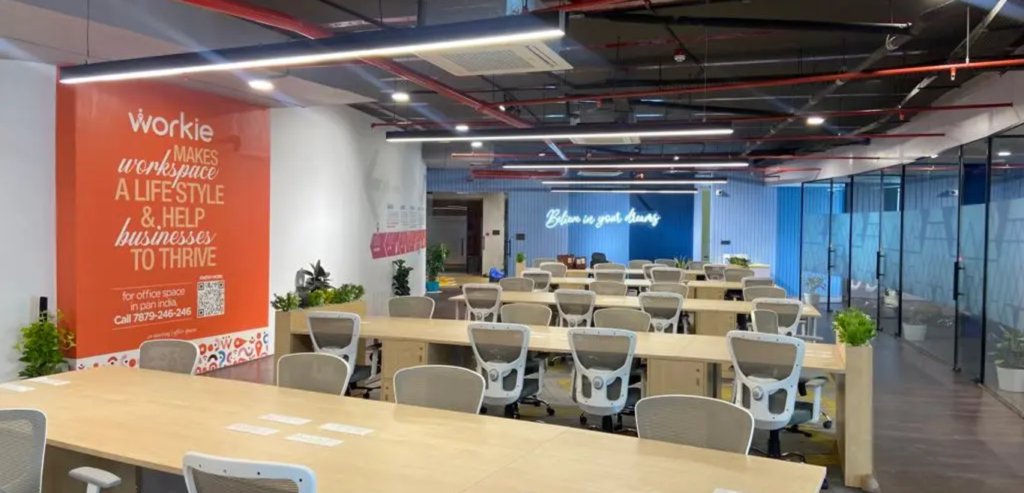
The landscape of commercial real estate is undergoing a fundamental transformation. For decades, organizations congregated in heavily centralized, high-density urban downtowns. However, as metropolitan infrastructure evolves and businesses prioritize agility, employee well-being, and operational efficiency, there is a distinct migration toward decentralized business hubs. Central to this shift is the rising demand for a tech park near expressway corridor.
Positioning corporate operations along major arterial highways offers a profound logistical advantage. Expressway networks are deliberately engineered to bypass the structural bottlenecks of inner-city transit. Consequently, businesses that secure office spaces in these adjacent commercial zones gain seamless connectivity, expansive architectural footprints, and access to a broader talent pool spanning multiple residential jurisdictions.
For enterprises evaluating relocation or expansion, the Noida-Greater Noida expressway office space market stands as a prime example of this urban planning principle. With wide multi-lane roads, dedicated commercial zoning, and integrated public transit planning, these corridors support everything from multinational corporate headquarters to agile startup ecosystems.
This comprehensive guide examines the strategic benefits of the expressway corridor office complex, the emergence of the new business district sector 136 expressway, and how modern workspace providers like Let’s Connect India are redefining enterprise mobility.
The Evolution of the Expressway Corridor Office Complex
The concept of an expressway corridor office complex is rooted in the principles of strategic urban decentralization. Historically, central business districts (CBDs) offered the primary advantage of proximity to central transit hubs and legacy financial institutions.
However, the inherent physical limitations of CBDs—such as restricted parking, older architectural floor plates, and severe traffic congestion—often cap an enterprise’s ability to scale operations efficiently.
Expressway corridors solve these structural challenges by design. Built on newer urban master plans, these corridors offer vast parcels of land capable of supporting campus-style commercial developments. An expressway corridor office complex typically features:-
- high-efficiency floor plates
- advanced facade engineering for energy conservation
- high-capacity centralized HVAC systems
- redundant power grids
- diverse fiber-optic connectivity
From an operational standpoint, securing a footprint in these complexes allows businesses to mitigate the hidden costs of urban congestion. Fleet management, vendor deliveries, and daily employee commutes are fundamentally streamlined when facilities are directly accessible via high-speed arterial routes.
Illustrative Scenario:
For example, a mid-size IT consultancy might experience consistent delays and high attrition rates due to grueling inner-city employee commutes. By relocating to an expressway corridor office complex, the consultancy bypasses local city traffic, enabling employees from dispersed suburban areas to utilize high-speed highway networks, thereby improving daily attendance predictability and overall workforce satisfaction.
Key Takeaways: The Expressway Corridor Office Complex
- Expressway commercial zones bypass the infrastructural limitations and congestion of traditional centralized business districts.
- These complexes support modern, campus-style architecture with highly efficient, scalable floor plates.
- Direct highway access streamlines logistics, vendor management, and employee commuting patterns.
- The foundational infrastructure includes advanced power redundancy and multi-provider fiber-optic networks critical for continuous enterprise operations.
Core Advantages of a Tech Park Near Expressway Corridor
Selecting a tech park near expressway corridor represents a strategic investment in an organization’s long-term operational stability. Tech parks are distinct from standalone office buildings; they are curated ecosystems designed explicitly to support high-performance business operations.
One of the foundational advantages of these tech parks is the sheer scale of available amenities. Because developers have access to larger land parcels along expressway routes, tech parks frequently incorporate extensive green spaces, dedicated visitor parking structures, centralized food courts, and on-site wellness facilities.
This comprehensive environment is designed to keep employees engaged and reduce the need to leave the campus during working hours, subsequently driving productivity.
Furthermore, a tech park near expressway corridor is generally engineered to meet strict global compliance and sustainability standards. The architectural principles governing these parks focus heavily on natural light optimization, superior indoor air quality, and efficient waste management systems.
For modern enterprises, particularly multinational corporations with stringent Environmental, Social, and Governance (ESG) mandates, establishing operations within a sustainably certified tech park is often a non-negotiable prerequisite.
Illustrative Scenario
Consider a rapidly scaling software development firm evaluating its real estate portfolio. By establishing a presence in a tech park, the firm does not merely acquire desk space; it inherits an ecosystem.
The firm can leverage the park’s shared auditoriums for large-scale town halls, utilize the integrated security protocols (such as biometric access and visitor management systems), and use the high-end campus environment as a tangible perk in competitive talent acquisition.
Key Takeaways: Tech Park Near Expressway Corridor
- Tech parks function as comprehensive, self-sustaining ecosystems rather than isolated commercial buildings.
- The availability of extensive land along expressways allows for vast amenities, including green zones, food courts, and dedicated parking.
- These parks are generally engineered to meet rigorous modern sustainability and ESG compliance standards.
- A premium campus environment serves as a critical asset for businesses focused on aggressive talent acquisition and retention.
Exploring the Noida-Greater Noida Expressway Office Space Market
The geographical stretch connecting Noida to Greater Noida exemplifies the successful implementation of expressway-driven commercial development. The Noida-Greater Noida expressway office space market has steadily evolved from an emerging alternative into a definitive destination for corporate real estate.
The underlying principle driving the success of this specific corridor is strategic macro-connectivity. The expressway acts as a high-speed conduit connecting the established urban infrastructure of Delhi and Noida with the expansive, planned development of Greater Noida. This connectivity ensures that businesses locating here are not isolated; rather, they are positioned at the nexus of multiple economic zones.
Furthermore, the urban planning surrounding the Noida-Greater Noida expressway involves dedicated sector zoning. Residential hubs, educational institutions, and commercial sectors are clearly delineated, creating a highly organized urban flow. For businesses, this translates to a stable operational environment devoid of the chaotic, mixed-use congestion found in older metropolitan areas.
Securing Noida-Greater Noida expressway office space also positions companies favorably for future infrastructural integration. Master plans for such expressway corridors typically incorporate future-proof public transit blueprints, including dedicated metro rail lines, high-speed regional transport systems, and optimized feeder bus networks, ensuring long-term accessibility.
Illustrative Scenario:
For example, an international logistics enterprise might select this corridor for its regional headquarters. The physical proximity to the expressway allows expedited movement of executives between the office and prospective regional airports, while the adjacent residential sectors provide a ready supply of skilled professionals, drastically reducing the friction associated with urban expansion.
Key Takeaways: Noida-Greater Noida Expressway Office Space
- The corridor serves as a high-speed bridge between established metropolitan areas and emerging, highly planned suburban zones.
- Rigorous sector zoning prevents the chaotic congestion typical of older, unplanned mixed-use urban centers.
- Enterprises benefit from seamless macro-connectivity, granting easy access to varied economic and residential hubs.
- These locations are historically prioritized for advanced public transit infrastructure investments, ensuring long-term viability.
Spotlight on the New Business District Sector 136 Expressway
Within the broader expressway ecosystem, specific micro-markets inevitably emerge as focal points of commercial activity. The new business district sector 136 expressway is widely recognized as a pivotal commercial hub within this regional master plan.
The rise of the new business district sector 136 expressway illustrates the importance of strategic positioning. Functioning as a critical node along the transit route, this sector offers businesses the optimal balance between metropolitan proximity and suburban spatial advantages.
The architectural profile of Sector 136 is defined by high-grade commercial towers featuring modern glass facades, highly efficient column-to-column spans, and state-of-the-art building management systems (BMS).
A defining characteristic of the new business district sector 136 expressway is the maturity of its local ecosystem. As commercial anchor tenants move into the area, they attract a secondary layer of support infrastructure. This includes business hotels, corporate banking branches, premium retail outlets, and fine dining establishments.
This agglomeration effect transforms the sector into a fully functional micro-economy, capable of supporting the diverse needs of large-scale corporate entities and their visiting clientele.
Illustrative Scenario:
Imagine a multinational original equipment manufacturer (OEM) seeking to establish an engineering capability center. By choosing the new business district sector 136 expressway, the OEM ensures that visiting global stakeholders have immediate access to nearby business hotels and premium meeting facilities, while local engineering teams benefit from a highly developed, secure, and modern workplace environment.
Key Takeaways: New Business District Sector 136 Expressway
- Sector 136 functions as a critical, highly developed micro-market along the broader expressway corridor.
- The area is characterized by premium, Grade-A commercial architecture featuring advanced building management systems.
- A mature local ecosystem of business hotels, retail, and banking provides robust support for corporate tenants.
- The sector offers an optimal geographical balance, maximizing both metropolitan access and suburban spatial benefits.
The Role of Flexible Workspaces and Let’s Connect India
As the physical landscape of commercial real estate shifts toward expressway corridors, the financial and operational models of how businesses occupy space are also evolving. The rigid, long-term commercial lease structure is increasingly being supplemented—and in many cases, replaced—by flexible workspace solutions. Within this progressive environment, workspace providers like Let’s Connect India are playing a critical role.
The foundational principle of flexible real estate is agility. In a dynamic economic landscape, organizations frequently find it challenging to accurately forecast headcount requirements over a traditional multi-year lease term. Flexible workspace operators address this by offering highly customized, managed office environments and coworking spaces within premium tech parks.
Let’s Connect India operates on the premise that businesses should be able to plug into a high-functioning enterprise environment without the burden of extensive capital expenditures (CapEx) associated with fit-outs, interior design, and IT infrastructure procurement. By utilizing managed spaces, enterprises can convert their real estate costs from fixed capital expenditures to scalable operational expenditures (OpEx).
Furthermore, providers like Let’s Connect India foster community and collaboration. In a traditional isolated office, networking opportunities are inherently limited to internal staff. In a managed, flexible workspace within an expressway corridor office complex, businesses share common areas, event spaces, and cafeterias with a diverse cross-section of industries, fostering organic B2B networking and potential partnerships.
Illustrative Scenario:
For example, an artificial intelligence startup might secure initial funding but lack the capital to independently lease and furnish a 5,000-square-foot office. By partnering with Let’s Connect India, the startup can immediately deploy its team into a fully operational, premium workspace near the expressway. As the startup hires more engineers, it can dynamically add seating capacity through the flexible workspace provider, entirely avoiding the downtime of traditional real estate procurement.
Key Takeaways: Flexible Workspaces and Let’s Connect India
- Flexible workspaces offer a critical alternative to rigid, capital-intensive traditional commercial leases.
- Providers like Let’s Connect India enable enterprises to shift real estate costs from CapEx to OpEx.
- Managed offices provide immediate operational readiness, removing the friction of facility fit-outs and IT deployment.
- Shared workspace environments foster organic networking and collaboration across diverse industries.
Criteria for Evaluating and Selecting Your Expressway Workspace
Securing the optimal tech park near expressway corridor requires rigorous due diligence and a multi-tiered evaluation strategy. Corporate real estate heads must assess prospective properties far beyond the surface-level aesthetic appeal, focusing instead on long-term operational resilience and employee accessibility.
1. Transportation and Last-Mile Connectivity:
While an expressway location guarantees excellent macro-connectivity for private vehicles, businesses must evaluate “last-mile” transit options. Assessing how employees utilizing public transportation will navigate from the nearest transit stop to the tech park is critical. Leading complexes often facilitate this by providing dedicated shuttle services from nearby transit hubs directly to the campus gates.
2. Core Building Technical Specifications:
A thorough technical audit of the expressway corridor office complex is paramount. Evaluators should analyze the building’s floor plate efficiency (the ratio of usable workspace to total leased area). Furthermore, assessing the capacity of the HVAC infrastructure, the redundancy of internet service providers (ISPs) entering the building, and the structural load-bearing capacity for heavy IT server rooms are essential steps to ensure the physical environment aligns with the operational mandate.
3. Parking and Traffic Flow Management:
A common operational bottleneck in commercial real estate is poor vehicular management. Prospective tenants must review the property’s parking ratios (the number of allotted parking spaces per square foot leased).
Additionally, analyzing the ingress and egress points of the tech park ensures that during peak morning and evening commute hours, employee vehicles do not face severe queueing delays.
4. Alignment with Flexible Providers:
Finally, companies should consider the presence of flexible workspace operators within the complex. Even if an enterprise secures a traditional primary lease, having a provider like **Let’s Connect India** within the same tech park offers a strategic safety valve. Should the enterprise require sudden overflow seating for a short-term project, they can leverage the flexible workspace within their own building, maintaining operational cohesion.
Illustrative Scenario: An enterprise evaluating Noida-Greater Noida expressway office space might initiate a comprehensive audit of three different towers. By methodically scoring each tower on last-mile connectivity, parking ratios, and the availability of flexible overflow spaces, the enterprise’s procurement team can confidently execute a lease that mitigates future operational bottlenecks.
Key Takeaways: Criteria for Workspace Evaluation
- Evaluate last-mile connectivity to ensure seamless daily commutes for all employees, regardless of transit mode.
- Conduct rigorous technical audits covering floor plate efficiency, HVAC capacity, and ISP redundancy.
- Assess parking ratios and vehicular flow to prevent peak-hour traffic bottlenecks at the campus entrances.
- Consider the presence of flexible providers as a strategic mechanism for managing sudden overflow seating requirements.
Frequently Asked Questions (FAQ)
1. What fundamentally defines a tech park near expressway corridor?
A tech park near an expressway corridor is a comprehensive commercial real estate development situated adjacent to a major arterial highway. Unlike standalone buildings, tech parks are campus-style ecosystems featuring advanced architectural design, centralized amenities, robust security, and scalable infrastructure designed to support high-density corporate operations.
2. Why are businesses transitioning to the Noida-Greater Noida expressway office space market?
Businesses choose this market to bypass the congestion of centralized metropolitan areas. The expressway offers high-speed macro-connectivity, while the planned urban sector zoning provides a highly organized environment. This combination yields more expansive workspace footprints, improved logistical efficiency, and a higher quality of daily life for the workforce.
3. What specific advantages does the new business district Sector 136 expressway offer?
Sector 136 operates as a highly developed micro-market along the expressway. It provides a mature ecosystem characterized by premium Grade-A commercial towers, integrated building management systems, and a supportive network of business hotels, banks, and retail, making it ideal for multinational and domestic corporate headquarters.
4. How does an expressway corridor office complex improve employee commute experiences?
By relying on high-capacity, multi-lane expressways rather than narrow, congested inner-city roads, employees experience more predictable and efficient travel times. Furthermore, these complexes generally provide expansive, dedicated parking facilities, completely eliminating the delays associated with searching for inner-city street parking.
5. How do flexible workspaces like Let’s Connect India fit into these tech parks?
Flexible workspace providers integrate into these tech parks by leasing large portions of commercial space and converting them into managed, agile environments. They allow businesses of all sizes to access premium expressway locations without traditional long-term lease commitments or heavy capital expenditures for interior fit-outs.
6. Is a tech park near an expressway corridor suitable for a small startup?
Yes, entirely. While tech parks house large enterprises, the integration of flexible workspace providers makes these premium locations highly accessible to startups. Through coworking or managed office solutions, startups can secure fractional space while enjoying the full suite of campus amenities.
7. What technical specifications should a company audit before leasing space in an expressway complex?
Companies must audit floor plate efficiency, centralized HVAC load capabilities, power grid redundancy, multiple fiber-optic ISP entry points, and structural readiness for internal IT server deployments. Comprehensive fire and life safety compliance is also critical.
8. How do these commercial hubs impact corporate ESG (Environmental, Social, and Governance) goals?
Newly developed tech parks along expressway corridors are generally designed with modern sustainability principles. Features such as high-performance glass facades for thermal regulation, rainwater harvesting systems, solar-integrated power, and high indoor air quality standards help occupying businesses meet their corporate ESG benchmarks.
9. Can enterprises easily scale their footprint within an expressway corridor office complex?
Yes. Due to the expansive nature of these developments, commercial towers in tech parks typically feature large, contiguous floor plates. Additionally, businesses can utilize on-site flexible workspace providers to dynamically scale seating up or down based on immediate project demands.
10. How does physical proximity to an expressway impact core business logistics?
For businesses relying on the physical movement of goods or frequent executive travel, immediate highway access drastically reduces fleet idle times and local transit friction. It creates a seamless conduit to regional airports, secondary manufacturing hubs, and diverse client sites, driving overall logistical efficiency.
Conclusion
The strategic migration of enterprise operations toward specialized suburban nodes represents the future of commercial real estate. By prioritizing a tech park near expressway corridor, organizations inherently bypass the structural and logistical constraints of legacy urban centers.
Whether exploring the robust infrastructure of the new business district sector 136 expressway or securing a comprehensive footprint in the broader Noida-Greater Noida expressway office space market, businesses position themselves for unimpeded operational scalability.
The modern expressway corridor office complex delivers unparalleled macro-connectivity, advanced architectural amenities, and a campus environment that actively fosters employee productivity and wellness. Furthermore, as enterprise agility becomes paramount, the integration of flexible, managed space solutions ensures that commercial real estate supports, rather than constrains, dynamic business growth.
To explore how your organization can leverage the advantages of highly connected, premium, and adaptable work environments, consider the comprehensive agile workspace solutions available in today’s leading commercial corridors. Engage with forward-thinking providers like Let’s Connect India to design a workspace strategy that aligns perfectly with your enterprise’s vision, mobility, and future scalability.