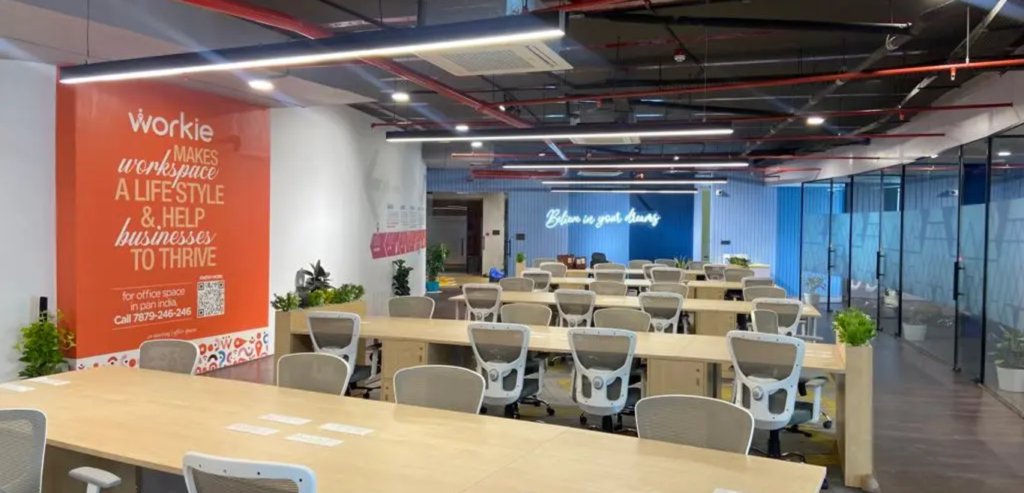

Businesses today are evolving faster than ever and the idea of using office space is changing too. A long-term commercial lease isn’t the only option anymore. Companies are shifting towards more flexible and agile workspace solutions that align with today’s working needs and style.
When searching for Noida office space for rent, there are just two main options:
-
- Rent a traditional commercial office and handle everything from purchase to maintenance.
- Choose a plug and play coworking space in Sector 136 Noida that already comes with modern infrastructure and amenities and you only focus on your work.
Each model serves a different business need. The right choice depends on cost structure, team size, growth speed, and operational flexibility. Let’s weigh our options and help you find what suits you best.
What is a Traditional Office Lease
Traditional leasing is the standard, conventional option where businesses rent office space for a fixed period up to many years.
- Unfurnished Office Space
- Limited flexibility
- Long lock-in periods
- High upfront investment
- Full responsibility for operations and setup
Common Additional Costs:
- Security deposits (often 6–12 months’ rent)
- Interior design and fit-outs
- Furniture and equipment
- Utilities and maintenance staff
- IT infrastructure setup
Traditional offices provide full control but require significant capital and long-term commitment.
What is a Plug and Play Office Space
On the other side is the subscription model such as plug and play office spaces allows you to pay a monthly access fee for ready-to-use workspaces that come with all the essential facilities.
Key Characteristics:
- Fully furnished workspaces
- Immediate move-in readiness
- Flexible rental terms (daily, monthly, quarterly)
- All-inclusive pricing (utilities, internet, maintenance)
- Managed services included (housekeeping, IT support, reception)
This model converts large upfront costs into predictable monthly operating expenses.
Leasing vs Subscription Model: A Quick Comparison
| Feature | Traditional Lease | Subscription Model (Coworking) |
| Setup Time | Weeks to a few months | Ready to work from (Plug and play office space) |
| Furniture & Equipment | Usually not included | Always fully furnished & equipped |
| Lock-in Period | Can go from 3–9 years | Monthly or quarterly plans (even for a few days) |
| Maintenance & Utilities | Paid separately | Included in the package |
| Scalability | Difficult and costly | Easy to scale up or down |
| Initial Investment | High with deposits, setup and legal fees | Low since it’s a fixed monthly fee |
| Flexibility | Rigid with expensive exit clauses | Highly flexible and minimal commitment |
| Support Services | Managed by yourself | IT support, front desk, housekeeping & security personnel available on site |
| Ideal For | Large or stable companies with fixed teams | Freelancers, startups, SMEs and growing businesses |
- Subscription model reduces lower upfront cost and are ideal for those that have just started or are still growing.
- However, established firms can always opt for a traditional setup if they need stable operations, fixed team sizes, and long-term occupancy requirements..
Also learn How Flexible Office Spaces Support Seasonal or Project-Based Teams
Total Cost of Ownership (TCO): The Real Difference
One of the biggest mistakes businesses make is comparing only monthly rent.
Traditional Office Costs Include:
- Rent
- Interiors (one-time heavy cost)
- Furniture replacement
- Utilities and maintenance
- IT setup
- Exit/relocation costs
Plug-and-Play Includes:
- One monthly invoice
- Internet, electricity, housekeeping
- Office infrastructure
- Maintenance and support
Key Insight:
While traditional offices may look cheaper per square foot, the total cost over 2–3 years is often significantly higher once setup and operational costs are included.
What Should You Choose For Your Business?
Go for a Traditional Lease if:
- You have a big company with a stable team size
- You want full control over branding, design and layout
- You plan to stay in the same place for many years
Choose a Subscription Model if:
- You want to move right away and have no time for setup hassles
- Your team size is frequently changing
- You need cost transparency and inclusive service
- You are a freelancer, a startup or a mid-sized business
- You value wnetworking and community benefits
Why Subscription Models are Becoming Popular in Noida?
Noida is a fast-growing city, attracting startups, local companies and MNCs due to the following reasons:
- Strong metro and expressway connectivity
- Increasing presence of IT companies and startups
- Expanding commercial infrastructure
- Lower operational costs compared to other NCR regions
As more and more businesses set up their operations here, demand for flexible and cost effective office solutions continues to grow.
Key advantages of Coworking (subscription model) involves:
- Short-term commitment
- Affordable monthly invoices
- A community of like-minded people
- Networking opportunities
- Meeting rooms, cafeterias, recreation spaces and common areas
- No admin burden
Hence, you never feel stuck but are always supported. Explore: Cost Benefits of Hybrid Offices – Pay Only for What You Need, When You Need It.
Hybrid Work Model: The Modern Reality
Many companies today are not choosing one model exclusively. Instead, they adopt a hybrid approach:
- Core headquarters in a traditional lease office
- Additional seats in coworking spaces
- Remote teams supported by flexible workspace access
This approach helps businesses:
- Control fixed costs
- Scale teams quickly
- Support distributed workforces
- Reduce real estate risk
Hybrid office strategies are becoming increasingly common among growing companies in India.
When Traditional Offices Still Make Sense
Despite the rise of flexible workspaces, traditional offices remain relevant in certain cases:
- Companies requiring strong physical branding presence
- Manufacturing or operational headquarters
- Businesses with stable long-term workforce
- Organizations with large teams requiring dedicated infrastructure
For these businesses, long-term leases can still offer cost efficiency over time.
Conclusion
The choice between traditional office leasing and plug-and-play office spaces is no longer just about rent—it is about flexibility, scalability, and capital efficiency.
Traditional offices offer stability and control, while subscription-based workspaces is useful when the business needs to keep changing, unpredictability and experience fast growth.
Coworking space in Sector 136 Noida witnesses how a new-day subscription-based office looks like. Explore future ready office
Frequently Asked Questions Related to Leasing VS Subscription Model
1. How long is the commitment for a subscription-based office?
Depending on the provider, businesses can choose from daily, monthly, quarterly, or customized plans, offering significantly greater flexibility than traditional leases.
2. Why are businesses choosing flexible office spaces in Noida?
Noida offers excellent infrastructure, metro connectivity, modern commercial developments, and a growing business ecosystem. Flexible office spaces allow companies to establish a presence in the city without the cost and complexity of a traditional lease.
3. Can I scale my office space as my team grows?
Yes. One of the biggest advantages of a subscription model is scalability. Businesses can easily add or reduce desks, cabins, or office space based on their changing requirements.
4. Is a coworking or subscription-based office suitable for established companies?
Absolutely. Many established companies use flexible workspaces for satellite offices, project teams, regional branches, or hybrid work arrangements.
5. Is a subscription-based office more affordable in the long run?
While the monthly cost may appear higher than bare office rent, subscription-based offices often prove more cost-effective when you factor in furniture, utilities, maintenance, internet, security, housekeeping, and setup expenses.
6. How can a subscription model help businesses manage cash flow?
With predictable monthly costs and minimal upfront investment, subscription-based offices allow businesses to allocate capital toward growth, hiring, and operations rather than office setup and maintenance.
7. Which office model is less risky during uncertain market conditions?
For businesses operating in rapidly changing markets, subscription-based offices generally offer lower risk due to reduced commitments and operational flexibility.