The modern commercial landscape demands agility. As operational paradigms shift and organizational structures become more fluid, the physical spaces where work happens must adapt accordingly. The traditional model of commercial real estate—characterized by lengthy lease commitments, substantial upfront capital expenditures, and rigid spatial constraints—is increasingly giving way to more adaptable solutions. Chief among these solutions is the utilization of business centres for maximum flexibility.
Flexible workspaces provide an operational framework that allows enterprises, mid-sized companies, and startups to align their real estate footprint with their immediate business realities. Rather than forecasting headcount years in advance, organizations can now expand or contract their physical presence on demand. This shift represents a fundamental change from viewing office space as a static liability to treating it as a dynamic resource.
This comprehensive guide explores the structural advantages of flexible business centres, the operational benefits of plug and play office environments, and the strategic reasons why specific commercial hubs; particularly the thriving corporate ecosystem in Noida—are becoming focal points for agile workspace solutions.
The Evolution of Commercial Real Estate and the Agile Shift
The concept of the workplace has undergone a significant transformation. Historically, securing an office meant navigating complex lease agreements, managing extensive build-outs, and establishing relationships with a multitude of facility vendors. This traditional model inherently lacks the agility required by contemporary operational strategies.
The Constraints of Traditional Leases
In a conventional commercial lease, organizations are typically bound by long-term contracts. This rigidity creates immediate operational friction. If an organization experiences rapid growth, it may quickly outgrow its physical footprint, leading to cramped conditions or the forced acquisition of disjointed secondary locations. Conversely, if a company scales down or adopts a highly distributed workforce model, it remains financially obligated to maintain and pay for unused square footage.
The Transition to Agile Environments
The introduction of business centres for maximum flexibility directly addresses these historical constraints. By restructuring the landlord-tenant relationship into a service-based model, flexible workspaces eliminate the friction of traditional commercial real estate.
Organizations can occupy a space that precisely fits their current headcount, with the contractual freedom to adjust their footprint as their strategic needs evolve. This evolution transitions commercial real estate from a rigid operational necessity into a highly adaptable strategic asset.
Key Takeaways: The Evolution of Commercial Real Estate
- Traditional commercial leases often impose rigid constraints that hinder rapid scaling and operational agility.
- Fixed office spaces force organizations to pay for unused capacity during structural transitions.
- Agile workspaces transition real estate from a static, long-term liability into a dynamic, service-based resource.
Defining Business Centres for Maximum Flexibility
To fully leverage the benefits of an agile workspace, it is essential to understand the core components that define a modern business centre. These facilities are not simply traditional offices with shorter leases; they are comprehensively managed ecosystems designed to remove administrative burdens from the occupant.
The Core Concept of Flexibility
At its foundation, a business centre provides spatial and contractual agility. Contractual flexibility allows organizations to engage in short-term agreements, month-to-month terms, or project-based tenures. Spatial flexibility ensures that a company can easily transition from a four-person private suite to an entire dedicated floor without changing their corporate address or disrupting their IT infrastructure.
Managed Infrastructure
A defining characteristic of these spaces is the presence of fully managed infrastructure. In a traditional setting, a company must procure, install, and maintain its own internet circuits, security systems, and utility connections. In a modern business centre, these elements are proactively managed by the facility operator. This comprehensive management extends to cleaning services, reception staffing, mail handling, and general maintenance.
Access to Premium Amenities
Business centres for maximum flexibility also democratize access to premium corporate amenities. Organizations occupy their dedicated private spaces while sharing access to high-end boardrooms, presentation theatres, wellness areas, and expansive cafeterias. This shared-resource model allows smaller teams to project an enterprise-level corporate image and utilize facilities that would typically be cost-prohibitive to build independently.
Key Takeaways: Defining Business Centres
- Flexibility encompasses both scalable physical space and adaptable, short-term lease agreements.
- Business centres provide comprehensively managed infrastructure, removing facility management burdens from the tenant.
- Occupants benefit from a shared-resource model, gaining access to premium amenities like boardrooms and wellness areas.
The Strategic Value of Plug and Play Office Space
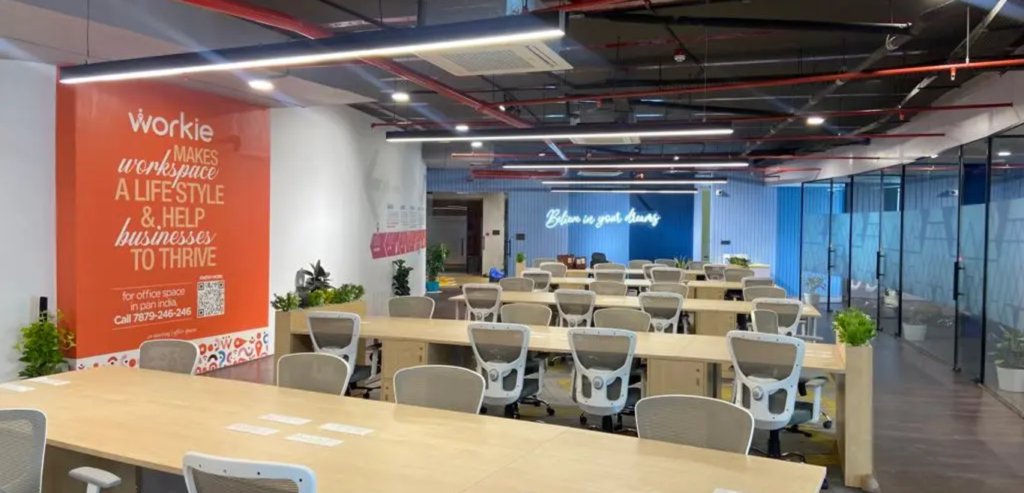
A critical component of the modern business centre is the provision of “plug and play” capabilities. A plug and play office space is exactly what the name implies: a fully furnished, technologically equipped environment where a team can arrive, connect their devices, and immediately commence work.
Eradicating Setup Times and Capital Expenditure
When establishing a traditional office, organizations face significant capital expenditure (CapEx) for interior design, furniture procurement, and IT infrastructure installation. Furthermore, the time required to build out a space can result in weeks or months of operational delays.
A plug and play office space converts these heavy CapEx requirements into predictable operating expenditures (OpEx). The furniture is already installed, the network architecture is already active, and the physical security protocols are already in place.
Enterprise-Grade Technological Readiness
High-quality plug and play environments are designed with enterprise operations in mind. This means the technological infrastructure extends beyond simple Wi-Fi access. These spaces feature dedicated bandwidth, secure virtual local area networks (VLANs), robust firewalls, and redundant internet connections to ensure uninterrupted uptime. For data-sensitive organizations, this enterprise-grade readiness ensures that they do not have to compromise on security to achieve flexibility.
Ergonomics and Spatial Design
Beyond technology, plug and play spaces are meticulously designed for human performance. Ergonomic seating, optimized lighting, and acoustic treatments are standard features. The spatial layout is typically zoned to accommodate different working styles—featuring quiet zones for deep, focused work, collaborative hubs for team ideation, and private pods for confidential communications.
Key Takeaways: Plug and Play Office Space
- Plug and play spaces eliminate setup times, allowing teams to commence operations immediately upon move-in.
- They convert heavy upfront capital expenditures (CapEx) into predictable, manageable operating expenditures (OpEx).
- These environments provide enterprise-grade IT infrastructure, robust security, and ergonomic spatial design.
Coworking and the Corporate Ecosystem
While the terms “business centre” and “coworking space” are often used interchangeably, modern facilities seamlessly blend the best elements of both. By integrating the privacy of a traditional office with the community dynamics of coworking, organizations can foster innovation and enhance employee satisfaction.
Networking and Cross-Pollination of Ideas
One of the most significant, albeit intangible, benefits of a shared commercial environment is the organic networking it facilitates. When multiple organizations—ranging from creative agencies to financial consultancies—operate within the same overarching facility, natural intersections occur in communal areas. These interactions frequently lead to strategic partnerships, client acquisitions, and the cross-pollination of innovative business practices.
Talent Attraction and Retention
The modern workforce places a high premium on the quality of their work environment. Facilities that offer a vibrant atmosphere, community events, and premium amenities serve as powerful tools for talent acquisition and retention. A dynamic coworking environment reduces the isolation often felt in static, traditional offices. The provision of community-building activities, professional development workshops, and wellness programs contributes significantly to overall team morale.
Fostering a Professional Corporate Image
For emerging enterprises, establishing a strong initial impression is vital. Meeting clients in a high-end business centre—complete with professional reception staff, state-of-the-art meeting rooms, and a prestigious address—projects an image of stability and success. This professional facade is seamlessly maintained by the facility operator, allowing the organization to focus entirely on its core business objectives rather than facility aesthetics.
Key Takeaways: Coworking and Ecosystems
- Shared commercial environments facilitate organic networking, strategic partnerships, and knowledge sharing.
- Vibrant, amenity-rich workspaces serve as powerful tools for attracting and retaining top-tier talent.
- Business centres project a professional, enterprise-level image that enhances client perception and brand trust.
Why Noida is a Premier Destination for Flexible Workspaces
Geography plays a crucial role in commercial real estate strategy. In recent years, specific urban centers have emerged as highly desirable locations for agile operations. For businesses operating in or expanding to northern India, securing a flexible workspace in Noida has become a highly strategic maneuver.
Strategic Geographic Positioning
Noida occupies a highly advantageous position within the National Capital Region (NCR). Its proximity to New Delhi, combined with superior urban planning, makes it highly accessible. The city features wide arterial roads, an expansive metro network, and rapid connectivity to major transit hubs. This logistical efficiency is a primary reason why organizations seek out coworking Noida solutions; it ensures that employees, clients, and partners can navigate the region with minimal friction.
A Booming Corporate and IT Hub
Noida has systematically developed into a powerhouse for the IT, ITES (Information Technology Enabled Services), and manufacturing sectors. The presence of multinational corporations, massive tech parks, and specialized special economic zones (SEZs) has created a robust corporate ecosystem. Utilizing a flexible workspace in Noida places an organization directly within this nexus of commercial activity. Proximity to industry leaders and a massive pool of technical talent provides a distinct competitive advantage.
The Demand for Agile Solutions in Rapidly Growing Markets
Because Noida’s commercial landscape is characterized by rapid growth and influxes of new businesses, the demand for adaptable real estate is immense. Organizations entering the market often require immediate operational capacity without the delay of traditional office setups. Consequently, the market for coworking Noida is highly developed, featuring sophisticated spaces designed to cater to the exacting standards of global enterprises and ambitious domestic firms alike.
Key Takeaways: Noida as a Commercial Hub
- Noida offers strategic geographic advantages, including superior urban planning and seamless connectivity to New Delhi.
- The region is a recognized powerhouse for IT and corporate enterprise, providing access to a vast talent pool.
- A mature market for flexible workspace in Noida allows businesses to rapidly establish a footprint in a high-growth economic zone.
Illustrative Scenarios: Who Benefits Most?
To understand the practical application of business centres for maximum flexibility, it is helpful to examine how different organizational structures utilize these spaces. The following scenarios are provided as illustrative examples of typical use cases.*
Scenario A: The Expanding Enterprise Satellite Office
For a large multinational enterprise looking to establish a presence in a new region, agility is paramount. Instead of committing to a five-year lease in an untested market, the enterprise can secure a dedicated, branded suite within a flexible business centre. This allows the organization to deploy a “landing team” immediately. As the regional market proves viable and the local team grows, the enterprise can incrementally expand its footprint within the same facility, maintaining continuity while mitigating financial risk.
Scenario B: The Lean, Fast-Scaling Startup
Startups frequently experience unpredictable growth trajectories. A technology startup might begin the year with a core team of five developers and end the year with thirty employees spanning sales, marketing, and engineering. A traditional lease cannot accommodate this volatility. By utilizing a plug and play office space, the startup can seamlessly add desks and private offices month by month. Furthermore, the startup avoids sinking precious venture capital into office furniture and IT infrastructure, preserving cash flow for product development.
Scenario C: The Distributed Hybrid Team
Many modern organizations operate on a hybrid model, where employees split their time between remote work and physical collaboration. A business centre is the ideal anchor for a distributed team. The organization can lease a smaller primary office for essential daily operations and utilize the centre’s on-demand meeting rooms and coworking areas on days when the entire team convenes for collaborative workshops or strategy sessions.
Key Takeaways: Illustrative Scenarios
- Enterprises use flexible spaces to test new geographic markets with minimal financial risk and setup time.
- Startups leverage spatial agility to accommodate rapid, unpredictable headcount growth without wasting capital.
- Hybrid organizations utilize business centres as central collaborative hubs for distributed workforces.
Selecting the Right Flexible Workspace Partner
Choosing the correct facility is a critical operational decision. Not all business centres offer the same level of service, infrastructure, or community engagement. Organizations must evaluate prospective spaces based on several key criteria to ensure they achieve true operational agility.
Evaluating Infrastructure and Support
The foundation of a good plug and play office space is its technical and administrative infrastructure. Prospective tenants should carefully assess the redundancy of the internet connection, the security protocols governing the physical space and the network, and the availability of on-site IT support. Additionally, the quality of administrative support—such as mail handling, guest reception, and facility maintenance—dictates how seamless the day-to-day operations will be.
Community and Cultural Fit
An office space must align with a company’s internal culture. Organizations should consider the atmosphere of the business centre. Is it heavily corporate and quiet, or is it vibrant and highly collaborative? Evaluating the existing tenant mix and the types of community events hosted by the facility can provide insight into whether the environment will foster productivity and employee satisfaction for a specific team.
Exploring Solutions: Let’s Connect India
When searching for a premium flexible workspace in Noida, aligning with an established, high-quality provider is essential. Providers like Let’s Connect India are structured to deliver comprehensively on the promise of agility. Let’s Connect India positions itself as a premier destination for businesses seeking adaptable, fully managed office environments. By focusing on ergonomic design, robust enterprise technology, and a vibrant professional community, facilities of this caliber allow organizations to bypass operational friction and focus entirely on their growth and innovation.
Key Takeaways: Selecting a Workspace
- Thoroughly evaluate a facility’s technical infrastructure, focusing on internet redundancy, network security, and IT support.
- Assess the community atmosphere and existing tenant mix to ensure alignment with your organization’s corporate culture.
- Partner with established providers, such as Let’s Connect India, to guarantee high-quality, comprehensively managed workspace solutions.
Frequently Asked Questions (FAQs)
1. What exactly constitutes a business centre?
A business centre is a professionally managed commercial facility that provides fully equipped office spaces, meeting rooms, and shared amenities. Unlike traditional real estate, these centres offer flexible lease terms, allowing businesses to rent space based on their immediate needs without long-term commitments or facility management burdens.
2. How does a plug and play office space differ from a traditional office?
A traditional office requires the tenant to manage the interior build-out, purchase furniture, and install IT and utility infrastructure. A plug and play office space is pre-furnished and pre-wired with high-speed internet and utilities. Businesses can move in and begin operations immediately with zero setup time.
3. Why should a company consider utilizing business centres for maximum flexibility?
Utilizing a flexible business centre allows an organization to align its real estate costs with its actual headcount. It converts large upfront capital expenditures into predictable operating costs, provides access to enterprise-grade amenities, and allows companies to scale their footprint up or down rapidly.
4. What types of businesses benefit most from coworking spaces?
While initially popular with freelancers and startups, modern coworking and flexible workspaces are heavily utilized by mid-sized companies and large enterprises. They are ideal for fast-scaling companies, organizations establishing regional satellite offices, and teams utilizing a hybrid work model.
5. Why is there a high demand for flexible workspace in Noida?
Noida is a major commercial and IT hub with excellent infrastructure, urban planning, and connectivity to New Delhi. The rapid influx of tech companies, multinational corporations, and startups in the region creates a strong demand for adaptable, move-in-ready commercial real estate.
6. Can an enterprise team maintain data security in a shared business centre?
Yes. High-quality business centres are designed to accommodate enterprise security protocols. They typically offer private, lockable office suites, dedicated secure Wi-Fi networks or private VLANs, robust firewalls, and secure access-card systems to ensure data and physical security.
7. Are meeting rooms and boardrooms included in a flexible workspace agreement?
Most business centres operate on a shared-resource model. While organizations rent their specific private offices or desks, they gain access to communal meeting rooms, boardrooms, and event spaces. These are usually bookable on demand, ensuring teams have professional spaces for client presentations.
8. What administrative services are typically provided by the facility operator?
Facility operators handle all aspects of building management. This routinely includes daily cleaning services, utility management, HVAC maintenance, front-desk reception, guest greeting, mail and package handling, and basic IT troubleshooting.
9. How do flexible lease terms impact a company’s financial planning?
Flexible terms drastically improve financial agility. Instead of locking into a multi-year lease that requires forecasting space needs years in advance, companies pay only for the space they currently use. This protects cash flow and prevents financial waste on unused square footage.
10. What role does Let’s Connect India play in the Noida commercial real estate market?
Let’s Connect India operates as a provider of premium coworking and flexible office solutions within Noida. They provide businesses with fully managed, scalable environments equipped with modern amenities, allowing organizations to establish a professional, agile footprint in the region.
Conclusion
The transition from rigid commercial real estate to highly adaptable work environments represents a fundamental evolution in how organizations operate. Utilizing business centres for maximum flexibility empowers companies to decouple their physical footprint from restrictive, long-term financial liabilities. By embracing the operational readiness of a plug and play office space, businesses can eliminate setup delays, preserve capital, and instantly access enterprise-grade infrastructure.
For companies operating in rapidly expanding corporate hubs, securing a flexible workspace in Noida offers a distinct strategic advantage, placing teams at the intersection of superior infrastructure and a deep talent pool. Whether you are a scaling startup navigating unpredictable growth, or an established enterprise deploying a regional satellite team, the agile workspace model provides the foundation for sustainable success.
Ready to transform your operational agility and elevate your corporate footprint? Explore the dynamic, fully managed workspace solutions available at Let’s Connect India and discover how a truly flexible office environment can accelerate your business growth today.