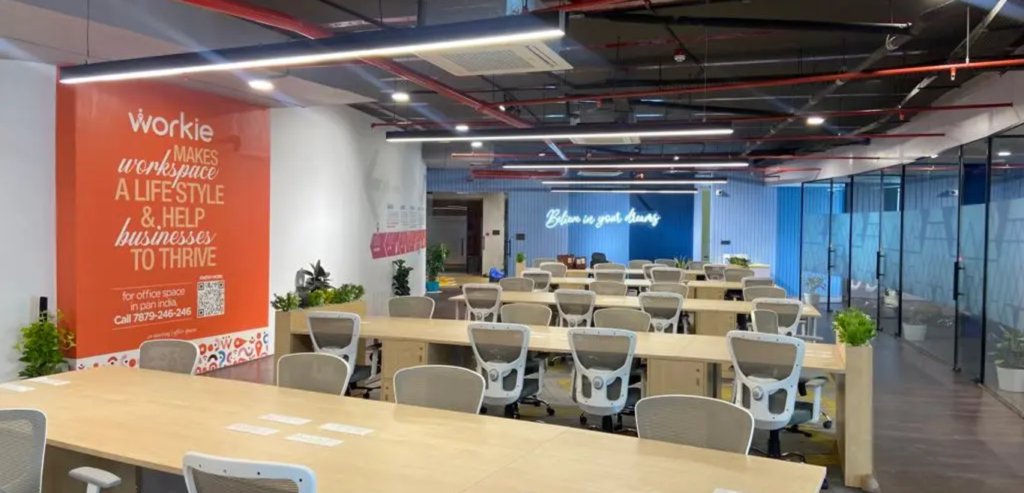

The landscape of commercial real estate is undergoing a fundamental transformation. As businesses prioritize operational agility, employee well-being, and financial efficiency, the traditional model of leasing bare-shell properties and committing to long-term capital expenditure is no longer the only—or even the preferred—path to growth. Instead, enterprises, scaling startups, and established multinational corporations are turning toward outsourced, highly optimized workspace solutions.
At the forefront of this shift in the National Capital Region (NCR) is the demand for managed office space in Noida Expressway. This specific corridor has evolved into a powerhouse for IT, ITES, and diverse corporate operations, driven by robust infrastructure, exceptional connectivity to Delhi, and a thriving commercial ecosystem.
A managed office offers a comprehensive solution where the design, build-out, and daily operations of the workspace are handled by a specialized provider. This model allows businesses to move in seamlessly, bypass the headaches of facility management, and focus entirely on their core objectives.
Whether an organization requires a flexible office space Noida location to accommodate a hybrid workforce, or a high-end serviced office in Noida Expressway setup to host international clients, the modern commercial real estate market offers tailored solutions to meet these distinct needs.
This comprehensive guide explores the structural advantages of managed workspaces, the specific value of the Noida Expressway corridor, and how solutions like a plug and play office Noida can catalyze business growth. Furthermore, it will highlight how workspace providers like Let’s Connect India operate within this ecosystem to deliver customized operational environments.
The Rise of Managed Office Space in Noida Expressway
The decision of where to anchor a business is critical, influencing talent acquisition, brand perception, and operational logistics. The Noida Expressway has emerged as a premier commercial hub for several foundational reasons.
First, the physical infrastructure surrounding the expressway provides seamless connectivity. Linking Noida to Greater Noida and seamlessly intersecting with major transit routes to Delhi, the corridor ensures that employees and clients can navigate the region with ease. The expansion of metro lines and arterial road networks further solidifies its accessibility.
Second, the expressway corridor has been systematically developed to support large-scale commercial operations. Unlike older, congested urban centers, this area features meticulously planned sectors, wide avenues, and modern glass-facade commercial towers designed specifically for modern enterprises.
By securing a managed office space in Noida Expressway, companies position themselves within a geographic zone heavily populated by leading tech firms, global capability centers (GCCs), and innovative startups. This proximity fosters a vibrant professional community, enabling networking, partnerships, and knowledge exchange.
Furthermore, the surrounding residential infrastructure plays a vital role. The expressway is flanked by contemporary residential developments, making it a highly desirable location for top-tier talent who seek a reduced commute and a high quality of life. For employers, locating a business here serves as a strategic advantage in employee recruitment and retention.
Key Takeaways:
- The Noida Expressway provides superior connectivity to Delhi and Greater Noida, essential for daily commuting and logistics.
- The area is a systematically planned commercial hub, attracting top-tier IT, ITES, and multinational corporations.
- Proximity to high-quality residential sectors makes it easier for businesses to attract and retain localized talent.
Managed vs. Traditional Offices: Understanding the Shift
To fully grasp the value of managed workspaces, it is necessary to understand how they contrast with traditional commercial leases.
In a traditional leasing model, a company rents a “bare-shell” or “warm-shell” property. The organization is then entirely responsible for the capital expenditure (CapEx) required to design the layout, construct partitions, install HVAC systems, set up IT networks, and purchase furniture.
Beyond the initial financial outlay, the company assumes the burden of facility management—handling security, housekeeping, internet service providers, and routine maintenance. This model often requires long-term commitments, locking businesses into spaces that may become too small if they grow rapidly, or unnecessarily large if they adopt remote work models.
Conversely, a managed office shifts the financial burden from CapEx to OpEx (Operational Expenditure). The workspace provider handles the entire lifecycle of the office. They work with the client to understand their brand guidelines, spatial requirements, and technical needs, and then deliver a fully customized, ready-to-use office.
This shift provides immense financial predictability. Businesses pay a consolidated monthly fee that encompasses rent, utilities, maintenance, and administrative support. By eliminating the upfront costs associated with traditional build-outs, companies preserve essential capital that can be reinvested into product development, marketing, or talent acquisition.
Key Takeaways:
- Traditional leases require significant upfront Capital Expenditure (CapEx) for fit-outs and infrastructure.
- Managed offices operate on an Operational Expenditure (OpEx) model, preserving business capital for core activities.
- The managed model provides financial predictability through a consolidated, all-inclusive monthly fee.
Core Features of a Plug and Play Office in Noida
The term “plug and play” is frequently used in commercial real estate, but what does it practically entail for a business setting up operations in Noida? A plug and play office Noida setup is designed to eliminate the friction of moving and setup times. The core philosophy is that a team should be able to walk in on day one, connect their laptops, and begin working immediately.
Key features of these environments include:
1. Enterprise-Grade IT Infrastructure
A reliable digital backbone is non-negotiable. Plug and play offices come equipped with high-speed, secure internet connectivity, enterprise-grade routers, structured cabling, and dedicated server room capabilities if required. Providers ensure network redundancy to minimize downtime, which is crucial for software development firms, financial institutions, and customer support centers.
2. Ergonomic and Purpose-Built Furniture
The physical comfort of employees directly impacts productivity. These spaces are outfitted with modern, ergonomic workstations, supportive seating, and varied collaborative setups. Rather than spending weeks procuring office furniture, businesses benefit from professionally designed layouts that adhere to modern workplace ergonomics.
3. Comprehensive Utility Management
Power outages or HVAC failures can paralyze business operations. Managed plug and play spaces feature robust power backup systems, centralized climate control, and comprehensive utility management, ensuring a stable and comfortable working environment regardless of external infrastructure fluctuations.
4. Optimized Spatial Design
These offices are not just desks in a room. They feature a balanced mix of private cabins for executives, open-plan workstations for collaborative teams, soundproof meeting rooms equipped with video conferencing tools, and informal breakout areas designed to foster creativity and mental well-being.
Key Takeaways:
- A plug and play office in Noida enables immediate operational readiness without setup delays.
- Facilities include enterprise-grade internet, network redundancy, and secure IT infrastructure.
- Workspaces are fully furnished with ergonomic equipment and feature a mix of private, collaborative, and meeting areas.
The Value of a Serviced Office on Noida Expressway for Growing Teams
While a plug and play space focuses heavily on the physical and technical infrastructure, a serviced office Noida Expressway model emphasizes the ongoing operational support and hospitality aspects of the workspace. This model acts as an extension of a company’s own administrative team.
In a serviced office, businesses benefit from comprehensive facility management. A dedicated front desk and reception team handles visitor management, ensuring that visiting clients or stakeholders receive a professional, brand-aligned welcome. Mail and package handling, call forwarding, and administrative support are often integrated into the service package.
Furthermore, a serviced office includes rigorous housekeeping, sanitation, and pantry management. The daily upkeep of the workspace is entirely outsourced. If an air conditioning unit malfunctions or a lighting fixture needs replacement, the responsibility falls on the workspace provider’s maintenance team to resolve the issue swiftly, preventing disruptions to the core business.
Security is another vital component of the serviced model. Providers implement biometric or keycard access controls, 24/7 CCTV surveillance, and specialized security personnel. For industries dealing with sensitive data or intellectual property, this multi-layered approach to physical security is paramount.
Key Takeaways:
- Serviced offices provide comprehensive administrative support, including professional reception and mail management.
- Daily facility management, including housekeeping and routine maintenance, is entirely outsourced to the provider.
- Advanced physical security measures, such as access control and surveillance, are integrated into the workspace.
Why Flexible Office Space in Noida is Crucial for Modern Work Models
The concept of work has fundamentally changed. The rigid, five-day-a-week office mandate is increasingly being replaced by agile, hybrid work structures. Consequently, the physical spaces that house these workforces must be equally adaptable. Flexible office space in Noida are designed specifically to accommodate this fluidity.
Flexibility manifests in several crucial ways. First is lease flexibility. Traditional commercial leases often require multi-year lock-in periods. Flexible workspaces allow for shorter-term commitments or agreements that can be renegotiated as business needs evolve.
Second is spatial flexibility. As an organization scales up, a flexible workspace provider can seamlessly add more desks, integrate an adjoining suite, or reconfigure the existing layout to accommodate new departments. Conversely, if a business shifts toward a more remote-heavy model and needs to downsize its physical footprint, the flexible model allows for contraction without severe financial penalties or the need to break a rigid traditional lease.
This agility is particularly valuable for project-based work. If an enterprise lands a specific contract that requires a temporary influx of contractors or specialists for a predefined period, a flexible office space allows them to secure temporary, dedicated space for that team, releasing it once the project concludes.
Key Takeaways:
- Flexible office space Noida supports hybrid work models by adapting to fluctuating attendance and team sizes.
- Lease structures are agile, avoiding the rigid, long-term lock-ins characteristic of traditional real estate.
- Spaces can be scaled up or scaled down rapidly in response to business growth, project demands, or operational restructuring.
Evaluating Providers: What to Look For (Spotlight on Let’s Connect India)
When a business decides to transition to a managed workspace, the choice of provider is just as important as the location itself. A workspace provider is essentially an operational partner.
Organizations must evaluate providers based on transparency, customization capabilities, community management, and technical reliability. A premium provider will not simply offer a standardized template; they will conduct a deep-dive consultation to understand the client’s workflow, brand identity, and security requirements before proposing a spatial design.
In the competitive NCR market, providers like Lets Connect are positioned to offer these comprehensive workspace solutions. As a brand focused on facilitating business growth, Let’s Connect India offers environments that blend modern design aesthetics with highly functional infrastructure. Their approach centers on providing holistic workspace solutions—from customized managed offices for large enterprises to agile coworking environments for smaller teams.
When evaluating a partner, businesses look at the quality of their meeting room technology, the responsiveness of their on-site community managers, the standard of their ergonomic furnishings, and their ability to execute a seamless transition from a traditional office to a managed environment. Ultimately, the right provider functions quietly in the background, ensuring the physical environment perfectly supports the client’s operational ambitions.
Key Takeaways:
- Selecting a workspace provider requires evaluating their capacity for customization, technical reliability, and transparent pricing.
- Providers act as operational partners, directly impacting the daily functionality and employee experience of the business.
- Solutions like Let’s Connect India provide targeted, holistic workspace environments designed to support both enterprise scalability and agile team operations.
Illustrative Scenarios: Who Benefits from Managed Workspaces
To understand the practical application of these real estate concepts, it is helpful to look at illustrative scenarios of how different types of organizations utilize managed offices.
Scenario A: The Scaling Technology Startup
For example, consider a rapidly growing SaaS (Software as a Service) startup that has just secured its Series B funding. They currently have 40 employees but plan to expand to 100 over the next year. Signing a traditional lease for a 100-person office means paying for empty space for months.
Instead, they secure a managed office space in Noida Expressway. They begin with a custom 50-seater setup. As they hire new engineering and sales cohorts, the workspace provider integrates additional customized modules within the same building. The startup preserves its venture capital for product development rather than spending it on real estate build-outs.
Scenario B: The Global Enterprise Regional Headquarters
For example, a multinational logistics enterprise headquartered in Europe decides to establish a North Indian operational hub. They lack local facility management contacts and do not want the administrative burden of setting up a new office from scratch.
By opting for a serviced office in Noida Expressway, the enterprise secures a premium, fully branded floor. The provider handles the international IT connectivity standards, strict access control requirements, and daily operations, allowing the enterprise’s regional director to focus solely on market expansion and hiring.
Scenario C: The Creative Agency Adopting a Hybrid Model
For example, a mid-sized marketing and design agency transitions to a hybrid model where employees work from the office only three days a week. Their previous traditional office is now underutilized and draining resources. They transition to a flexible office space setup.
The new managed space features unassigned “hot desks” for rotational staff, highly advanced collaborative meeting rooms for client pitches, and a smaller dedicated zone for the core administrative team. This drastically reduces their real estate overhead while upgrading the quality of their physical meeting spaces.
Key Takeaways:
- Startups benefit from the ability to scale space concurrently with headcount without paying for unused capacity.
- Global enterprises use managed spaces to establish immediate, high-quality regional hubs without local real estate operational burdens.
- Companies adopting hybrid models utilize flexible offices to optimize their physical footprint and reduce unnecessary overhead.
Frequently Asked Questions (FAQs)
1. What exactly is a managed office space?
A managed office space is a customized workspace where a third-party provider handles the design, build-out, and all ongoing daily operations (including IT, maintenance, and housekeeping). The business occupying the space pays a single, consolidated monthly fee, operating the office entirely on an OpEx model.
2. How does a managed office differ from a standard coworking space?
While both offer flexibility, a standard coworking space typically involves sharing amenities and open spaces with multiple different companies and freelancers. A managed office is custom-built and highly privatized for a single enterprise, featuring their specific branding, private IT infrastructure, and dedicated access.
3. Why is the Noida Expressway considered a strategic location for businesses?
The Noida Expressway offers an ecosystem of excellent road connectivity, dedicated commercial sectors, robust power and data infrastructure, and proximity to premium residential zones. This makes it an ideal corridor for attracting talent and conducting business with both Delhi-based and global entities.
4. What is included in a plug and play office Noida setup?
A plug and play office includes everything required to start working immediately. This encompasses ergonomic furniture, high-speed internet, power backup, central air conditioning, pantry facilities, and fully equipped meeting rooms.
5. Are serviced offices on Noida Expressway suitable for large enterprises?
Yes. While historically associated with smaller teams, modern serviced offices are highly scalable. Large enterprises frequently use entire customized floors or buildings managed by a workspace provider to house hundreds of employees, benefiting from enterprise-grade security and IT infrastructure.
6. How does flexible office space in Noida help reduce corporate costs?
It reduces costs by eliminating the massive upfront capital expenditures required for designing, building, and furnishing an office. Furthermore, flexible terms mean a company only pays for the space it currently needs, avoiding the financial drain of leasing underutilized square footage.
7. Can we customize the design of a managed office space?
Absolutely. One of the primary benefits of a managed office is customization. Providers work with clients to incorporate brand colors, specific spatial layouts (such as ratios of private cabins to open desks), and tailored security protocols before the move-in date.
8. What level of IT infrastructure is typically provided?
Premium managed workspaces provide enterprise-grade infrastructure. This usually includes dedicated high-speed bandwidth, secure local area networks (LAN), firewall management, server room space if required, and 24/7 IT support to troubleshoot any connectivity issues.
9. How long are the typical lease terms for these managed workspaces?
Unlike traditional commercial leases that often require multi-year lock-ins (e.g., 3 to 9 years), managed and flexible offices offer agile terms. Agreements can range from a few months to several years, depending entirely on the specific requirements and growth projections of the business.
10. How can Let’s Connect India assist with our workspace needs?
Let’s Connect India offers tailored workspace solutions designed for operational efficiency. By providing agile, well-equipped, and professionally managed environments, Let’s Connect India enables businesses to bypass facility management challenges and focus on their core growth objectives within the competitive NCR market.
Conclusion
The evolution of commercial real estate has made one thing abundantly clear: businesses no longer need to be anchored down by rigid leases and complex facility management. The strategic transition toward a managed office space in Noida Expressway allows organizations of all sizes to operate with unprecedented agility, financial predictability, and professionalism.
Whether your organization requires the immediate functionality of a plug and play office, the premium hospitality of a serviced office, or the scalable nature of a flexible office space in Noida. The modern market provides customized solutions. By partnering with dedicated workspace providers, companies can ensure their physical environment is a catalyst for growth, productivity, and talent retention, rather than an operational burden.
Ready to transform your corporate workspace? Explore how agile, custom-built environments can elevate your operational efficiency. Discover customized, state-of-the-art managed office solutions with Let’s Connect India today, and give your team the infrastructure they need to thrive.