Finding the ideal operational base is a foundational step for any growing enterprise. As businesses scale, the geographical location, infrastructure, and terms of their workspace directly influence overhead costs, talent acquisition, and overall brand perception. In the National Capital Region (NCR), a commercial property lease in Sector 136 Noida has emerged as a highly strategic choice for corporations, IT firms, and ambitious startups alike.
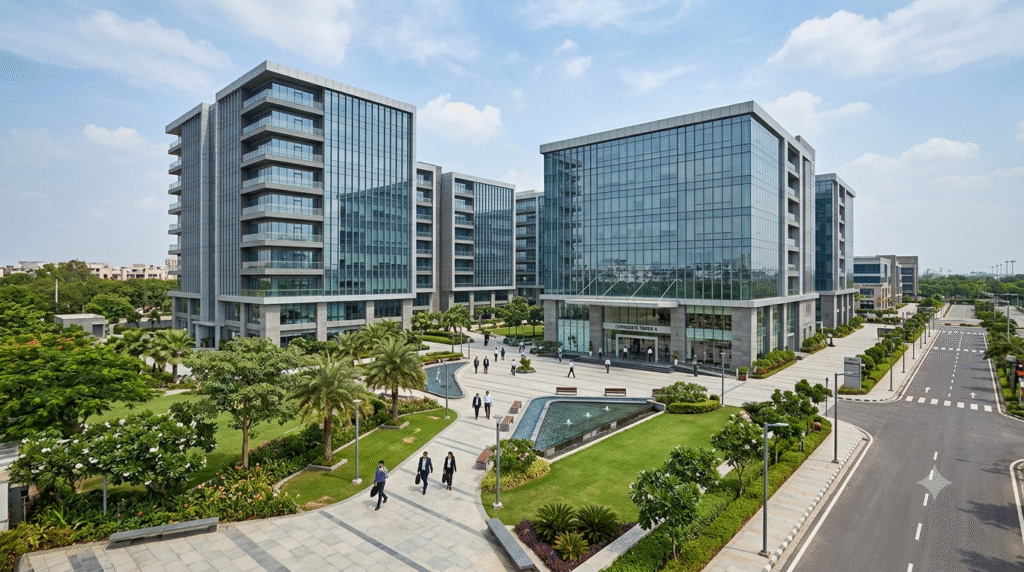
Situated strategically along the Noida-Greater Noida Expressway, Sector 136 offers a blend of accessibility, modern infrastructure, and an evolving corporate ecosystem. However, navigating the commercial real estate market requires a deep understanding of lease structures, negotiation levers, and emerging workplace trends. Traditional long-term commitments are no longer the only option; today, businesses are actively exploring managed spaces and hybrid models to optimize their real estate portfolios.
This comprehensive guide explores the mechanics of commercial leasing in this prominent business hub. It breaks down the shift toward a flexible office lease in Sector 136, provides actionable strategies for securing a discount office lease in Sector 136, and highlights how modern workspace solutions, such as those offered by Let’s Connect India, are reshaping the way organizations approach their real estate needs.
Strategic Advantages of Sector 136 Noida
Choosing a location for a commercial office goes beyond simply finding a building with available floor space. The surrounding ecosystem, connectivity, and local infrastructure play crucial roles in a company’s operational efficiency.
Unmatched Connectivity and Accessibility
Sector 136 benefits immensely from its positioning along the Noida-Greater Noida Expressway. This major arterial route provides seamless connectivity to central Delhi, Greater Noida, and other key business districts across the NCR.
For businesses, this means employees and clients can commute with relative ease. The proximity to established metro networks further enhances this accessibility, ensuring that the workforce has reliable public transit options.
A Thriving Corporate Ecosystem
The area has steadily developed into a preferred destination for IT companies, multinational corporations (MNCs), and business process outsourcing (BPO) firms. Leasing commercial space in a recognized corporate corridor allows businesses to operate in a professional environment, often surrounded by complementary service providers, vendors, and potential clients.
Proximity to Residential Hubs
A significant advantage of Sector 136 is its proximity to well-developed residential sectors. A shorter commute is a powerful tool for employee retention and satisfaction. Businesses operating in this area often find it easier to attract top-tier talent who reside in adjacent residential zones and prefer to avoid the congestion of older, more central city districts.
Key Takeaways: The Strategic Advantage of Sector 136 Noida
- Sector 136 is strategically located on the Noida-Greater Noida Expressway, ensuring excellent regional connectivity.
- The area is characterized by a strong corporate ecosystem, making it ideal for IT firms, MNCs, and growing enterprises.
- Proximity to established residential neighborhoods aids in talent acquisition and employee retention by offering manageable commute times.
Anatomy of a Commercial Property Lease
Entering into a commercial property lease in Sector 136 Noida requires a thorough understanding of real estate terminology and contractual obligations. Unlike residential leases, commercial agreements are highly customizable and often significantly more complex.
Types of Commercial Leases
Understanding the financial structure of a lease is paramount. Commercial properties generally offer different leasing models:
Gross Lease
The tenant pays a single, comprehensive rental amount. The landlord is responsible for covering property taxes, insurance, and routine maintenance. This provides financial predictability for the tenant.
Net Lease
The tenant pays a lower base rent but takes on additional responsibilities, which may include a share of property taxes, insurance, and maintenance costs.
Modified Gross Lease:
A hybrid approach where the tenant and landlord negotiate a middle ground, sharing the burden of operational expenses.
Core Components of the Agreement
When reviewing a lease contract, several critical clauses require careful evaluation:
Super Built-up Area vs. Carpet Area
Commercial rent is often calculated based on the super built-up area, which includes a proportionate share of common spaces (lobbies, staircases, elevators). However, the usable workspace for the business is the carpet area. Understanding this ratio is essential for assessing the true value of the space.
Lock-in Period
This is the duration during which neither the tenant nor the landlord can terminate the agreement without facing financial penalties. Traditional leases often require multi-year lock-ins.
Escalation Clause
Commercial rents are rarely static over a long period. The escalation clause dictates how and when the rent will increase (e.g., a predefined percentage increase every three years).
Common Area Maintenance (CAM)
These are mandatory charges levied for the upkeep of shared facilities such as security, elevator maintenance, power backup, and common area housekeeping.
Key Takeaways: Anatomy of a Commercial Property Lease
- Commercial leases come in various structures (Gross, Net, Modified Gross), each dictating how operational costs are shared.
- Rent is typically calculated on super built-up area, making it vital to understand the actual usable carpet area.
- Pay close attention to long-term financial commitments dictated by lock-in periods, escalation clauses, and CAM charges.
The Rise of the Flexible Office Lease in Sector 136
The traditional model of leasing an empty shell, investing heavily in interior fit-outs, and locking into a five-to-nine-year lease is no longer the default choice for every enterprise. Market dynamics and the demand for agility have driven the popularity of the flexible office lease in Sector 136
What Defines a Flexible Office Lease?
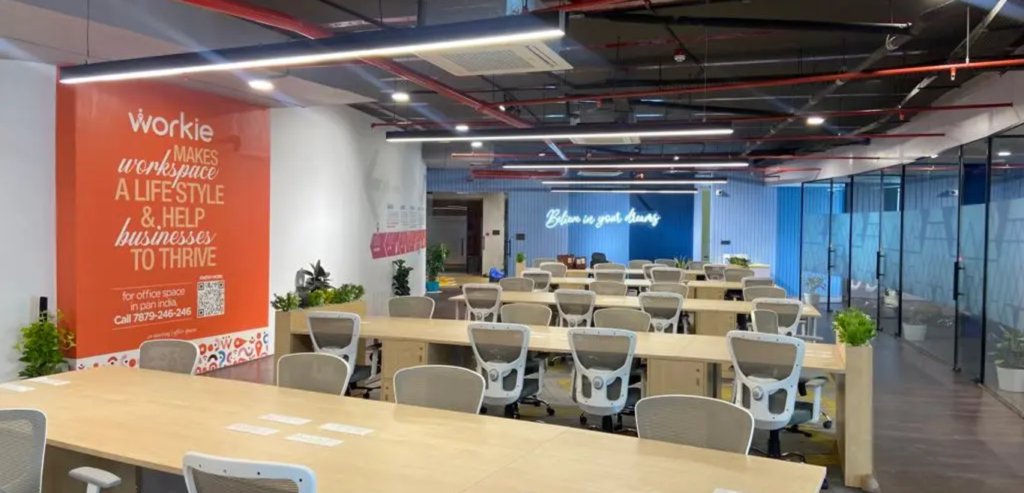
A flexible lease allows businesses to occupy fully functional workspaces without the rigid, long-term commitments associated with conventional real estate. These agreements often operate on a plug-and-play model, where desks, meeting rooms, IT infrastructure, and utilities are bundled into a single monthly fee. Terms can range from month-to-month rolling contracts to customized one-to-two-year agreements.
Benefits for Modern Enterprises
Capital Expenditure (CapEx) Reduction: Traditional leasing requires massive upfront capital for interior design, furniture, HVAC installation, and IT wiring. Flexible spaces eliminate these CapEx requirements, allowing companies to allocate funds toward core business growth.
Scalability: For example, an illustrative mid-size IT firm might win a major contract requiring them to double their headcount for an 18-month project. A flexible lease allows them to seamlessly add desks or private cabins as needed, and subsequently downsize when the project concludes, without breaking lease terms.
Speed to Market: Setting up a traditional office can take months of planning, contractor negotiations, and construction. Flexible spaces allow a business to sign an agreement and move in on the same day.
The Hybrid Work Environment
With many organizations adopting hybrid work models—where employees split their time between home and the office—the necessity for permanent, dedicated desks for every single employee has diminished. Flexible leasing accommodates this shift by allowing companies to lease space based on average daily attendance rather than total headcount.
Key Takeaways: The Rise of the Flexible Office Lease
- Flexible leases eliminate the high upfront capital expenditures required for traditional office fit-outs.
- They provide unmatched scalability, allowing businesses to adjust their spatial requirements in real-time.
- Flexible workspaces perfectly complement modern hybrid work models by offering agility and speed to market.
Strategies for Securing a Discount Office Lease in Sector 136
While premium corporate spaces command premium prices, diligent businesses can optimize their real estate expenditures. Securing a discount office lease in Sector 136 is rarely about finding a “cheap” building; rather, it is about strategic negotiation, timing, and understanding landlord motivations.
Leveraging Lease Tenure for Better Rates
Landlords prioritize stable, long-term rental income. If a business has a predictable growth trajectory and is willing to commit to a longer lock-in period, landlords are often willing to offer a discounted base rent. Guaranteeing occupancy reduces the landlord’s risk of vacancy and the costs associated with finding new tenants.
Unfurnished vs. Furnished Spaces
Companies with existing office furniture or those with highly specific operational needs can often negotiate lower rates by opting for “bare shell” or “warm shell” properties. While this increases the tenant’s initial setup costs, the monthly lease rate is substantially lower than that of a fully furnished, plug-and-play office. Over a multi-year lease, this discount can result in significant cumulative savings.
Negotiating Tenant Improvement (TI) Allowances
Instead of a direct discount on the monthly rent, businesses can negotiate for a Tenant Improvement allowance. In this scenario, the landlord provides a set amount of funding to help the tenant build out the space. This effectively subsidizes the cost of moving and setup, easing the financial burden on the tenant’s cash flow.
Evaluating Off-Peak Real Estate Cycles
Commercial real estate operates in cycles. When new commercial towers are completed and a large volume of inventory enters the market simultaneously, landlords may offer introductory discounts or extended rent-free fit-out periods to attract anchor tenants quickly. Identifying these market windows is key to negotiating a value-driven lease.
Key Takeaways: Strategies for Securing a Discount Office Lease
- Committing to a longer lock-in period is one of the strongest levers for negotiating a lower monthly rent.
- Opting for bare-shell spaces can reduce monthly leasing costs, though it requires upfront investment in fit-outs.
- Negotiating Tenant Improvement (TI) allowances can effectively subsidize the cost of customizing a new office space.
Let’s Connect India and the Managed Workspace Revolution
As the demand for agility grows, managed workspace providers have become integral to the commercial real estate ecosystem. Brands like Let’s Connect India represent a modernized approach to corporate real estate, blending physical infrastructure with hospitality and community management.
The Value Proposition of Managed Spaces
Managed workspaces bridge the gap between traditional leasing and standard coworking. While a standard coworking space might cater primarily to freelancers and micro-startups, managed spaces provide enterprise-grade environments tailored to established businesses. Providers like Let’s Connect India focus on delivering customized private offices, dedicated enterprise suites, and comprehensive facility management.
Key Amenities and Infrastructure
Choosing a managed workspace means shifting the burden of office administration to a third party. Providers typically handle:
High-Speed Enterprise IT: Ensuring robust, secure internet connectivity with failovers.
Ergonomic Furniture: Providing modern, health-conscious seating and desk arrangements.
Meeting and Conference Facilities: Offering access to fully equipped boardrooms with audio-visual technology, payable on a pay-per-use basis or included in a monthly allowance.
Pantry and Housekeeping: Managing daily cleaning, hygiene maintenance, and cafeteria supplies.
Community and Networking
Beyond physical infrastructure, premium workspace providers foster a collaborative community. Operating in a shared building ecosystem allows businesses to network, collaborate, and cross-pollinate ideas. For instance, an illustrative marketing agency operating out of a managed workspace might naturally find synergy and client opportunities with a software development firm located on the same floor.
Operational Simplification
By consolidating rent, electricity, maintenance, security, and internet into a single monthly invoice, businesses drastically simplify their accounting and operations. This allows the executive team to focus entirely on core business activities rather than dealing with multiple facility vendors.
Key Takeaways: Let’s Connect India and Managed Workspaces
- Managed workspace providers like Let’s Connect India offer enterprise-grade facilities without the administrative burden of traditional offices.
- They provide access to premium amenities, including ergonomic furniture, secure IT infrastructure, and professional meeting rooms.
- Consolidating facility costs into a single invoice simplifies operations and allows businesses to focus on growth.
Legal Due Diligence and Compliance
Before signing a commercial property lease in Sector 136 Noida, comprehensive legal due diligence is non-negotiable. Commercial disputes can be costly and disruptive to business operations.
Verifying Title and Ownership
It is critical to ensure that the party leasing the property holds a clear and unencumbered title. Businesses must review the ownership documents, building plan approvals, and occupancy certificates (OC) issued by the relevant Noida authorities. Operating in a building without a valid OC can lead to sudden eviction or regulatory penalties.
Understanding Termination and Force Majeure Clauses
A robust lease agreement must clearly define the conditions under which either party can terminate the contract. It should outline notice periods and any penalties involved. Additionally, the inclusion of a comprehensive *force majeure* clause is vital to protect the business from liability in the event of unforeseeable circumstances (such as natural disasters) that render the property unusable.
Subleasing Rights
Future-proofing a business requires flexibility. If a company overestimates its spatial needs, the ability to sublease a portion of the office can mitigate financial losses. The lease agreement must explicitly state whether subleasing is permitted and under what conditions the landlord’s approval is required.
Registration and Stamp Duty
In India, lease agreements extending beyond 11 months must be legally registered. The cost of stamp duty and registration fees is typically shared between the landlord and the tenant, though this is subject to negotiation. Unregistered long-term leases do not hold evidentiary value in a court of law.
Key Takeaways: Legal Due Diligence and Compliance
- Always verify the landlord’s title and ensure the commercial building possesses a valid Occupancy Certificate (OC).
- Carefully review termination, notice period, and *force majeure* clauses to protect the business against unforeseen disruptions.
- Ensure that any lease exceeding 11 months is properly registered and applicable stamp duty is paid to ensure legal enforceability.
Future Outlook for Workspace Planning
The landscape of commercial real estate is undergoing continuous evolution. As businesses look toward the future in hubs like Sector 136, several trends are dictating how space is leased and utilized.
The Flight to Quality
There is a noticeable shift in tenant preference toward “Grade A” commercial buildings. Businesses are prioritizing properties that offer superior air quality, abundant natural light, energy-efficient systems, and comprehensive safety protocols. High-quality workspaces are increasingly viewed as a tool for talent attraction rather than just an operational expense.
Focus on Sustainability
Environmental, Social, and Governance (ESG) criteria are becoming critical factors in corporate real estate decisions. Modern enterprises prefer buildings with green certifications, sustainable waste management systems, and energy-efficient lighting and HVAC configurations.
Data-Driven Space Utilization
As companies navigate hybrid work models, they are utilizing workspace analytics to make leasing decisions. By understanding peak attendance days, meeting room utilization rates, and desk-to-employee ratios, businesses can accurately project their spatial needs, preventing them from over-leasing space they do not actively use.
Key Takeaways: Future Outlook for Workspace Planning
- Tenants are increasingly seeking “Grade A” properties to enhance employee well-being and assist in talent retention.
- Sustainable building practices and ESG compliance are playing a larger role in commercial leasing decisions.
- Data analytics are helping businesses optimize their space utilization, ensuring they only lease the square footage they truly need.
Frequently Asked Questions (FAQs)
1. What makes Sector 136 Noida a good location for a commercial lease?
Sector 136 offers excellent connectivity via the Noida-Greater Noida Expressway, proximity to established residential areas for talent acquisition, and a thriving ecosystem of corporate and IT businesses.
2. What is the difference between a traditional lease and a flexible office lease?
A traditional lease usually involves a long-term commitment (often 3-9 years) where the tenant handles the interior fit-out and facility management. A flexible lease offers shorter, adaptable terms in fully furnished, managed environments where amenities and utilities are included in a single fee.
3. How can I secure a discount office lease in Sector 136?
Securing a favorable rate often involves negotiating a longer lock-in period, taking on a bare-shell space instead of a furnished one, or negotiating for Tenant Improvement allowances to offset setup costs.
4. What are CAM charges in a commercial lease?
CAM stands for Common Area Maintenance. These are charges paid by the tenant for the upkeep, security, power backup, and cleaning of the building’s shared spaces, such as lobbies, elevators, and parking areas.
5. What is the difference between carpet area and super built-up area?
The carpet area is the actual usable floor space inside your office walls. The super built-up area includes the carpet area plus a proportionate share of the building’s common areas. Rent is typically charged on the super built-up area.
6. What role do providers like Let’s Connect India play in the market?
Providers like Let’s Connect India offer managed, flexible workspaces. They provide enterprise-grade infrastructure, administrative support, and community environments, allowing businesses to operate without managing the day-to-day facilities.
7. What is a lock-in period?
A lock-in period is a defined timeframe in a lease agreement during which neither the tenant nor the landlord can terminate the contract without paying a financial penalty.
8. Are startups better suited for traditional or flexible leases?
Due to the unpredictable growth trajectory of startups, flexible leases are generally more suitable. They require lower upfront capital and allow the startup to scale their desk space up or down as needed.
9. Is it necessary to register a commercial lease agreement?
Yes, under Indian law, any lease agreement that has a tenure exceeding 11 months must be officially registered, and the appropriate stamp duty must be paid for it to be legally enforceable.
10. What is an escalation clause?
An escalation clause is a provision in the lease agreement that outlines how much and how often the rent will increase over the tenure of the lease.
Conclusion
Securing a commercial property lease in Sector 136 Noida is a major strategic milestone that can significantly impact a company’s operational efficiency, financial health, and company culture. Whether an organization chooses the predictability of a long-term traditional lease, seeks the agility of a flexible office lease in Sector 136, or successfully negotiates a discount office lease in Sector 136 by leveraging market timing, the key to success lies in thorough preparation and due diligence.
As the workspace landscape continues to evolve, traditional barriers to entry are falling. Innovative workspace providers, exemplified by brands like Let’s Connect India, are democratizing access to premium, enterprise-grade facilities without the burdensome capital expenditures of the past. By understanding real estate metrics, prioritizing legal compliance, and aligning spatial requirements with long-term business goals, business leaders can transform their office space from a mere overhead cost into a powerful asset for growth.
Ready to find the perfect workspace for your growing business? Evaluate your team’s spatial needs today, explore the diverse leasing options available in Sector 136 Noida, and partner with reputable workspace providers to design an environment that drives productivity and innovation.