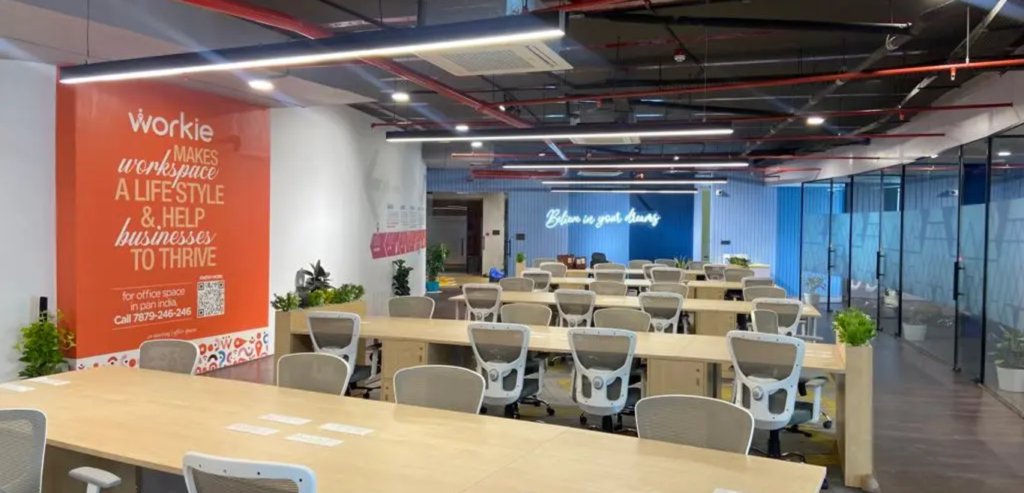
In the modern business landscape, the physical environment in which a company operates plays a foundational role in its operational trajectory. For early-stage companies and scaling enterprises alike, traditional commercial real estate often presents rigid barriers.
Long-term lease commitments, high initial capital expenditures, and the administrative burden of facilities management can divert critical resources away from product development and market expansion. As a result, the paradigm has shifted toward flexible, dynamic environments, making shared offices for startup growth a central pillar of modern business strategy.
The transition from conventional leases to flexible workspaces fundamentally alters how young companies approach scaling. Instead of treating an office as a fixed asset with sunk costs, startups can now leverage their workspace as an adaptable service.
This evolution is particularly visible in rapidly developing business and technology hubs where agility is paramount. Choosing a workspace is no longer just about acquiring desks and chairs; it is about plugging into an ecosystem designed to remove administrative friction and foster professional synergies.
For businesses looking to establish a presence in strategic regions, the search for the right infrastructure often leads away from a traditional office for rent in Noida, for instance, and toward integrated coworking environments. By operating in specialized hubs, startups position themselves alongside peers, potential clients, and industry veterans.
This comprehensive guide explores the structural, financial, and strategic mechanisms through which shared workspaces accelerate business development, offering an authoritative look at how the right physical or virtual footprint can catalyze operational success.
Core Mechanics of Shared Offices for Startup Growth
The foundational advantage of a shared office environment is operational agility. Traditional office spaces require businesses to accurately predict their headcount years in advance. For a startup, where growth trajectories can change dramatically month over month, this prediction is virtually impossible. A miscalculation typically results in either paying for unused space or dealing with overcrowded, unproductive work environments.
Shared offices for startup growth solve this forecasting dilemma through intrinsic scalability. Flexible workspaces allow organizations to adjust their spatial requirements on demand. A company can begin with a small private office or a cluster of dedicated desks and seamlessly expand its footprint as the team grows. This eliminates the frictional costs of breaking leases, relocating, and setting up new infrastructure.
Beyond spatial flexibility, shared environments provide an enterprise-grade infrastructure that most startups could not afford independently. High-speed, secure internet networks, advanced meeting room technologies, ergonomic furniture, and climate-controlled environments are managed entirely by the workspace provider. By outsourcing facilities management, startup founders and core teams reclaim valuable time and mental bandwidth.
Illustrative Scenario:
Consider a newly funded software company. In a traditional setting, the founders would spend weeks negotiating leases, coordinating with internet service providers, purchasing furniture, and hiring administrative staff. In a shared workspace, the same founders can sign an agreement on a Monday and have their entire engineering team fully operational by Tuesday morning, focusing entirely on writing code and acquiring customers.
Key Takeaways: The Core Mechanics
- On-Demand Scalability: Shared offices allow businesses to expand or contract their physical footprint without the penalties of traditional commercial leases.
- Outsourced Facilities Management: Eliminating the administrative burden of running an office allows startups to focus strictly on core operational goals.
- Enterprise-Grade Infrastructure: Startups gain immediate access to premium technological and physical amenities that enhance daily productivity.
Financial Efficiency: Shifting Capital to Growth
Financial preservation is a critical survival mechanism for any emerging business. The traditional commercial real estate model heavily relies on Capital Expenditure (CapEx). Securing a standard lease typically requires substantial security deposits, build-out costs, interior design investments, and the outright purchase of office equipment. For a startup, tying up capital in static assets directly impedes the ability to invest in talent, marketing, and product refinement.
Shared offices fundamentally shift this financial model from CapEx to Operational Expenditure (OpEx). Instead of a massive upfront investment, startups pay a predictable, all-inclusive monthly or annual fee. This fee generally covers rent, utilities, cleaning services, security, internet, and maintenance. When analyzing the total cost of occupancy, businesses frequently find that flexible spaces offer a highly efficient alternative to managing these diverse expenses independently.
When entrepreneurs search for an office for rent in Noida or similar commercial hubs, the hidden costs of traditional leases—such as maintenance delays, equipment depreciation, and utility fluctuations—must be factored into the decision. Flexible workspaces insulate startups from these unpredictable variables. The predictability of an all-inclusive invoice simplifies financial forecasting and runway calculation, which is essential when reporting to investors or managing tight cash flows.
Furthermore, the shared model democratizes access to high-end facilities. The cost of building and maintaining a premium boardroom, complete with video conferencing hardware, is distributed among all the tenants of a coworking space. A startup pays a fraction of the cost for access to these facilities, utilizing them only when needed.
Key Takeaways: Financial Efficiency
- CapEx to OpEx Conversion: Shared offices eliminate heavy upfront capital requirements, preserving funds for business development.
- Predictable Overhead: All-inclusive billing insulates startups from fluctuating utility costs and unexpected maintenance expenses.
- Fractional Cost for Premium Assets: Businesses enjoy high-end amenities like boardrooms and lounge areas without bearing the full cost of construction and upkeep.
Cultivating Collaboration and Networking Opportunities
While the financial and administrative benefits of flexible workspaces are compelling, the intangible benefits of community often drive long-term value. Shared offices for startup growth act as physical aggregators of talent, ambition, and industry diversity. Operating in isolation limits a startup’s exposure to new ideas, potential partnerships, and spontaneous problem-solving.
Coworking environments are inherently designed to foster interaction. Communal lounges, shared cafeterias, and strategically designed breakout areas naturally encourage cross-pollination between different companies. In these environments, it is common for a technology startup to operate alongside a boutique marketing agency, a legal consultancy, and freelance financial advisors. This proximity lowers the barrier to B2B collaboration.
Many workspace operators actively cultivate this ecosystem by hosting professional development workshops, networking mixers, and investor pitch sessions. These curated events provide startup founders with direct access to local business networks that might otherwise take years to penetrate.
Illustrative Scenario:
A mid-sized e-commerce startup operating in a shared space might face an unexpected challenge with its digital advertising strategy. In a traditional office, the founders would need to initiate a formal search for an external agency. In a shared environment, they might simply walk down the hall to consult with an advertising specialist working in the same building, leading to a rapid, trust-based vendor relationship.
Key Takeaways: Collaboration and Networking
- Organic Cross-Pollination: Proximity to diverse businesses naturally encourages knowledge sharing and innovative problem-solving.
- Frictionless B2B Relationships: Operating in a shared environment allows startups to easily source local vendors, partners, and even clients.
- Curated Ecosystem Events: Professional workshops and networking sessions provided by the workspace operator accelerate local business integration.
Strategic Location and Talent Acquisition
The geographical location of an office heavily influences a startup’s brand perception, client accessibility, and talent acquisition capabilities. Establishing a headquarters in a recognized business district signals legitimacy and stability to prospective clients and investors. However, prime real estate is traditionally cost-prohibitive for early-stage companies.
Shared workspaces bridge this gap by offering premium addresses at accessible price points. For companies looking to establish a presence in Northern India’s thriving tech and business corridors, securing a workspace in Noida has become a strategic priority. The city’s infrastructure, connectivity to the national capital region, and influx of skilled professionals make it a prime location for enterprise development.
Specifically, establishing a presence in established micro-markets is highly advantageous. Utilizing a coworking space in Noida Sector 62, for example, places a startup in the heart of a recognized IT and institutional hub. This specific location offers excellent metro connectivity, making the daily commute manageable for top-tier talent.
Talent acquisition is directly impacted by workspace quality and location. Modern professionals evaluate prospective employers not just on salary, but on the quality of the work environment. A vibrant, well-designed coworking Noida location with premium amenities, ergonomic design, and a lively surrounding neighborhood serves as a powerful recruiting tool. It allows a nascent startup to offer a workplace experience that rivals those of established multinational corporations.
Key Takeaways: Strategic Location
- Enhanced Brand Legitimacy: Operating from a premium business district instantly elevates a startup’s professional image.
- Advantageous Micro-Markets: Targeting established hubs, such as a coworking space in Noida Sector 62, ensures excellent connectivity and proximity to industry peers.
- Competitive Talent Attraction: High-quality shared workspaces serve as a compelling benefit when recruiting top-tier professionals who value their working environment.
Scaling with Remote and Hybrid Models
The modern definition of an office has expanded beyond a physical desk. As remote and hybrid work models become permanent fixtures of the global economy, startups require infrastructure that supports distributed teams. Shared offices seamlessly accommodate these modern workflows.
For startups operating primarily remotely, maintaining a professional corporate identity remains necessary for legal compliance, investor relations, and client trust. This is where the concept of a virtual office becomes invaluable. A Noida virtual office, for example, provides a business with a premium mailing address, professional mail handling services, and a dedicated local phone number with call-forwarding capabilities—all without the cost of leasing physical square footage.
Virtual offices are instrumental during the initial phases of startup growth. They fulfill the administrative requirements for official company registration and local tax compliance. When remote founders need to meet with stakeholders or investors, they can utilize the meeting rooms and day-passes available at their virtual office provider’s physical location, ensuring a professional presentation.
As a startup transitions from fully remote to a hybrid model, flexible workspace providers can easily adapt the service. A company might upgrade from a virtual office to a package that includes hot-desking access for local employees a few days a week, scaling up to private office suites only when the core team requires permanent, collaborative space.
Key Takeaways: Remote and Hybrid Scaling
- Professional Corporate Identity: Virtual offices provide a premium business address and communication handling without the need for a physical footprint.
- Administrative and Legal Compliance: A designated virtual business address fulfills the requirements for company registration and official documentation.
- Seamless Hybrid Transition: Startups can easily transition from virtual setups to physical hot-desks and private offices as their hybrid workforce models evolve.
Choosing the Right Partner for Workspace Solutions
Realizing the full benefits of shared offices for startup growth depends heavily on selecting the appropriate workspace provider. The market is diverse, ranging from bare-bones budget spaces to premium, hospitality-driven environments. Startup leaders must evaluate providers based on their specific operational needs, growth projections, and company culture.
When evaluating a workspace in Noida or any major commercial center, several criteria must be rigorously assessed:
- Technological Resilience: The workspace must offer redundant, high-speed internet infrastructure and secure networks to protect sensitive intellectual property.
- Acoustics and Privacy: While open-plan environments foster collaboration, startups also require soundproof phone booths and private meeting rooms for confidential discussions and focused work.
- Flexibility of Terms: The ideal provider will offer transparent, adaptable contracts that do not lock the startup into punishing long-term commitments if their circumstances change.
- Community Management: A proactive community management team is essential. They act as the operational backbone of the space, handling guest reception, mail sorting, and facility troubleshooting.
Aligning with recognized, established operators can significantly reduce operational friction. Providers like Lets Connect India represent the standard of integrated workspace solutions, focusing on creating environments that balance professional amenities with community-driven experiences. Partnering with a comprehensive provider ensures that the workspace acts as an enabler of growth, rather than a landlord managing a static asset.
Key Takeaways: Choosing a Partner
- Assess Technological Infrastructure: Ensure the provider guarantees secure, high-speed, and redundant internet connectivity.
- Balance Openness with Privacy: A functional workspace must provide quiet zones and soundproof areas alongside collaborative open spaces.
- Value Community Management: Select operators that provide proactive, hospitable on-site staff to manage daily administrative functions seamlessly.
Frequently Asked Questions (FAQ)
1. What exactly constitutes a shared office for startup growth?
A shared office is a flexible, fully equipped commercial workspace utilized by multiple distinct businesses, freelancers, and remote workers. For startups, these spaces act as growth catalysts by providing enterprise-grade infrastructure, administrative support, and networking opportunities on a flexible, subscription-based model, rather than a rigid traditional lease.
2. How does a flexible workspace differ from a traditional office for rent in Noida?
A traditional office for rent typically requires a multi-year lease, a significant security deposit, and internal management of utilities, cleaning, and internet setup. A flexible workspace or coworking space provides a plug-and-play environment where all utilities, furniture, and maintenance are included in a single, predictable monthly fee, with contract terms ranging from daily passes to annual agreements.
3. Are shared offices secure enough for technology startups handling sensitive data?
Reputable shared workspace providers implement robust security measures. This includes enterprise-grade network security with segregated VLANs, secure Wi-Fi protocols, and physical security measures such as keycard access, CCTV surveillance, and lockable private office suites. Startups with high security requirements can usually request dedicated bandwidth and specialized physical access controls.
4. Can my startup use a coworking space for official company registration?
Yes. Most premium workspace providers offer official business address services. This allows startups to use the workspace address for official government registrations, tax documentation, and corporate bank accounts. This service is often a core component of a virtual office package or included with dedicated desk and private office memberships.
5. What is a Noida virtual office, and who should use it?
A virtual office provides a business with a professional corporate address, mail handling, and phone answering services without granting permanent physical desk space. It is ideal for fully remote startups, international companies establishing a local presence, or early-stage founders who need a professional image and administrative compliance without the cost of a physical commute.
6. Why is a coworking space in Noida Sector 62 considered advantageous?
Sector 62 is one of the most established institutional and IT hubs in the region. Choosing a workspace here places a startup in close physical proximity to major multinational corporations, technical institutions, and a vast pool of IT talent. Furthermore, the area features excellent public transportation connectivity, making it highly accessible for employees and visiting clients.
7. How do shared workspaces support employee well-being and retention?
Modern shared workspaces are designed with an emphasis on ergonomics, natural light, and employee comfort. Providers often include amenities such as premium coffee bars, wellness rooms, breakout lounges, and curated community events. These hospitality-driven elements create a vibrant working environment that boosts employee morale, reduces burnout, and serves as a strong retention tool.
8. Will a shared workspace accommodate my company if we rapidly double in size?
Yes, inherent scalability is a primary benefit of these spaces. If a startup doubles its headcount, the workspace management can typically upgrade the company from a small private suite to a larger office, or add adjacent dedicated desks. This seamless transition occurs without the business needing to change its address or undergo a disruptive physical relocation.
9. Do shared offices only benefit early-stage tech startups?
While highly popular with tech startups, shared offices are utilized by a wide spectrum of businesses. Legal firms, marketing agencies, financial consultancies, non-profit organizations, and even satellite teams from large, established multinational corporations utilize flexible workspaces to maintain agility and reduce overhead costs.
10. How do community events in shared workspaces translate to tangible business growth?
Community events—ranging from casual networking breakfasts to formal investor pitch days—break down the silos of traditional office environments. They allow founders to meet potential B2B clients, source local vendors, and find mentors. These organic interactions often lead to strategic partnerships, accelerated problem solving, and an expanded local client base.
Conclusion
The operational landscape for modern enterprises requires adaptability, financial prudence, and strategic networking. Utilizing shared offices for startup growth addresses these necessities by transforming commercial real estate from a rigid liability into a flexible, service-oriented asset. By eliminating the heavy capital expenditures and administrative burdens associated with traditional leases, startups can channel their resources directly into product development, talent acquisition, and market expansion.
Whether a company is leveraging a fully equipped coworking Noida location to attract top engineering talent, or utilizing a Noida virtual office to establish a compliant, professional remote presence, the right workspace strategy is integral to scaling successfully. Ecosystems managed by established providers such as Lets Connect India offer the infrastructure, community, and strategic locations—like a premium coworking space in Noida Sector 62—necessary to elevate a brand’s trajectory.
Take the Next Step. Evaluate your current operational footprint and discover how transitioning to a flexible workspace model can accelerate your business objectives. Explore premium workspace solutions today to find an environment tailored to your startup’s unique growth journey.