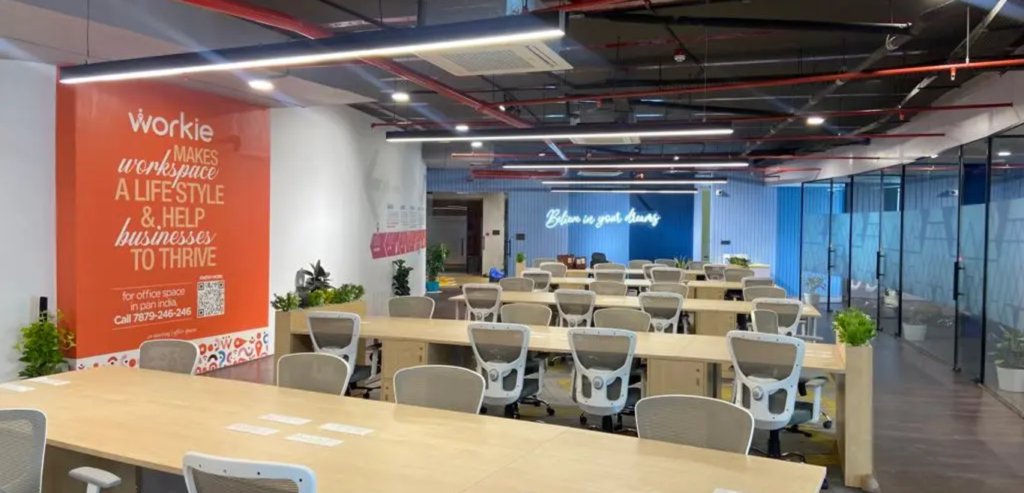
In the modern corporate landscape, commercial real estate represents one of the most significant line items in any organizational budget. As work patterns evolve and businesses seek greater financial agility, leadership teams are increasingly scrutinizing how they acquire and utilize physical office space.
One of the most critical dilemmas in this spatial planning process involves collaborative areas. Organizations must carefully evaluate the ROI of renting and building meeting rooms to ensure they are not over-capitalizing on underutilized assets or, conversely, lacking the necessary infrastructure to conduct essential business operations.
Deciding whether to construct dedicated meeting rooms within a privately leased office or to utilize on-demand meeting spaces in shared environments requires a thorough financial and operational analysis.
Building a meeting room is a capital-intensive project that requires long-term commitment, maintenance, and spatial dedication. Renting a meeting room shifts this dynamic, transforming capital expenditures into operational expenditures and offering high levels of scalability.
This comprehensive guide explores the principles of workspace economics, detailing the hidden costs, opportunity costs, and strategic advantages associated with both models. By understanding the operational frameworks behind these choices, decision-makers can accurately assess the ROI of renting and building meeting rooms and align their real estate strategies with broader business objectives.
Understanding the True Cost of Building Meeting Rooms
To accurately calculate the ROI of renting and building meeting rooms, organizations must first deconstruct the costs associated with traditional construction and maintenance. Building an in-house collaborative space extends far beyond simply erecting four walls and purchasing a table. It involves a complex matrix of capital expenditures (CapEx) and operational expenditures (OpEx).
Capital Expenditures (CapEx)
When a company decides to build a meeting room, it assumes all upfront financial responsibilities. These typically include:
- Architectural and Construction Costs: This involves design fees, permits, framing, drywall, specialized soundproofing, acoustic paneling, and high-quality glass partitions to maintain office aesthetics while ensuring privacy.
- Technology and AV Infrastructure: Modern meeting rooms require sophisticated technological integrations. This includes high-definition displays, interactive whiteboards, pan-tilt-zoom (PTZ) cameras, omnidirectional microphones, integrated speakers, and the underlying cabling and network infrastructure to support seamless video conferencing
- Furniture and Fixtures: Ergonomic seating, large-scale customized conference tables with integrated power delivery, specialized lighting, and climate control fixtures are essential for a professional environment.
Operational Expenditures (OpEx)
The financial commitment does not end once construction is complete. The ongoing operational costs heavily influence the ROI of renting and building meeting rooms:
- Real Estate Footprint Cost: A meeting room occupies valuable square footage. Every hour the room sits empty, the organization is still paying a premium for that space through its overarching lease.
- Technological Obsolescence and Maintenance: Audio-visual equipment requires constant updates, software licensing for conferencing platforms, and IT troubleshooting. Hardware depreciates and eventually requires complete replacement to maintain professional standards.
- Facility Upkeep: Daily cleaning, HVAC maintenance, and general wear-and-tear repairs add to the monthly operational burden.
Key Takeaways
- Building a meeting room requires substantial upfront capital expenditure.
- The total cost of ownership includes ongoing maintenance, technological upgrades, and the base lease cost of the square footage occupied.
- In-house meeting rooms run the risk of technological obsolescence, requiring further investment over time.
The Financial Mechanics of Renting Meeting Rooms
The alternative to constructing private facilities is leveraging the flexible real estate market. Renting meeting rooms on demand fundamentally alters the financial mechanics of workspace management, heavily impacting the ROI of renting and building meeting rooms.
Transitioning from CapEx to OpEx
By renting meeting spaces—often found within a larger coworking space or flexible office environment—companies avoid the massive upfront capital expenditures detailed in the previous section. Instead, these costs are shifted to a predictable, scalable operational expense. Organizations pay only for the time and space they actively utilize.
Zero Maintenance and Administrative Burden
When utilizing external meeting rooms, the facility provider absorbs the cost and logistical burden of maintenance. The IT infrastructure, high-speed internet, audiovisual equipment, and facility cleanliness are managed entirely by the space provider.
If a projector fails or a microphone requires a software update, the host facility’s IT team handles the resolution, eliminating the need to divert the renting company’s internal resources.
Premium Amenities and Scalability
Renting allows organizations to select spaces tailored exactly to their immediate needs. For example, an illustrative scenario might involve a mid-size consulting firm that typically requires a small four-person huddle room for weekly catch-ups but needs a massive, premium boardroom with top-tier catering amenities once a quarter for stakeholder presentations.
Renting on-demand allows this company to scale its space usage infinitely without paying year-round for a boardroom that remains empty 95% of the time.
Key Takeaways
- Renting meeting rooms shifts financial obligations from rigid CapEx to flexible OpEx.
- All facility maintenance, IT troubleshooting, and cleaning are handled by the space provider.
- Organizations benefit from spatial scalability, renting exactly the right size room for specific, immediate needs.
Calculating the ROI of Renting and Building Meeting Rooms
To make a financially sound decision, businesses must understand the conceptual formula for determining the ROI of renting and building meeting rooms. Because every business operates under different geographical and operational constraints, the focus must be on utilization rates and opportunity costs.
Measuring Utilization Rates
The utilization rate is the cornerstone of meeting room ROI. It is calculated conceptually by taking the total hours a meeting room is actively used and dividing it by the total available working hours in a month.
If an organization builds a large conference room but its utilization rate is consistently low, the cost per use skyrockets. The ROI of building is generally positive only when utilization rates are exceptionally high—meaning the room is booked and occupied for the vast majority of the workweek.
Evaluating Opportunity Cost
When evaluating the ROI of renting and building meeting rooms, companies must factor in the opportunity cost of the physical space. If an organization chooses not to build a meeting room, that same square footage could be utilized for revenue-generating activities, such as housing additional sales personnel, expanding a product testing lab, or reducing the overall footprint of the leased office to save on the monthly real estate bill.
An Illustrative Comparison
Consider an illustrative scenario involving a growing enterprise evaluating its spatial needs.
- Scenario A (Building): The enterprise signs a long-term lease for extra square footage, spends capital to construct and furnish a boardroom, and assigns IT staff to maintain it. The total cost is fixed, regardless of whether the room is used twice a week or ten times a week.
- Scenario B (Renting): The enterprise leases a smaller core office without a large boardroom. When a large meeting is required, they book a fully equipped room externally. The enterprise saves on the permanent lease footprint, construction, and IT maintenance.
If the frequency of large meetings is low to moderate, Scenario B mathematically yields a far superior ROI. Scenario A only achieves a better ROI if the enterprise conducts large, high-stakes meetings continuously throughout the week, making external daily rentals cost-prohibitive over time.
Key Takeaways
- Utilization rate is the primary metric for determining whether building or renting yields a better ROI.
- Unused meeting rooms represent a significant financial drain due to the opportunity cost of real estate.
- High-frequency usage generally favors building, while low-to-moderate or fluctuating usage strongly favors renting.
Strategic Advantages of Flexible Workspaces in Urban Hubs
The discussion surrounding the ROI of renting and building meeting rooms is particularly relevant in rapidly expanding commercial hubs. The real estate dynamics in densely populated corporate sectors make flexible workspaces highly attractive.
Leveraging a Coworking Space in Noida
For businesses operating in the National Capital Region (NCR) of India, utilizing a coworking space in Noida can be a highly strategic maneuver. Noida is a booming IT and corporate sector where commercial real estate commands significant premiums.
Instead of committing to long-term, expansive leases to accommodate theoretical future meeting needs, companies can establish a leaner core office and rely on coworking facilities for their collaborative spaces.
A coworking space in Noida typically offers state-of-the-art meeting infrastructure, allowing businesses to impress clients and conduct high-level operational meetings without the burden of long-term real estate management.
The Dynamics of a Coworking Space in Delhi
Similarly, a coworking space in Delhi provides unparalleled access to central business districts. Delhi’s prime real estate is highly competitive. For many growing enterprises, building expansive private boardrooms in central Delhi is simply not cost-effective.
By leveraging external meeting rooms within a coworking space in Delhi, organizations can maintain a prestigious meeting address and access premium amenities while keeping their baseline operational costs strictly controlled.
Networking and Professional Environments
Beyond the pure financial ROI, renting spaces within these urban coworking environments offers qualitative returns. Teams are exposed to dynamic, professional atmospheres that often feature communal lounges, premium coffee bars, and networking opportunities.
These environments can foster a sense of innovation and energy that isolated, poorly maintained internal meeting rooms often lack.
Key Takeaways
- Urban real estate markets make the flexibility of renting meeting rooms highly desirable.
- A coworking space in Noida provides access to high-end infrastructure without premium lease commitments.
- Utilizing a coworking space in Delhi allows businesses to host meetings in prime central districts cost-effectively.
Managed Office Solutions for Enterprise Needs
While freelancers and startups frequently use coworking spaces, larger enterprises might find themselves caught between the desire for flexible meeting space and the need for stringent corporate privacy. This is where managed office solutions bridge the gap, profoundly affecting the ROI of renting and building meeting rooms.
The Role of Managed Offices
A managed office differs from traditional coworking. It is a fully customized, dedicated workspace procured and managed by a third-party provider. The provider handles the initial build-out, the IT infrastructure, and the daily facility management, while the enterprise retains an exclusive, branded environment.
Managed Office Space in Noida
For a large corporation expanding its operations, utilizing a managed office space in Noida can optimize the ROI of their real estate portfolio. In a managed setup, the enterprise can dictate the exact ratio of private workstations to meeting rooms during the design phase.
Because the managed space provider amortizes the cost of construction and maintenance over the term of the agreement, the enterprise avoids the massive initial CapEx shock.
Furthermore, if the enterprise outgrows the space, managed office providers often offer the flexibility to transition to a larger facility within their portfolio without the severe penalties associated with breaking a traditional commercial lease.
Predictability and Brand Control
Managed offices provide the financial predictability of a flex-space model alongside the brand control of a built-to-suit office. The ROI calculation here benefits from precise customization. Enterprises do not pay for shared amenities they do not want, nor do they bear the risk of building infrastructure that might become obsolete. The workspace is managed as a continuous service.
Key Takeaways
- Managed offices offer a hybrid solution, combining dedicated privacy with flexible operational frameworks.
- A managed office space in Noida allows enterprises to establish a customized presence without massive upfront CapEx.
- This model provides high financial predictability and mitigates the risk of real estate underutilization.
Qualitative Factors Influencing Meeting Room ROI
When evaluating the ROI of renting and building meeting rooms, decision-makers must look beyond pure financial spreadsheets. Qualitative factors play a substantial role in the overall return on investment, impacting brand perception, employee morale, and operational reliability.
Client Perception and Brand Image
The environment in which a business hosts its clients speaks volumes about its brand. An aging, in-house meeting room with flickering lights, a scratched table, and outdated video conferencing technology can unconsciously signal a lack of innovation or success to visiting stakeholders.
Conversely, renting a modern, beautifully designed meeting room equipped with the latest technology presents an image of professionalism and success. The ability to host a client in a premium space without having to fund the permanent existence of that space is a major qualitative boost to ROI.
Employee Experience and Productivity
Collaborative environments directly impact how teams work. If internal meeting rooms are chronically overbooked, poorly ventilated, or lack adequate soundproofing, employee frustration rises and productivity falls.
Relying on an external provider ensures that teams have access to professional, purpose-built environments designed specifically to facilitate effective communication and brainstorming.
Technological Reliability
Nothing derails a critical presentation faster than failing AV equipment. When building internal rooms, the onus of troubleshooting falls on the internal staff, burning valuable time. Premium rented meeting spaces and managed offices treat technological reliability as a core product offering.
Ensuring that meetings start on time with seamless connectivity protects the organization’s most valuable asset: the time of its employees and executives.
Key Takeaways
- The quality of a meeting room directly impacts client perception and brand authority.
- Well-designed collaborative spaces reduce employee friction and enhance productivity.
- Outsourcing the responsibility for AV reliability protects valuable executive time.
Frequently Asked Questions (FAQ)
1. What does “ROI” mean in the context of meeting rooms?
Return on Investment (ROI) in this context refers to the value a company gains from a meeting space compared to the financial and operational costs required to acquire and maintain it. It evaluates whether the cost of building or renting the space is justified by its utilization and the successful business outcomes generated within it.
2. What are the hidden costs of building a meeting room in-house?
Hidden costs often include the ongoing opportunity cost of the square footage, HVAC and utility usage, daily cleaning, structural maintenance, AV software licensing, and the eventual cost of replacing depreciated hardware like displays and microphones.
3. How do I calculate the utilization rate of a meeting room?
Utilization rate is conceptually calculated by tracking the total hours a room is occupied for meetings and dividing it by the total available working hours in a given period. A consistently low percentage indicates poor ROI for an in-house build.
4. When is building a meeting room more cost-effective than renting?
Building generally yields a better ROI only if the organization has an exceptionally high, consistent frequency of internal and external meetings that would make the daily or hourly costs of external rentals financially unsustainable over a long period.
5. How does a coworking space in Noida benefit a growing business?
A coworking space in Noida allows businesses to operate in a highly competitive, premium corporate real estate market without committing to long-term leases or the heavy capital expenditures required to build out dedicated office infrastructure.
6. What is the difference between renting a meeting room and a managed office space?
Renting a meeting room usually refers to booking a shared, on-demand space for a few hours or days. A managed office space is an entirely dedicated, customized office environment (including its own meeting rooms) that is built and maintained by a third-party provider for a specific enterprise.
7. Can renting meeting rooms improve client presentations?
Yes. Rented meeting spaces in premium facilities are typically designed by architectural professionals and equipped with top-tier technology. This ensures a flawless, impressive environment that can positively influence client perceptions and negotiations.
8. Why is AV technology a major factor in the ROI of renting and building meeting rooms?
AV technology depreciates rapidly and requires constant maintenance. Building a room means absorbing the initial cost and the eventual replacement costs. Renting a room means the facility provider absorbs the cost of keeping the technology modern and functional.
9. Is it possible to scale meeting room usage if we build our own?
Scaling internal physical infrastructure is incredibly difficult and expensive. If you build a four-person room and your team grows to require a twelve-person room, you must undertake new construction. Renting allows infinite, immediate scalability based on real-time needs.
10. How does the opportunity cost of real estate affect this decision?
Every square foot of a leased office costs money. If a large meeting room sits empty, the company is still paying rent on that footprint. That same space could otherwise be used for revenue-generating staff or eliminated entirely to reduce the company’s baseline real estate costs.
Conclusion
Evaluating the ROI of renting and building meeting rooms is a critical exercise in corporate financial planning. While traditional paradigms often favored building permanent internal infrastructure, the modern emphasis on agility, capital preservation, and operational efficiency has heavily shifted the balance.
For businesses with fluctuating collaborative needs, transitioning from rigid capital expenditures to flexible operational expenditures by renting spaces ensures that resources are allocated efficiently. By carefully analyzing utilization rates, understanding opportunity costs, and factoring in the value of premium amenities, organizations can make intelligent, data-driven real estate decisions.
Whether you are seeking occasional boardrooms in a dynamic coworking space in Delhi, looking for agile solutions within a coworking space in Noida, or require the dedicated infrastructure of a managed office space in Noida, partnering with the right workspace provider is paramount.
Lets Connect India provides premium, scalable workspace solutions designed to optimize your operational footprint. With state-of-the-art facilities and flexible frameworks tailored to your business needs, Lets Connect India ensures that your collaborative spaces drive growth, foster innovation, and deliver maximum return on investment. Contact Lets Connect India today to elevate your workspace strategy.