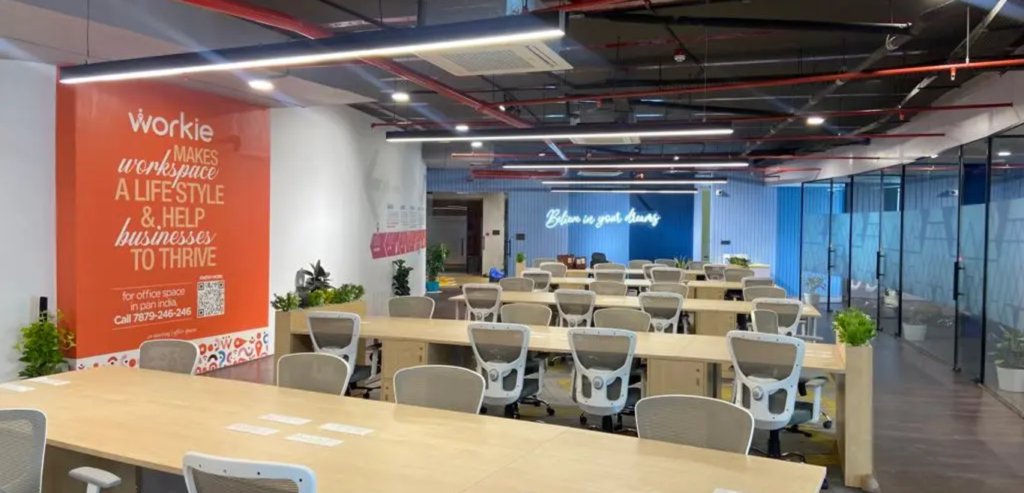
The commercial real estate landscape is undergoing a fundamental transformation. For decades, the standard approach to securing a workspace involved long-term commitments, extensive capital investment, and complex facility management. Today, organizational agility and shifting workforce expectations have introduced new models of real estate procurement. At the center of this evolution is the ongoing debate between fixed vs flexible office leases.
Choosing the right real estate strategy is a critical operational decision. It impacts cash flow, talent acquisition, brand perception, and the ability to scale. As companies evaluate their long-term footprint, they must weigh the permanence and control of a traditional fixed lease against the agility and convenience of flexible models, such as coworking environments or a fully outfitted plug and play office space.
This comprehensive guide explores the structural differences, financial implications, and operational realities of fixed versus flexible workspaces. It also examines regional trends, particularly the growing demand for office leasing in Noida, where infrastructural development is rapidly attracting enterprises of all sizes.
Whether a business requires the foundational stability of a conventional lease or the turnkey readiness of a managed office space in Noida, understanding these core principles is the first step toward building an effective real estate strategy.
Understanding Fixed Office Leases
A fixed office lease, often referred to as a traditional or conventional lease, represents the historical standard for commercial real estate. In this model, a tenant rents a designated amount of square footage directly from a landlord for a specified, typically long-term period.
Core Characteristics of Traditional Leasing
Fixed leases are defined by their permanence. Tenants sign contracts that span multiple years, committing to a set monthly rent regardless of whether the business grows, shrinks, or changes its operational model during that timeframe.
These spaces are frequently leased in a “bare shell” or “warm shell” condition. A bare shell implies the tenant receives four walls and a concrete floor, requiring them to design, build, and finance the entire interior infrastructure—from HVAC systems and plumbing to meeting rooms and workstation cabling. A warm shell may provide basic ceilings and lighting, but the tenant remains responsible for the customized fit-out.
The Advantages of the Fixed Model
The primary benefit of a fixed lease is absolute control. Because the tenant is responsible for the interior build-out, the space can be architecturally tailored to exact specifications. This is particularly advantageous for organizations with highly specialized requirements, such as heavy on-site servers, specialized security protocols, or custom client-facing areas designed to reflect strict brand guidelines.
Furthermore, fixed leases offer long-term geographic stability. By locking in a location for several years, a business establishes a permanent address, which can project an image of longevity and reliability to clients, investors, and employees.
The Challenges of the Fixed Model
The inherent rigidity of a fixed lease presents notable challenges. The foremost obstacle is the capital expenditure (CapEx) required upfront. Designing, constructing, and furnishing a bare-shell office requires significant financial reserves before the business can even begin operating in the space.
Additionally, fixed leases place the burden of facility management entirely on the tenant. Everything from routine cleaning and security to repairing a broken air conditioning unit becomes the responsibility of the organization’s internal operations team.
Finally, traditional leases lack spatial agility; if a business rapidly doubles in headcount, it cannot easily expand its square footage without leasing a secondary location or breaking its current lease at a substantial penalty.
Illustrative Scenario: The Traditional Corporate Headquarters
For example, a large, legacy financial institution might opt for a fixed lease. The institution requires bank-grade security infrastructure, dedicated private executive suites, and a highly branded, opulent reception area to host high-net-worth clients. Because they have highly predictable headcount projections and access to substantial capital, the upfront investment in a 10-year fixed lease aligns perfectly with their need for total environmental control.
Key Takeaways: Fixed Office Leases
- Best for: Organizations with predictable headcounts, specific architectural needs, and large capital reserves.
- Financial Structure: High upfront CapEx for build-outs; predictable, fixed monthly rental costs.
- Operational Control: Complete authority over design, branding, and IT infrastructure.
- Flexibility: Low; difficult to scale space up or down mid-lease without financial penalties.
Understanding Flexible Office Leases
As business cycles accelerate, the demand for agility has given rise to the flexible office lease. This model shifts commercial real estate from a physical asset to a procured service, fundamentally altering how companies occupy space.
Core Characteristics of Flexible Leasing
Flexible leases operate on a fundamentally different legal and operational structure than conventional leases. Often structured as license agreements rather than traditional lease deeds, these arrangements allow businesses to occupy space on a shorter-term basis. Contracts can range from month-to-month agreements to multi-year commitments, offering a sliding scale of flexibility.
The defining feature of a flexible lease is that the space comes fully prepared for immediate occupation. The operator provides the desks, chairs, internet infrastructure, utility connections, and communal amenities.
The Advantages of the Flexible Model
The primary advantage of flexible leasing is operational agility. Businesses can bypass the lengthy processes of interior design, contractor negotiation, and furniture procurement. They can sign an agreement and move their teams into the workspace almost immediately.
This model also shifts the financial burden from capital expenditure (CapEx) to operational expenditure (OpEx). Because the workspace provider has already absorbed the cost of the fit-out, the tenant pays a comprehensive monthly fee that bundles rent, utilities, internet, and maintenance. This preserves the organization’s working capital, allowing funds to be redirected toward core business activities like research and development or marketing.
Furthermore, flexible spaces allow for rapid scalability. If a company wins a major contract and needs to add new employees, they can easily add more desks or move to a larger suite within the same facility, subject to availability.
The Challenges of the Flexible Model
While agility is highly beneficial, flexible leases do require compromises. In standard coworking environments, tenants share amenities such as pantries, meeting rooms, and reception areas with other businesses. This shared ecosystem means an individual company has less control over the holistic visitor experience and the overall culture of the broader facility.
Additionally, while flexible leases eliminate high upfront capital costs, the bundled monthly premium can sometimes result in higher total costs over a very long timeline when compared to a heavily amortized fixed lease.
Illustrative Scenario: The High-Growth Tech Startup
For example, a mid-size software startup might secure a recent round of venture funding to expand into a new region. Unsure if their regional headcount will be 20 or 80 people by the end of the year, they opt for a flexible lease.
This allows them to secure a private, fully furnished suite for 20 employees on day one, with the option to incrementally add workstations as they successfully recruit regional talent, all without sinking their new funding into construction costs.
Key Takeaways: Flexible Office Leases
- Best for: Startups, high-growth companies, satellite teams, and organizations testing new markets.
- Financial Structure: Negligible upfront CapEx; bundled monthly OpEx covering rent and services.
- Operational Control: Provider handles all facility management, cleaning, and basic IT maintenance.
- Flexibility: High; allows for rapid scaling of headcount and shorter commitment horizons.
Fixed vs Flexible Office Leases: A Head-to-Head Comparison
To navigate the fixed vs flexible office leases decision, leadership teams must evaluate three primary pillars: financial strategy, operational management, and strategic agility.
1. Financial Strategy: CapEx vs OpEx
The most profound difference between the two models lies in accounting and cash flow. Fixed leases require heavy capital expenditure. The business must finance the architectural design, construction materials, labor, and customized IT infrastructure. These are sunk costs that must be amortized over the life of the lease.
Flexible models operate purely as operational expenditures. The monthly invoice acts as an all-inclusive service fee. For organizations that prioritize liquid capital and prefer predictable monthly outgoings over massive, one-time cash disbursements, the flexible model is inherently superior.
2. Operational Management and Diligence
In a fixed lease scenario, the tenant acts as the facility manager. The organization must negotiate independent contracts with internet service providers, janitorial staff, security personnel, and utility companies. If a plumbing issue arises, the company’s internal operations team must resolve it.
Conversely, flexible leases remove this friction. The workspace operator functions as the singular vendor for all facility needs. The monthly fee covers the continuous operation of the space, allowing the tenant’s leadership team to focus entirely on their core business objectives rather than facility maintenance.
3. Strategic Spatial Agility
Business forecasting is inherently complex. A fixed lease demands that a business accurately predict its space requirements years in advance. If the business overestimates growth, it pays for empty, unutilized space. If it underestimates growth, the office becomes overcrowded.
Flexible models mitigate spatial risk. They allow businesses to align their real estate footprint with their real-time headcount. This elasticity is highly valuable in dynamic economic environments where workforce sizes may fluctuate.
Key Takeaways: Head-to-Head Comparison
- Fixed leases provide an uncompromised blank canvas but demand extensive capital and time.
- Flexible leases provide immediate operational readiness and preserve capital but offer fewer options for deep structural customization.
- The choice ultimately hinges on whether a business values total environmental control more than financial and spatial agility.
The Rise of Managed and Plug and Play Office Space
As the real estate market matures, operators have developed nuanced solutions that bridge the gap between traditional and flexible models. This is where concepts like managed offices and plug-and-play environments come into play.
Defining Plug and Play Office Space
A plug and play office space is the ultimate expression of turnkey real estate. As the name suggests, these environments are fully operational the moment the tenant walks through the door. Workstations are wired with enterprise-grade internet, meeting rooms are equipped with audio-visual technology, and the pantry is stocked.
Plug and play spaces eliminate the “downtime” associated with moving offices. A company can operate out of its old location on a Friday and be fully functional in a plug and play environment the following Monday. This continuity is vital for businesses that cannot afford operational disruptions, such as customer support centers or daily trading firms.
The Evolution of Managed Office Space
While standard coworking spaces often involve sharing open floors with multiple distinct companies, a managed office space offers a more tailored, private experience.
In a managed office model, a third-party operator sources a dedicated property or floor, fits it out to the specific requirements of a single tenant, and then operates the facility on the tenant’s behalf. The space is entirely private to the occupying business, featuring its own branding, dedicated reception, and customized layout. However, the lease remains flexible, and the operator handles all the background facility management.
This hybrid approach allows mature enterprises to enjoy the privacy and branding of a fixed lease while maintaining the OpEx financial structure and hassle-free management of a flexible lease.
Key Takeaways: Managed and Plug and Play Spaces
- Plug and Play Office Space ensures zero operational downtime during a relocation, offering immediate, fully wired functionality.
- Managed offices blend the privacy and bespoke branding of a fixed lease with the operational ease of a flexible lease.
- These hybrid models are increasingly favored by large-scale enterprises seeking flexibility without sacrificing corporate identity.
Spotlight on Office Leasing in Noida
When discussing corporate real estate strategy in India, the National Capital Region (NCR) remains a focal point. Within this region, office leasing in Noida has become a premier choice for domestic and international enterprises.
The Appeal of Noida’s Infrastructure
Noida’s evolution into a major commercial hub is driven by its foundational infrastructure. The city boasts wide, planned expressways, comprehensive metro connectivity, and a strategic location adjacent to the national capital. This accessibility is a primary consideration for businesses looking to attract a wide talent pool from across the NCR.
Furthermore, the urban planning of Noida accommodates expansive commercial IT parks and large-floor-plate buildings. For companies requiring significant square footage for large-scale operations, Noida provides ample architectural options that are sometimes difficult to secure in more congested, legacy business districts.
The Shift Toward Managed Office Space in Noida
As businesses migrate to or expand within the region, the demand for managed office space in Noida has surged. Organizations establishing regional headquarters or global capability centers (GCCs) in Noida often prefer the managed model.
By partnering with a workspace operator, these enterprises can rapidly deploy large teams in a custom-branded environment without navigating local vendor procurement, interior build-outs, or localized facility management.
Navigating the Ecosystem with Lets Connect India
For organizations looking to establish a presence in the region, navigating the transition requires robust local expertise and top-tier infrastructure. Lets Connect India provides comprehensive workspace solutions designed to meet the dynamic needs of modern businesses.
By offering state-of-the-art managed spaces and highly equipped plug and play environments, Lets Connect India enables organizations to effortlessly tap into Noida’s thriving commercial ecosystem. Their focus on premium amenities, seamless operations, and scalable designs ensures that businesses can focus on growth while their real estate needs are expertly managed.
Key Takeaways: Office Leasing in Noida
- Noida offers unparalleled infrastructure, large commercial floor plates, and excellent metro connectivity.
- There is a strong preference among enterprises for managed office space in Noida to facilitate rapid, hassle-free market entry.
- Choosing operators like Lets Connect India allows businesses to leverage premium, scalable workspaces tailored to their specific operational needs.
How to Choose the Right Model for Your Business
Deciding between fixed vs flexible office leases is not a one-size-fits-all determination. Leadership teams must evaluate their unique operational context through a structured framework.
Step 1: Assess the Business Lifecycle Stage
A company’s age and stability are leading indicators of its real estate needs. Startups and early-stage companies, which often experience volatile headcount fluctuations and prioritize cash preservation, lean heavily toward plug and play or flexible spaces. Conversely, legacy corporations with highly predictable, slow-growth trajectories and vast capital reserves often find the long-term control of a fixed lease more appropriate.
Step 2: Evaluate the Workforce Strategy
The rise of hybrid and remote work models profoundly impacts real estate decisions. If a company operates a strict “five days in the office” policy, a traditional fixed lease or a dedicated managed space provides a consistent, dedicated home base.
However, if a company utilizes a distributed, hybrid workforce where employees rotate in and out of the office, flexible leases offer the ability to implement hot-desking strategies and optimize space utilization without paying for unused desks.
Step 3: Conduct a Holistic Financial Analysis
Business leaders must look beyond the monthly rent. A true financial evaluation compares the total cost of occupancy over a projected timeline. For a fixed lease, this calculation must include the initial build-out, architect fees, furniture, ongoing maintenance, utility bills, and dilapidation costs (the cost of returning the space to a bare shell at the end of the lease).
For a flexible lease, the calculation is simpler, focusing on the bundled monthly fee and projected expansion costs.
Illustrative Scenario: Evaluating the Total Cost
For example, an engineering firm must decide between a 5-year fixed lease and a 3-year managed office agreement. While the fixed lease offers a lower base rental rate per square foot, the cost of installing heavy-duty electrical infrastructure, buying specialized furniture, and hiring a full-time facility manager makes the upfront cost massive. If the firm expects to double in size in three years, the fixed lease will become a constraint, making the flexible managed space a more financially prudent choice over the long term.
Key Takeaways: Decision Framework
- Align your real estate strategy with your company’s lifecycle and growth projections.
- Factor in modern workforce models, such as hybrid or remote work, to determine actual space requirements.
- Calculate the total cost of occupancy, including CapEx, OpEx, and facility management overhead, rather than simply comparing base rent.
Frequently Asked Questions (FAQs)
1. What is the main difference between fixed vs flexible office leases?
The primary difference is structure and commitment. Fixed leases involve renting an empty space for a long-term period (often 3-10 years) where the tenant handles all fit-outs and management. Flexible leases involve renting fully furnished, managed space on shorter, adaptable terms, with all operational services bundled into a single fee.
2. Is a plug and play office space more expensive than a traditional lease?
While the monthly fee for a plug and play space may appear higher than the base rent of a traditional lease, it includes furniture, internet, utilities, cleaning, and maintenance. When factoring in the upfront capital expenditure of building out a traditional office, plug and play spaces are often more cost-effective for small to mid-sized businesses over a short to medium timeframe.
3. What is included in a managed office space?
A managed office space typically includes custom interior design and branding, ergonomic furniture, enterprise-grade IT infrastructure, daily housekeeping, security, utility management, and pantry services. The operator handles all facility management behind the scenes.
4. Why is office leasing in Noida becoming so popular?
Noida is highly sought after due to its excellent urban planning, wide roads, extensive metro connectivity to the rest of the NCR, and availability of large-scale commercial real estate. It provides a strategic location for IT hubs, multinational corporations, and growing startups.
5. Can I customize a flexible office space?
Standard coworking spaces offer limited customization, as they are shared environments. However, a managed office space allows for deep customization. The workspace operator can design the layout, incorporate company branding, and tailor the IT infrastructure to meet the tenant’s specific needs.
6. What happens if my business grows rapidly while in a fixed lease?
In a fixed lease, sudden growth can be problematic. If you run out of space, you must either lease additional space elsewhere (creating a split workforce) or negotiate to break your current lease, which usually incurs significant financial penalties.
7. How does Lets Connect India support businesses in Noida?
Lets Connect India provides premium managed and plug and play workspace solutions in Noida. They help businesses bypass the complexities of traditional real estate by offering fully equipped, scalable, and professionally managed office environments tailored to modern corporate needs.
8. Are flexible leases considered an operational or capital expense?
Because flexible and plug-and-play leases bundle the cost of the space and services into a monthly fee without requiring the tenant to purchase physical assets (like construction materials or furniture), they are generally classified entirely as operational expenditures (OpEx).
9. What is a “bare shell” property?
A bare shell property is a commercial space offered in a traditional fixed lease that consists only of basic structural elements—concrete floors, a roof, and exterior walls. The tenant is responsible for installing HVAC, plumbing, electrical wiring, lighting, flooring, and all interior partitions.
10. How quickly can a business move into a plug and play office space?
One of the greatest advantages of a plug and play environment is the speed of deployment. Because the desks, internet, and utilities are already active, a business can typically sign an agreement and move their team into the space within a matter of days, ensuring zero operational downtime.
Conclusion
The evolution of commercial real estate has given business leaders a powerful spectrum of choices. The debate between fixed vs flexible office leases ultimately comes down to an organization’s specific requirements regarding capital allocation, spatial agility, and operational focus. While fixed leases offer the permanence and total control desired by established legacy corporations, the modern business landscape is increasingly leaning toward the agility of flexible models.
By eliminating massive upfront capital expenditures and removing the burden of daily facility management, plug and play office space and managed environments allow companies to remain nimble and focused on growth. This shift is particularly evident in thriving commercial hubs, where the demand for managed office space in Noida continues to accelerate among enterprises seeking seamless expansion in the NCR.
If your organization is ready to optimize its workspace strategy, expert guidance and premium infrastructure are essential. Partner with Lets Connect India to discover highly tailored, scalable workspace solutions that empower your workforce and elevate your operational efficiency.
Whether you need a dynamic plug-and-play suite or a fully customized managed headquarters, Lets Connect India has the perfect space to support your business’s future. Contact Lets Connect India today to explore premium office leasing in Noida.