In the evolving landscape of commercial real estate, location remains the foundational pillar of business success. Organizations today require more than just desk space; they require highly connected, infrastructure-rich environments that support both daily operations and long-term scalability. For enterprises seeking a strategic foothold in the National Capital Region (NCR), identifying the right commercial ecosystem is a top priority.
One prominent area of interest is the corridor along the Noida-Greater Noida Expressway. Specifically, establishing a presence in a corporate hub near expressway 136 offers distinct logistical and operational advantages. Moving away from historically congested city centers, modern businesses are increasingly favoring planned urban sectors that offer seamless connectivity, premium amenities, and versatile workspace solutions.
This comprehensive guide explores the structural and strategic benefits of establishing commercial operations in this region. From the emergence of corporate hubs sector 136 noida to the specific requirements of a corporate training center 136, we will examine the principles of modern office selection, the advantages of a noida-greater noida expressway office space, and the role of flexible workspace providers like Let’s Connect India in facilitating business growth.
The Rise of Sector 136 Noida as a Prime Business Destination
The architectural and urban planning of Noida has consistently favored structured zoning, separating residential enclaves from commercial and industrial districts. As central business districts reach capacity, enterprise focus has naturally shifted toward newer, well-planned sectors.
The corporate hubs sector 136 noida have emerged as premium destinations for businesses across IT, ITES, consulting, and manufacturing sectors.
Urban Planning and Infrastructure
Sector 136 benefits from wide arterial roads, dedicated commercial zoning, and a foundational infrastructure designed to support high-density corporate operations. Unlike older commercial areas that struggle with parking deficits and traffic bottlenecks, modern corporate hubs in Sector 136 are designed with the foresight of urban mobility.
They feature structured parking facilities, pedestrian-friendly walkways, and reliable utility grids.
A Hub for Diverse Industries
The ecosystem within Sector 136 is not limited to a single industry. It serves as a convergence point for technology firms, financial services, and logistical headquarters. This diversity creates a micro-economy where businesses can find vendors, partners, and clients within their immediate vicinity.
The presence of varied enterprises fosters a professional environment conducive to networking and cross-industry collaboration.
Talent Acquisition and Retention
A primary consideration for any enterprise is human capital. The quality of a workplace and its surrounding environment plays a significant role in attracting top-tier talent. Sector 136 is situated in close proximity to premier residential zones and educational institutions.
By operating within these hubs, companies position themselves favorably to recruit skilled professionals who prefer an optimized commute and a high-quality working environment.
Key Takeaways:
- Structured urban zoning in Sector 136 eliminates many of the operational bottlenecks found in older business districts.
- The corporate hubs sector 136 noida attract a diverse range of industries, creating a robust networking ecosystem.
- Proximity to residential and educational zones aids in talent acquisition and retention.
Strategic Advantages of a Corporate Hub Near Expressway 136
Connectivity is the lifeblood of modern enterprise. The operational efficiency of a company is heavily dependent on how easily its employees, clients, and supply chains can access its facilities. Operating from a corporate hub near expressway 136 provides unparalleled accessibility.
The Role of the Noida-Greater Noida Expressway
The Noida-Greater Noida Expressway is a critical arterial highway connecting the national capital to the rapidly expanding areas of Greater Noida. A workspace located adjacent to or easily accessible from this expressway drastically reduces transit times.
For logistics and supply chain management, direct highway access means reduced turnaround times for deliveries. For service-based companies, it ensures that client visits and executive commutes are streamlined.
Regional and Global Connectivity
A corporate hub near expressway 136 does not just offer local connectivity; it integrates businesses into a broader regional network. The expressway provides a direct route toward major national highways, the Yamuna Expressway, and anticipated future transit hubs.
This macro-level connectivity is vital for companies that require frequent travel, host international delegates, or manage a distributed workforce across the NCR.
Visibility and Brand Prestige
Commercial real estate is closely tied to brand perception. Facilities situated along major expressways often benefit from high visibility. A prominent building facade facing a high-traffic expressway serves as a continuous physical billboard.
Furthermore, hosting clients in a well-connected, highly accessible corporate park signals operational stability and business prestige.
Key Takeaways:
- A corporate hub near expressway 136 ensures rapid transit for employees, executives, and logistical fleets.
- Expressway adjacency provides seamless integration with broader regional transit networks.
- High-visibility locations contribute positively to brand perception and corporate prestige.
Evaluating Noida-Greater Noida Expressway Office Space
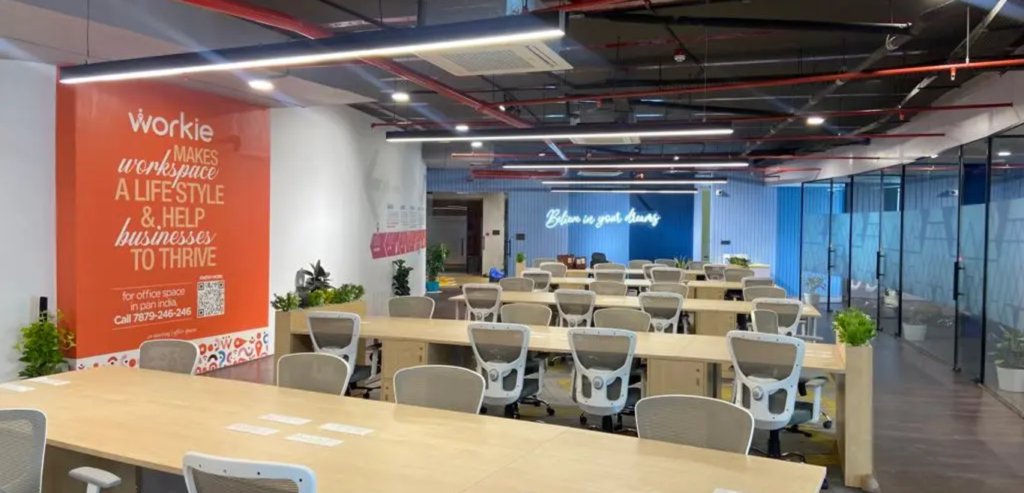
As the demand for premium commercial real estate grows, the definition of an ideal office space has evolved. The transition from traditional, rigidly leased spaces to dynamic, amenity-rich environments is particularly evident when evaluating noida-greater noida expressway office space.
Organizations must assess several critical factors to ensure their chosen facility aligns with their operational goals.
Operational Infrastructure
A modern office space must provide a robust technological and physical infrastructure. This includes high-speed fiber-optic connectivity, enterprise-grade network security capabilities, and seamless cellular coverage throughout the building.
Additionally, reliable power backup systems are essential to prevent operational disruptions. Facilities along the expressway are frequently equipped with heavy-duty commercial generators and centralized HVAC systems designed for maximum energy efficiency.
Scalability and Spatial Design
Business growth is rarely linear, and an office space must accommodate fluctuating headcounts. When selecting a noida-greater noida expressway office space, organizations prioritize scalable layouts.
The structural design should allow for the easy addition of workstations or the reconfiguration of spaces to create collaborative zones, private executive suites, or open-plan bullpens.
Health, Wellness, and Amenities
The modern workforce places a high premium on health and wellness. Premium office spaces integrate natural light, ergonomic furniture, and high-quality indoor air filtration systems. Beyond the immediate workspace, building amenities play a crucial role.
Access to on-site cafeterias, fitness centers, outdoor terraces, and recreational lounges contributes to employee satisfaction and mitigates burnout.
Key Takeaways:
- Reliable technological infrastructure and power redundancies are non-negotiable for uninterrupted operations.
- A noida-greater noida expressway office space must offer scalable spatial designs to accommodate business growth.
- Integrated health, wellness, and recreational amenities are essential for maintaining a highly productive workforce.
Infrastructure for Development: Corporate Training Center 136
Continuous learning and employee upskilling are critical components of a modern corporate strategy. Organizations frequently require dedicated spaces to conduct onboarding sessions, software training, leadership workshops, and compliance seminars. Establishing or leasing a dedicated corporate training center 136 requires careful consideration of specialized infrastructure.
Acoustic and Visual Design
A facility functioning as a corporate training center 136 must prioritize optimal learning conditions. Acoustic management is critical; training rooms must be soundproofed to prevent external noise from disrupting instruction, while internal acoustics must ensure the speaker is clearly heard without excessive echoing.
Lighting must be versatile, combining natural daylight with adjustable artificial lighting to accommodate both traditional lectures and digital presentations without causing screen glare.
Advanced Technological Integration
Modern training is highly digital. A corporate training room must feature state-of-the-art audiovisual (AV) equipment. This includes high-definition projectors or large-scale LED displays, integrated speaker systems, and high-quality microphones.
Furthermore, as hybrid training models become standard, the facility must support seamless video conferencing capabilities, allowing remote participants to engage with in-person sessions without technical friction.
Modular Seating and Breakout Zones
The pedagogy of corporate training varies from classroom-style lectures to highly interactive group workshops. Therefore, the furniture within a training center must be modular. Lightweight, mobile desks and ergonomic chairs that can be quickly reconfigured are essential.
Additionally, an effective training facility includes adjacent breakout rooms or lounges. These spaces allow participants to collaborate in smaller groups, network during breaks, and step away from the primary instructional environment to refresh.
Key Takeaways:
- A corporate training center 136 requires specialized acoustic and lighting designs to facilitate learning.
- Advanced AV technology and hybrid conferencing capabilities are essential for modern training delivery.
- Modular furniture and dedicated breakout spaces support diverse instructional methods and participant networking.
Role of Flexible Workspaces: Let’s Connect India
The commercial real estate market has experienced a paradigm shift toward flexible and managed workspaces. Traditional commercial leases, which often require extensive capital expenditure (CapEx) for fit-outs and multi-year lock-in periods, are being bypassed in favor of agile solutions.
In this context, workspace providers like Let’s Connect India play a pivotal role in shaping the corporate landscape.
Transitioning from CapEx to OpEx
Establishing a new office typically requires significant upfront investment in interior design, furniture, IT infrastructure, and utility setups. Managed workspaces and coworking environments convert these heavy capital expenditures into predictable operational expenditures (OpEx).
By utilizing spaces provided by operators like Let’s Connect India, enterprises can allocate their financial resources toward core business growth rather than real estate management.
Plug-and-Play Efficiency
Time-to-market is a critical metric for business expansion. Flexible workspaces offer plug-and-play efficiency, allowing companies to commence operations almost immediately. The infrastructure—from high-speed internet to reception services and housekeeping—is already established.
This turnkey approach eliminates the months of planning and construction typically associated with opening a new branch or headquarters.
Fostering Community and Networking
Beyond physical infrastructure, managed workspaces cultivate an environment of professional community. By housing multiple businesses, freelancers, and enterprise teams under one roof, these spaces naturally facilitate organic networking.
Providers like Let’s Connect India often design their facilities with shared lounges, communal kitchens, and event spaces that encourage interaction, potentially leading to strategic partnerships, client acquisitions, and vendor relationships.
Key Takeaways:
- Flexible workspaces convert high upfront capital expenditures into manageable, predictable operational costs.
- Providers like Let’s Connect India offer turnkey solutions that drastically reduce the time required to set up an office.
- Managed environments foster cross-industry networking and professional community building.
Illustrative Scenarios: How Businesses Utilize Hubs in Sector 136
To understand the practical application of these commercial principles, it is helpful to examine how different organizational structures might utilize a corporate hub in this region. The following scenarios are provided as illustrative examples of space utilization and do not represent specific real-world companies.
The Expanding Mid-Size Technology Firm
For example, a mid-size IT firm looking to expand its regional footprint might choose a managed workspace within a corporate hub near the expressway. By opting for a scalable private suite rather than a traditional lease, the firm can comfortably house its initial team of fifty developers.
As the firm secures new contracts and hires additional staff, the flexible nature of the workspace allows them to seamlessly add workstations without the need to relocate or renegotiate complex property leases. The expressway proximity ensures that their business development executives can easily travel to client sites across the NCR.
The Enterprise Training Bootcamp
Consider a multinational corporation that conducts quarterly, month-long intensive training bootcamps for its national sales teams. Rather than maintaining a large, permanent, and often vacant auditorium at their headquarters, the corporation might lease a specialized corporate training center 136 on a short-term basis.
They utilize the advanced AV equipment for international guest speakers and the modular seating for collaborative role-playing exercises. The proximity to the expressway ensures that delegates arriving from various parts of the country can easily access the venue from transit terminals or nearby accommodations.
The Satellite Branch Office
A financial consultancy headquartered in another city may wish to establish a satellite branch to service clients in the Noida and Greater Noida regions. By partnering with a flexible workspace provider, they establish a professional presence immediately.
The highly visible location and premium building amenities project the necessary corporate prestige to visiting high-net-worth clients, while the turnkey operational setup allows the consulting team to focus entirely on client acquisition rather than office administration.
Key Takeaways:
- Flexible hubs allow expanding tech firms to scale up workstations dynamically as they hire.
- Specialized training centers provide large enterprises with professional environments for temporary, intensive workshops.
- Satellite branches benefit from immediate setup and the brand prestige of operating in a high-tier commercial hub.
Future Outlook for Workspace Ecosystems in Noida
The trajectory of commercial real estate in planned urban sectors points toward increasing integration, sustainability, and flexibility. As the macro-economic environment evolves, the demands placed on office spaces will continue to shift, and hubs near major expressways are uniquely positioned to adapt to these changes.
Emphasis on Sustainable Operations
Sustainability is transitioning from a corporate buzzword to a fundamental operational requirement. Future developments in corporate hubs are expected to prioritize green building standards. This includes the integration of solar power generation, comprehensive rainwater harvesting systems, and smart-building automation that drastically reduces energy consumption.
Facilities that embrace these practices will not only reduce their ecological footprint but also lower their utility overheads, making them highly attractive to environmentally conscious enterprises.
The Permanence of Hybrid Work Models
The hybrid work model—where employees split their time between remote work and the physical office—is recognized as a permanent fixture in the corporate landscape. Consequently, office spaces will increasingly function as hubs for collaboration rather than centers for isolated, heads-down work.
Noida-Greater Noida expressway office spaces are anticipated to evolve further, dedicating larger percentages of their floor plans to interactive meeting rooms, technology-enabled brainstorming zones, and social spaces designed to maximize the value of in-person collaboration.
Integration of Artificial Intelligence in Facility Management
The management of corporate hubs is becoming highly digitized. The implementation of artificial intelligence and Internet of Things (IoT) sensors within office buildings will streamline facility management.
From predictive maintenance of HVAC systems to AI-driven security protocols and automated space-utilization analytics, the workspaces of the future will operate with unprecedented efficiency, ensuring a seamless experience for tenants and visitors alike.
Key Takeaways:
- Sustainable building practices and energy efficiency will become standard expectations for premium corporate hubs.
- Office layouts will continue to evolve, favoring collaborative and social spaces over traditional isolated cubicles to support hybrid work.
- AI and IoT technologies will drive the future of facility management, enhancing security, maintenance, and space optimization.
Frequently Asked Questions (FAQs)
1. What defines a corporate hub?
A corporate hub is a concentrated geographic area featuring specialized infrastructure designed to support business operations. It typically includes commercial office buildings, high-speed connectivity, managed amenities, and excellent transport links, creating an ecosystem that fosters professional growth and networking.
2. Why are the corporate hubs sector 136 noida gaining popularity?
Sector 136 is popular due to its structured urban planning, dedicated commercial zoning, and lack of the severe congestion found in older city centers. Its proximity to high-quality residential areas and arterial highways makes it an ideal location for diverse industries.
3. What are the logistical benefits of a corporate hub near expressway 136?
Proximity to the expressway significantly reduces commute times for employees and transit times for logistics. It provides direct, uninterrupted routes to other major commercial zones, national highways, and future transit developments across the National Capital Region.
4. What should a company look for in a noida-greater noida expressway office space?
Organizations should evaluate the facility’s technological infrastructure (internet and power redundancies), the scalability of the floor plan, the quality of facility management, and the availability of employee amenities like parking, cafeterias, and wellness spaces.
5. How does a managed office space differ from a traditional lease?
A traditional lease typically provides a bare shell that the tenant must furnish and maintain, usually under a long-term contract. A managed office space is a turnkey, fully furnished facility where the operator handles all maintenance, utilities, and IT infrastructure, often with flexible, shorter-term agreements.
6. What features are essential for a corporate training center 136?
An effective corporate training center requires excellent acoustic management, adjustable lighting, high-definition audiovisual equipment, reliable video conferencing capabilities, and modular furniture that can be rearranged for different teaching styles.
7. Why is modular furniture important in training centers?
Modular furniture allows a single room to serve multiple purposes. Desks and chairs can be arranged in a traditional classroom style for lectures, clustered together for group workshops, or cleared away entirely for team-building exercises, maximizing the utility of the space.
8. How do flexible workspaces reduce operational costs?
Flexible workspaces eliminate the need for large upfront capital investments in interior design, furniture, and technology infrastructure. They also consolidate costs like internet, housekeeping, security, and utilities into a single, predictable monthly fee.
9. Are flexible and coworking spaces suitable for large enterprises?
Yes. While historically associated with startups, large enterprises increasingly use flexible workspaces to establish satellite offices, house temporary project teams, or implement hub-and-spoke real estate models without committing to rigid, long-term leases.
10. What solutions does Let’s Connect India provide in this region?
Let’s Connect India provides managed workspaces and flexible office solutions that offer enterprises plug-and-play efficiency. Their environments are designed to reduce capital expenditure while providing professional amenities, robust infrastructure, and opportunities for corporate networking.
Conclusion
Selecting the right location for business operations is a critical decision that impacts talent acquisition, operational efficiency, and overall corporate growth. Establishing a presence within a corporate hub near expressway 136 provides enterprises with the vital connectivity and modern infrastructure required to thrive in a competitive market.
Whether an organization is seeking a scalable noida-greater noida expressway office space, requires a technologically advanced corporate training center 136, or aims to integrate into the dynamic corporate hubs sector 136 noida, the commercial real estate landscape in this corridor offers robust solutions.
By leveraging the services of flexible workspace providers like Let’s Connect India, companies can bypass the friction of traditional real estate management and focus entirely on their core business objectives.
Ready to elevate your business presence in Noida? Explore the comprehensive managed workspace solutions and state-of-the-art facilities offered by Let’s Connect India to find the ideal environment for your enterprise today.