The evolution of commercial real estate in the National Capital Region (NCR) continues to shift toward integrated, purpose-built business ecosystems. Among the most anticipated developments in this landscape is the office park launch sector 136. Positioned strategically to leverage regional connectivity and urban infrastructure, Sector 136 in Noida has emerged as a focal point for enterprises seeking advanced operational facilities.
Modern office parks are no longer mere collections of commercial buildings; they are curated environments designed to foster innovation, attract top-tier talent, and support diverse operational workflows. An effective office park launch requires meticulous planning, from architectural foresight to the integration of comprehensive technological frameworks.
Organizations exploring this micro-market must evaluate how such developments align with their long-term growth trajectories, infrastructural requirements, and employee wellness goals.
This comprehensive guide examines the foundational principles of establishing a presence in an emerging commercial hub. It explores the specialized requirements for an R&D facility sector 136 Noida, the architectural demands of an IT office space sector 136 Noida, and the role of flexible workspace operators like Lets Connect India in providing agile enterprise solutions.
By understanding these core elements, business leaders and real estate strategists can make informed, future-proof decisions.
The Strategic Significance of Sector 136 Noida
Selecting the optimal location for a corporate headquarters or a regional satellite office dictates long-term operational efficiency. Sector 136 in Noida offers a distinct geographic advantage, primarily due to its proximity to major expressways and arterial road networks. This connectivity facilitates seamless transitions between residential hubs, commercial zones, and transportation terminals.
For an office park launch sector 136 to be successful, the surrounding infrastructure must support high-volume daily commuting. Master-planned business districts typically offer wide access roads, dedicated traffic management systems, and integration with public transit corridors. This infrastructural foundation ensures that enterprises can draw talent from a wide geographic radius without subjecting employees to prohibitive commute times.
Furthermore, the strategic significance of this location is amplified by the zoning principles of the region. Sector 136 is situated in a corridor that encourages the clustering of technology, engineering, and service-oriented firms. This clustering effect naturally generates corporate synergy.
When related industries operate within a shared geographical footprint, they benefit from a localized ecosystem of vendors, suppliers, and specialized service providers. Ultimately, an office park launch in this sector serves as a catalyst, transforming a physical location into a dynamic economic community.
Key Takeaways:
- Strategic proximity to expressways and arterial networks is critical for daily operational efficiency.
- Master-planned infrastructure reduces commute friction, aiding in comprehensive talent acquisition.
- Zoning that encourages industry clustering fosters natural corporate synergy and localized supply chains.
Core Components of a Modern Office Park Launch
A successful office park launch sector 136 relies on a multifaceted development strategy that prioritizes resilience, sustainability, and user experience. Modern commercial real estate development moves beyond basic floor plans, focusing instead on holistic environmental design.
The first core component is architectural adaptability. Enterprises today experience rapid scaling phases and structural reorganizations. Consequently, the buildings within a modern office park must feature modular design elements. Column-free floor plates, elevated access floors, and adaptable HVAC zoning allow tenant organizations to reconfigure their spaces without undertaking disruptive, structural renovations.
The second component is the integration of green spaces and biophilic design. The built environment profoundly impacts employee productivity and wellness. Office park launches that prioritize landscaped courtyards, natural light penetration, and outdoor collaborative zones invariably offer a more compelling value proposition to prospective tenants.
Finally, digital infrastructure forms the backbone of the modern office park. A commercial campus must provide enterprise-grade connectivity before the first tenant occupies the space. This involves establishing diverse fiber-optic entry points into the buildings, ensuring redundant communication lines, and implementing campus-wide secure Wi-Fi networks.
By weaving digital readiness into the foundational blueprint, an office park launch transitions from a real estate event to a comprehensive technology solution.
Key Takeaways:
- Architectural adaptability through modular design allows tenants to scale operations efficiently.
- Biophilic design and integrated green spaces are fundamental to employee wellness and productivity.
- Enterprise-grade digital infrastructure, including redundant fiber optics, must be foundational to the campus blueprint.
Designing the Ideal IT Office Space Sector 136 Noida
The technology sector demands highly specialized operational environments. Securing an IT office space sector 136 Noida requires an acute understanding of both hardware housing and human collaboration needs. Technology firms operate on continuous development cycles, meaning their physical environments must support both deep, focused work and dynamic team scrums.
To accommodate modern tech workflows, an IT office space must prioritize robust power architecture and thermal management. High-density server rooms, localized data closets, and extensive workstation networks generate significant heat and demand uninterrupted power. Ideal IT office spaces feature dedicated power redundancies—such as seamless uninterruptible power supply (UPS) integration and backup generators—coupled with precision cooling systems designed to maintain optimal temperatures for sensitive hardware.
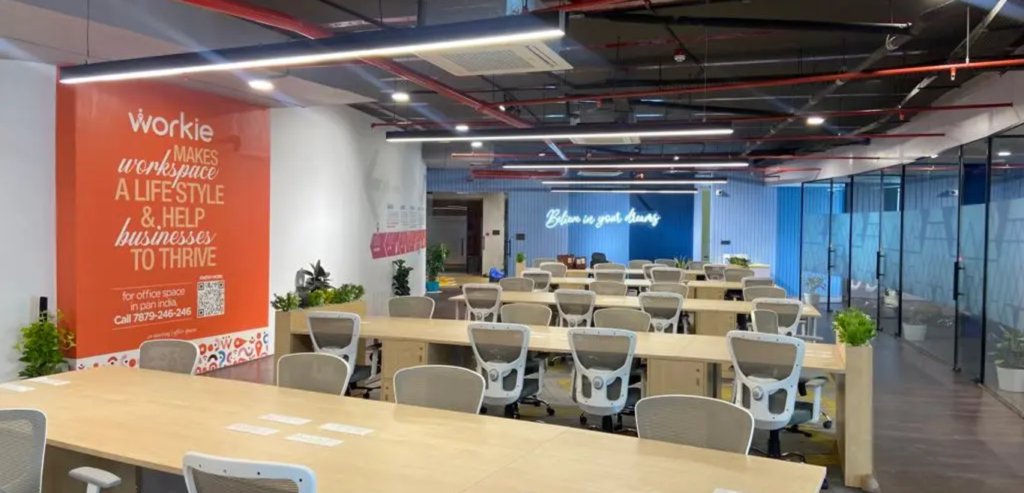
Beyond the hardware, the spatial layout must reflect agile working methodologies. For example, a mid-size IT consultancy scaling its operations might require a blend of open-plan workstations, acoustically sealed focus pods, and technologically equipped conference rooms.
The integration of smart building technologies—such as automated lighting, occupancy sensors, and localized climate control—further enhances the efficiency of the space. By combining resilient infrastructural support with agile spatial design, an IT office space sector 136 Noida can serve as a true engine for technological innovation.
Key Takeaways:
- IT operations require specialized power redundancies and precision cooling systems to support high-density hardware.
- Agile spatial design, balancing open collaborative areas with acoustically sealed focus pods, is essential for tech workflows.
- Smart building technologies optimize resource usage and enhance the day-to-day efficiency of the workspace.
Establishing an R&D Facility Sector 136 Noida
Research and Development (R&D) operations represent the most complex tenant requirement within a commercial ecosystem. An R&D facility sector 136 Noida must function as a highly secure, structurally reinforced, and customizable environment. Unlike standard administrative offices, R&D centers often house sensitive proprietary technology, heavy prototype machinery, and specialized testing environments.
Structural integrity is paramount. Buildings intended to house an R&D facility must feature enhanced load-bearing floors to support the weight of industrial equipment or dense laboratory setups. Additionally, ceiling heights must frequently exceed standard commercial dimensions to accommodate specialized ventilation hoods, overhead cranes, or complex cabling trays.
Security and intellectual property (IP) protection dictate the flow of an R&D space. Facility design must incorporate strict access control matrices, segregating public visitor areas from secure testing zones.
Biometric access panels, secure perimeter monitoring, and isolated internal networks are standard requirements. Furthermore, environmental stability is critical. Many diagnostic and prototyping processes require strict vibration isolation, static control, and hospital-grade air filtration to ensure the integrity of the research.
When an office park successfully supports an R&D facility sector 136 Noida, it signals to the broader market that the campus is capable of maintaining the highest tiers of operational compliance and infrastructural stability.
Key Takeaways:
- R&D facilities require enhanced structural elements, including high load-bearing floors and extended ceiling heights.
- Strict physical and network security protocols are required to protect intellectual property and sensitive testing environments.
- Environmental stability, including vibration isolation and specialized ventilation, is crucial for accurate prototyping and diagnostics.
The Role of Flexible Workspace Providers: Lets Connect India
As the commercial real estate landscape shifts, the integration of flexible workspace operators within major office parks has become a strategic necessity. Providers like Lets Connect India serve a vital function in an office park launch by offering managed, scalable solutions alongside traditional, long-term leased spaces.
The presence of a flexible workspace provider bridges the gap between varying enterprise needs. For instance, a multinational corporation leasing a vast headquarters within the office park might experience sudden project-based scaling. Rather than committing to additional long-term real estate, the enterprise can leverage Lets Connect India to house overflow teams, consultants, or temporary task forces. This “hub-and-spoke” real estate model provides unparalleled agility.
Furthermore, managed workspace providers democratize access to premium office parks. Startups, independent contractors, and boutique agencies that may not require a massive footprint can still establish a presence within Sector 136 through Lets Connect India. These operators handle the logistical burdens of office management—ranging from internet provisioning and front-desk reception to facility maintenance and community event programming.
By integrating flexible, managed solutions, an office park becomes a dynamic, inclusive ecosystem that caters to businesses at every stage of their lifecycle.
Key Takeaways:
- Flexible workspace operators provide essential “swing space” for large enterprises undergoing rapid, project-based scaling.
- Managed spaces handle logistical and facility management burdens, allowing businesses to focus entirely on core operations.
- Providers like Lets Connect India enable startups and boutique firms to access premium commercial ecosystems without massive capital expenditures.
Evaluating the Impact on the Local Business Ecosystem
The successful execution of an office park launch sector 136 extends its benefits far beyond the perimeter of the campus. Large-scale commercial developments act as economic multipliers, profoundly impacting the local business ecosystem and surrounding communities.
First, a concentrated hub of IT and R&D professionals necessitates the growth of ancillary services. The influx of a daily workforce drives demand for retail establishments, food and beverage outlets, wellness centers, and corporate hospitality venues. This secondary economic wave creates diverse business opportunities and elevates the overall commercial profile of the sector.
Second, an active office park facilitates knowledge transfer and professional networking. When multiple high-performing organizations share a geographical proximity, an organic exchange of ideas occurs. Industry conferences, inter-company seminars, and informal networking within campus amenity zones foster a culture of innovation.
Finally, the establishment of major IT and R&D nodes influences the local talent pipeline. Educational institutions and technical training centers often align their curricula with the needs of the businesses operating in their vicinity.
By anchoring significant operations in Sector 136, enterprises can actively engage with local academic institutions to cultivate a highly skilled, localized workforce tailored to their specific technological and research needs.
Key Takeaways:
- Office parks act as economic multipliers, driving secondary growth in local retail, hospitality, and wellness sectors.
- Geographical clustering of enterprises fosters organic networking, knowledge transfer, and a culture of innovation.
- Major commercial hubs influence local academic and training pipelines, ensuring a steady stream of relevant talent.
Future-Proofing Commercial Real Estate Ventures
Deciding to lease or invest in an office park launch sector 136 requires a forward-looking perspective. Commercial real estate must be future-proofed against technological advancements, shifting work paradigms, and evolving environmental regulations.
Environmental, Social, and Governance (ESG) criteria now dictate much of corporate real estate strategy. Future-proofed office parks prioritize sustainable design principles, such as energy-efficient building envelopes, rainwater harvesting systems, and solar power integration. Facilities that align with global sustainability certifications not only reduce long-term operational costs but also assist tenant organizations in meeting their internal corporate responsibility mandates.
Adaptability to hybrid work models is another pillar of future-proofing. As organizations balance remote and in-office workforces, the physical office must evolve into a destination for collaboration rather than a mandatory location for solitary tasks. Office spaces must be designed to facilitate seamless hybrid meetings, utilizing advanced audiovisual integration and equitable camera setups to ensure remote participants remain fully engaged.
Ultimately, the longevity and success of commercial spaces—whether an IT office space sector 136 Noida or a complex R&D center—depend on their capacity to evolve. By prioritizing sustainability, technological integration, and spatial agility, enterprises can ensure their real estate investments continue to deliver value in a rapidly changing corporate landscape.
Key Takeaways:
- Adherence to ESG criteria and sustainable design principles reduces operational costs and fulfills corporate responsibility mandates.
- Future-proofed spaces must actively support hybrid work models through advanced audiovisual integration and collaborative spatial design.
- Long-term real estate value relies on the continuous adaptability of the physical environment to shifting technological and operational trends.
Frequently Asked Questions (FAQ)
1. What makes an office park launch sector 136 strategically important?
Sector 136 offers highly connected infrastructure, proximity to major arterial expressways, and zoning that supports the clustering of technology, R&D, and corporate enterprises, making it a highly desirable location for business operations.
2. What structural requirements are necessary for an R&D facility sector 136 Noida?
An R&D facility typically requires enhanced load-bearing floors for heavy equipment, higher ceilings for specialized ventilation, robust structural vibration isolation, and strict physical security protocols to protect sensitive intellectual property.
3. How does an IT office space sector 136 Noida differ from standard administrative offices?
IT office spaces require advanced power redundancies, high-capacity cooling systems for server networks, multiple fiber-optic entry points for continuous internet connectivity, and agile layouts to support dynamic tech teams.
4. What role does Lets Connect India play in modern office parks?
Lets Connect India and similar flexible workspace providers offer managed, scalable office solutions. They allow large enterprises to acquire temporary swing space and enable smaller companies to access premium office amenities without long-term lease commitments.
5. How do office parks support employee wellness?
Modern office parks integrate biophilic design elements, such as natural light optimization, indoor air quality management, landscaped outdoor collaborative zones, and access to wellness amenities to support physical and mental health.
6. Why is modular design important in commercial real estate?
Modular design—utilizing column-free floor plates and adaptable HVAC zoning—allows tenant organizations to easily reconfigure their workspaces as their teams scale or operational needs change, avoiding costly structural renovations.
7. How do commercial developments impact the local economy?
Large-scale office parks act as economic multipliers by driving local demand for secondary services, including retail, food and beverage, hospitality, and facility maintenance, thereby creating a localized ecosystem of commerce.
8. What are the power requirements for a modern commercial tech campus?
Tech-focused campuses require uninterrupted power solutions, including integrated UPS systems, diverse power grid connections, and heavy-duty backup generators to ensure continuous operation of servers and research equipment.
9. How do companies future-proof their office spaces?
Companies future-proof their real estate by investing in smart building technologies, prioritizing environmentally sustainable design (ESG compliance), and creating flexible layouts that accommodate hybrid working models.
10. Why is industry clustering beneficial for businesses in Sector 136?
Clustering similar industries in one geographic area creates natural corporate synergy, fosters knowledge transfer, attracts specialized talent to the region, and builds a localized network of supportive vendors and suppliers.
Conclusion
The anticipation surrounding an office park launch sector 136 is rooted in the fundamental transformation of how modern businesses operate. Today’s enterprises require more than just square footage; they demand intelligent, resilient ecosystems capable of supporting highly specialized workflows. Whether an organization is architecting a highly secure R&D facility sector 136 Noida or building a hyper-connected IT office space sector 136 Noida, the foundational infrastructure of the commercial campus dictates the success of the venture.
Furthermore, the integration of flexible, managed workspace operators like Lets Connect India ensures that these premium ecosystems remain agile, accessible, and scalable for businesses of all sizes. By prioritizing advanced technological frameworks, employee wellness, and sustainable design, Sector 136 stands as a prime example of the future of commercial real estate.
Ready to elevate your corporate operations? Explore the scalable, future-proof commercial real estate options available in Noida’s premier business districts. Contact our advisory team today to schedule a site visit, discuss customized enterprise floor plans, or discover managed workspace solutions tailored to your company’s growth trajectory.