The landscape of commercial real estate is undergoing a profound transformation. As traditional central business districts become highly saturated, businesses and investors alike are continuously seeking new geographic nodes that offer a blend of accessibility, modern infrastructure, and long-term capital appreciation.
Central to this geographic shift is the concept of decentralized commercial hubs, which provide enterprises with the operational bandwidth they require without the premium costs associated with legacy business centers. Understanding the dynamics of an emerging commercial sector 136 investment requires a foundational knowledge of urban planning principles, infrastructure development, and evolving workplace strategies.
Sector 136 represents a strategic micro-market where real estate developers are shifting their focus toward creating integrated business ecosystems. These ecosystems are designed not merely as places to work, but as comprehensive environments that support corporate growth, employee well-being, and operational efficiency.
This guide explores the fundamental drivers behind commercial development sector 136. By analyzing the structural shift toward decentralized office spaces, the rising demand for value office space sector 136, and the growing influence of flexible workspace solutions such as Lets Connect India, stakeholders can better understand how to position themselves in this evolving market.
Through an examination of architectural trends, investment strategies, and illustrative scenarios, this article provides a comprehensive overview of how to navigate and capitalize on emerging commercial corridors.
The Rise of Commercial Development Sector 136
The foundational appeal of any emerging commercial node rests on its physical infrastructure and strategic location. Urban sprawl and the expansion of metropolitan transit networks consistently dictate the path of commercial real estate development.
The principles driving commercial development sector 136 center heavily on transit-oriented development and seamless connectivity to major arterial roads.
Infrastructure and Connectivity Principles
For a commercial sector to thrive, it must offer frictionless mobility for the workforce. Commercial development in emerging sectors relies on proximity to expressways, dedicated freight corridors, and expanding public transit networks. When businesses evaluate a location, the daily commute of their human capital is a primary consideration.
Sector 136 is positioned within a broader urban grid that facilitates movement between residential catchments and corporate offices. This connectivity reduces transit fatigue, thereby indirectly supporting employee productivity and retention.
Furthermore, infrastructure extends beyond roads. Modern commercial development necessitates robust digital connectivity, reliable power grids, and advanced water management systems.
Emerging hubs are often planned with these modern utilities built into the municipal framework, allowing developers to construct high-performance buildings without the constraints of retrofitting older, legacy urban grids.
The Ecosystem Approach to Urban Planning
Another driving factor in commercial development sector 136 is the transition toward mixed-use and integrated ecosystems. Modern urban planning principles suggest that commercial spaces function best when surrounded by supporting infrastructure, including retail outlets, business hotels, and residential neighborhoods.
This ecosystem approach ensures that the sector remains vibrant beyond standard operating hours, creating a secure and dynamic environment for businesses.
Key Takeaways: The Rise of Commercial Development Sector 136
- Strategic geographic placement and connectivity to arterial networks are the primary catalysts for emerging commercial hubs.
- Modern infrastructure, including digital connectivity and power reliability, is essential for supporting enterprise-grade commercial development.
- An ecosystem approach that integrates commercial spaces with supporting retail and residential catchments creates a sustainable, long-term business environment.
Why Value Office Space Sector 136 is Attracting Businesses
As corporate operational costs face continuous scrutiny, the definition of an ideal corporate headquarters has evolved. Organizations are increasingly migrating away from high-priced legacy districts in favor of locations that offer a superior cost-to-benefit ratio. This structural shift has given rise to the demand for value office space sector 136.
Balancing Cost and Quality
Value office space does not imply a reduction in quality; rather, it denotes a highly efficient use of capital. In an emerging commercial sector 136 investment, businesses can secure Grade-A architectural infrastructure at a fraction of the cost required in highly saturated markets.
This optimization of the cost-per-square-foot metric allows enterprises to reallocate capital toward core business activities, such as research and development, talent acquisition, or market expansion.
The financial principle here relies heavily on the substitution effect. By substituting a high-rent, low-efficiency legacy building for a moderately priced, high-efficiency modern building, a company improves its operational expenditure (Opex) profile.
The Role of Amenities and Modern Infrastructure
Value office space in these emerging sectors is typically characterized by high floor plate efficiency, abundant natural light, and advanced climate control systems. Developers in Sector 136 utilize contemporary architectural principles to minimize wasted space, ensuring that tenants pay only for usable, productive areas.
Moreover, these developments prioritize shared amenities. Instead of each tenant building their own extensive cafeteria, large conference facilities, or wellness centers, modern commercial complexes often provide these as shared resources.
This pooling of resources is a core tenet of value office space, allowing mid-sized enterprises to access premium amenities without bearing the full capital expenditure.
Key Takeaways: Why Value Office Space Sector 136 is Attracting Businesses
- Value office space represents a strategic optimization of operational costs without sacrificing building quality or infrastructure.
- Modern architectural principles, such as high floor plate efficiency, maximize the utility of leased spaces.
- Shared complex amenities allow businesses to access premium facilities while minimizing localized capital expenditures.
Illustrative Scenarios: Maximizing Investment Potential
To fully grasp the strategic utility of an emerging commercial sector 136 investment, it is helpful to examine how different types of organizations might leverage this environment. The following scenarios are entirely illustrative and serve to demonstrate the application of commercial real estate principles.
Scenario A: A Growing IT Solutions Provider
For example, consider a mid-size IT startup that has outgrown its initial incubator space. The company requires a facility that can accommodate rapid headcount fluctuations while providing a professional environment for client meetings. By securing value office space sector 136, the startup achieves a scalable footprint.
The lower cost-per-square-foot allows the firm to lease a slightly larger space than currently needed, building in a buffer for future expansion. Furthermore, the modern digital infrastructure inherent in new commercial developments ensures that their server and networking requirements are met without the need for expensive structural retrofits.
Scenario B: An Established Enterprise Expanding Operations
Alternatively, consider an established logistics or fast-moving consumer goods (FMCG) enterprise looking to set up a regional administrative headquarters. This company prioritizes accessibility for its supply chain managers and a high-quality environment to attract top-tier management talent.
An investment in commercial development sector 136 serves this dual mandate. The proximity to major transit corridors satisfies the logistical requirement, while the Grade-A office environment satisfies the human resources mandate.
By purchasing the space outright as an asset, the enterprise converts ongoing lease liabilities into a long-term capital asset, relying on the sector’s emerging status to drive future capital appreciation.
Key Takeaways: Illustrative Scenarios
- Startups and high-growth firms benefit from the scalability and digital readiness of emerging commercial nodes.
- Established enterprises can utilize these sectors to balance logistical accessibility with premium workspace environments.
- Both leasing and purchasing strategies in emerging nodes offer distinct financial advantages depending on a company’s capital structure.
The Impact of Flexible Workspaces and Lets Connect India
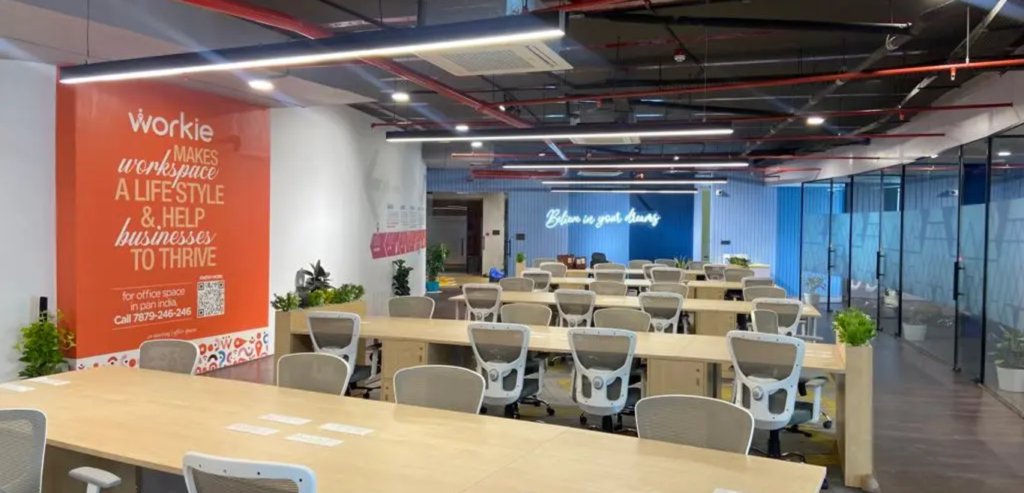
The traditional model of long-term, rigid commercial leasing is rapidly making room for more agile solutions. The integration of flexible workspaces, coworking environments, and managed offices is a defining characteristic of modern commercial ecosystems.
Within the context of Sector 136, flexible workspace concepts like Lets Connect India represent a vital layer of the commercial real estate matrix.
Evolving Workplace Dynamics
The modern workforce places a high premium on flexibility, hybrid work models, and dynamic office environments. Flexible workspaces cater directly to this shift by offering a “space-as-a-service” model.
Rather than engaging in extensive interior fit-outs and managing facility operations, businesses can plug into pre-built, fully managed environments. This is particularly advantageous for project-based teams, regional satellite offices, or international firms testing a new geographic market.
Fostering Collaboration and Growth
Environments modeled after or operated by entities like Lets Connect India are designed to foster professional communities. Beyond physical desks and high-speed internet, these spaces operate on the principle of synergy.
By placing disparate businesses, freelancers, and enterprise teams within a shared physical ecosystem, these environments naturally encourage networking, knowledge sharing, and B2B collaborations.
For an investor looking at an emerging commercial sector 136 investment, the presence of robust flexible workspace operators is a strong indicator of micro-market health. These operators generate consistent foot traffic, attract a diverse tenant mix, and provide a buffer against macroeconomic volatility, as they cater to a broad spectrum of industries rather than relying on a single corporate tenant.
Key Takeaways: The Impact of Flexible Workspaces and Lets Connect India
- Flexible and managed workspaces provide the agility required by hybrid work models and rapidly scaling teams.
- Concepts akin to Lets Connect India foster valuable B2B networking and community-driven business growth.
- The presence of flexible workspace operators diversifies tenant risk and indicates a healthy, dynamic commercial micro-market.
Strategic Considerations for Emerging Commercial Sector 136 Investment
Entering an emerging market requires rigorous due diligence and a clear understanding of commercial real estate investment principles. While the upside potential in a developing node like Sector 136 is significant, investors must navigate several strategic considerations to protect and grow their capital.
Evaluating Developer Reputation and Project Quality
The foundational step in any real estate investment is assessing the pedigree of the developer. In an emerging commercial sector 136 investment, buyers must look closely at a developer’s historical track record of delivering projects on time and to specification. It is vital to evaluate the legal sanctity of the land title, zoning approvals, and compliance with local municipal codes.
Furthermore, the long-term viability of a commercial asset is heavily dependent on the quality of its facility management. A beautifully designed building will rapidly lose tenant appeal if the elevators, HVAC systems, and security protocols are poorly maintained.
Long-Term Yield and Capital Appreciation Principles
Commercial real estate generates returns through two primary mechanisms: rental yield (income) and capital appreciation (growth). Investors must analyze the local supply and demand dynamics to project realistic rental yields.
In an emerging sector, initial rental yields might be modest as the area populates, but the potential for capital appreciation is generally higher than in fully mature, saturated markets.
Investors should structure their portfolios based on their specific financial goals. Those seeking immediate, stable cash flow might target pre-leased assets within the commercial development sector 136, whereas those with a longer time horizon might invest in under-construction projects at a lower entry price, anticipating significant value compounding as the local infrastructure matures.
Key Takeaways: Strategic Considerations
- Rigorous due diligence regarding developer track records, legal titles, and municipal compliance is non-negotiable.
- High-quality, proactive facility management is critical for tenant retention and asset preservation.
- Investors must strategically balance the dual objectives of capital appreciation and long-term rental yield.
Navigating the Future of Sector 136 Real Estate
The built environment is evolving at an unprecedented pace, driven by environmental imperatives and technological advancements. Any long-term emerging commercial sector 136 investment must account for the trends that will define the next several decades of commercial real estate.
Sustainable Building Practices
Environmental, Social, and Governance (ESG) criteria are no longer optional extras; they are fundamental requirements for institutional investors and multinational tenants. The future of commercial development sector 136 will be defined by sustainable architecture.
This includes the implementation of
- Passive cooling designs
- High-performance glazing to reduce thermal loads
- Advanced water recycling systems.
Buildings that adhere to green certification principles generally command higher rental premiums and suffer from lower vacancy rates, as top-tier corporate tenants mandate sustainable facilities to meet their own corporate carbon reduction goals.
Integration of Smart Technologies
The integration of the Internet of Things (IoT) is transforming traditional offices into smart buildings. Future-proofed value office space sector 136 will feature centralized building management systems that automatically optimize lighting, climate control, and security based on real-time occupancy data.
Touchless access controls, intelligent parking management, and predictive maintenance sensors for critical infrastructure (such as elevators and generators) represent the new standard.
Investors evaluating properties in this emerging node should prioritize assets that have the digital backbone required to support these technologies, as retrofitting older buildings with smart infrastructure is both technically complex and capital-intensive.
Key Takeaways: Navigating the Future of Sector 136 Real Estate
- Adherence to ESG principles and sustainable building practices is essential for attracting multinational tenants and maintaining asset value.
- Smart building technologies and IoT integrations optimize operational efficiency and enhance the tenant experience.
- Future-proofing investments requires selecting developments with robust, scalable digital and mechanical infrastructures.
Frequently Asked Questions (FAQs)
1. What defines an emerging commercial sector 136 investment?
An emerging commercial sector 136 investment refers to allocating capital into commercial real estate assets—such as office spaces, retail zones, or IT parks—within Sector 136. It is categorized as “emerging” because the area is actively developing its infrastructure, tenant base, and ecosystem, offering early investors potential for high capital appreciation compared to fully saturated markets.
2. How does commercial development sector 136 differ from traditional business districts?
Traditional business districts are typically characterized by legacy architecture, high congestion, and premium pricing due to saturation. In contrast, commercial development sector 136 benefits from modern urban planning principles, featuring wider arterial access, integrated mixed-use environments, smart building technologies, and an optimized cost structure for businesses.
3. What exactly constitutes value office space sector 136?
Value office space sector 136 refers to commercial workspaces that offer an optimal balance of premium amenities, high structural efficiency, and competitive leasing or purchasing costs. These spaces allow businesses to access Grade-A infrastructure—such as high-speed connectivity, climate control, and shared facilities—without the exorbitant operational expenditures associated with prime legacy districts.
4. Why are flexible workspaces becoming prominent in emerging sectors?
Flexible workspaces align perfectly with modern corporate strategies that prioritize agility. They allow businesses to scale their footprint up or down based on operational needs without being locked into rigid, long-term leases. In emerging sectors, they serve as incubators for growing companies and provide established enterprises with risk-free satellite locations.
5. How does the presence of solutions like Lets Connect India impact the local business ecosystem?
Workspace operators akin to Lets Connect India serve as community anchors within commercial developments. By providing managed infrastructure and fostering networking events, they attract a diverse array of freelancers, startups, and enterprise teams. This diversity stabilizes the micro-market, drives consistent daily footfall, and fosters a collaborative local economy.
6. What infrastructure principles drive value in Sector 136?
Value is fundamentally driven by accessibility and utility. Proximity to expressways, reliable municipal power grids, high-bandwidth digital networks, and integration with public transit corridors are the core infrastructure principles that make an emerging commercial node attractive to institutional developers and corporate tenants.
7. How should investors evaluate risk in emerging commercial hubs?
Investors mitigate risk by conducting thorough due diligence. This includes verifying the developer’s historical performance, ensuring clear and unencumbered land titles, understanding local zoning laws, and evaluating the long-term maintenance frameworks of the property. Analyzing the broader macroeconomic demand for office space in the region also helps in risk assessment.
8. What role do residential catchments play in commercial real estate success?
A commercial hub cannot survive in isolation. Proximity to quality residential catchments ensures that businesses located in the commercial sector have access to a reliable talent pool. Shorter commutes improve employee satisfaction and retention, making commercial properties near residential zones highly attractive to corporate human resource departments.
9. How is technology shaping new office developments?
Technology acts as the nervous system of modern office developments. Through IoT sensors and automated building management systems, properties can autonomously regulate temperature, lighting, and security. This not only significantly reduces energy consumption and operational costs but also provides a safer, more comfortable environment for the workforce.
10. What are the long-term strategic benefits of investing in decentralized commercial nodes?
Investing in decentralized nodes offers the dual benefit of lower entry costs and higher growth trajectories. As cities expand outward, today’s emerging decentralized nodes become tomorrow’s core business hubs.
Investors who position themselves early in areas governed by strong urban planning principles stand to capture substantial capital appreciation and steady rental yield growth as the localized ecosystem matures.
Conclusion
The trajectory of modern real estate clearly favors decentralized, well-planned geographic nodes that can support the complex needs of modern enterprises. An emerging commercial sector 136 investment represents a strategic opportunity to participate in this structural shift. By prioritizing robust infrastructure, sustainable architectural practices, and strategic geographic positioning, this sector is rapidly establishing itself as a premier destination for corporate expansion.
Whether a business is seeking value office space sector 136 to optimize its operational expenditures, or an investor is looking to capitalize on the robust commercial development sector 136, the principles of careful due diligence and long-term ecosystem evaluation remain paramount.
Furthermore, the integration of adaptable, modern workspace concepts—exemplified by environments such as Lets Connect India—ensures that the sector remains resilient and responsive to changing global work paradigms.
As the lines between work, technology, and lifestyle continue to blur, commercial spaces must evolve from simple structural enclosures into dynamic business accelerators. Investors and corporate decision-makers are encouraged to explore the diverse opportunities within this emerging corridor, positioning their portfolios and their operations for sustainable, long-term success.
Ready to optimize your corporate footprint or diversify your real estate portfolio? Explore the advanced infrastructure and lucrative opportunities available in Sector 136 today, and discover how modern workspace solutions can drive your business forward.