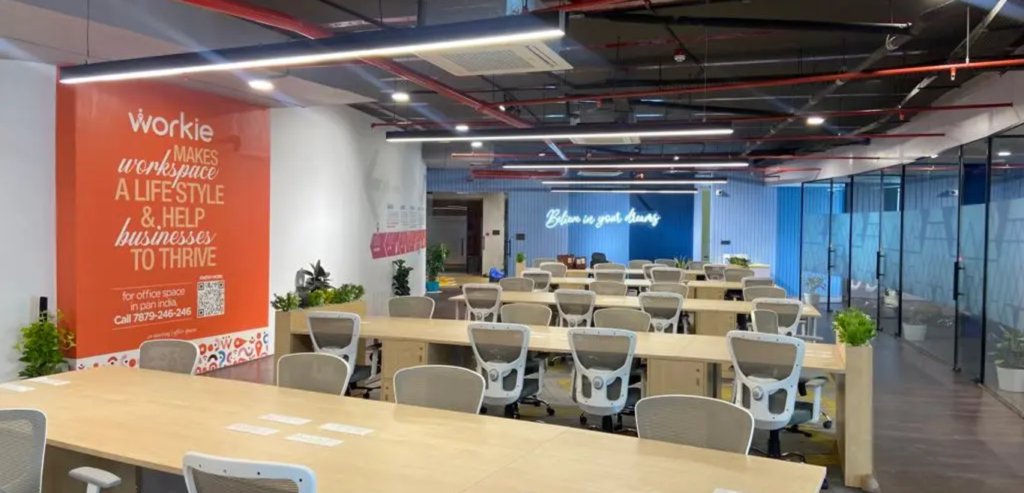
For emerging businesses, selecting the right physical headquarters is far more than a logistical necessity; it is a strategic decision that directly impacts capital preservation, company culture, and talent acquisition. As business districts evolve, finding an optimized office for startups in Sector 136 has become a priority for founders looking to balance premium infrastructure with operational agility.
Sector 136 has established itself as a vibrant commercial node, attracting a diverse ecosystem of tech innovators, creative agencies, and professional service providers. However, the traditional commercial real estate model—characterized by long lock-in periods, heavy upfront capital expenditures, and rigid space constraints—often misaligns with the volatile growth trajectories of early-stage companies. Today, startups require environments that can pivot as quickly as their business models.
This comprehensive guide explores the core principles of sourcing a startup workspace in Sector 136. From understanding the financial advantages of a flexible office lease to evaluating the daily operational benefits provided by modern workspace operators like Lets Connect India, this article provides a step-by-step roadmap for founders and operational leaders.
The Strategic Appeal of Sector 136 for Growing Businesses
Location is a fundamental pillar of business success. Sector 136 offers a unique blend of corporate visibility and accessibility, making it an attractive destination for companies looking to establish a professional footprint.
Connectivity and Commute
A primary consideration for any business is how easily employees, clients, and investors can reach the office. Sector 136 benefits from strategic urban planning, offering seamless connectivity to major expressways and arterial roads.
This accessibility reduces commute fatigue for employees, which is a critical factor in daily productivity and overall job satisfaction. An easy commute also broadens the geographical radius from which a startup can recruit top-tier talent.
Corporate Ecosystem and Proximity to Partners
Startups do not operate in a vacuum. Being situated in a recognized business district places emerging companies in close proximity to vendors, potential corporate clients, and industry peers. This density of enterprise activity fosters an environment of organic networking.
A designated startup workspace in Sector 136 places founders at the center of this commercial activity, lending immediate credibility to a young brand when hosting investor meetings or client pitches.
Urban Infrastructure
Beyond the office walls, the surrounding urban infrastructure plays a role in employee satisfaction. Sector 136 provides access to essential modern conveniences, including public transit nodes, business hotels, banking facilities, and dining establishments. A well-rounded micro-market ensures that teams have everything they need within a short distance from their desks.
Key Takeaways:
- Sector 136 provides strategic connectivity, reducing commute times and aiding in talent acquisition.
- Proximity to a dense corporate ecosystem offers startups enhanced credibility and organic networking opportunities.
- Surrounding urban infrastructure supports daily employee needs and convenience.
Defining the Ideal Startup Workspace in Sector 136
The concept of the office has shifted dramatically. A modern startup workspace in Sector 136 is no longer just a place to house desks and computers; it is an integrated service designed to enhance productivity and foster innovation.
Agility and Scalability
Startups experience rapid fluctuations in headcount. A company might secure a new round of funding and need to double its engineering team within a quarter, or conversely, it may need to streamline operations to extend its runway.
The ideal workspace accommodates this volatility seamlessly. Rather than being trapped in an oversized office anticipating future growth, or cramped in a space that has been outgrown, agile workspaces allow founders to add or subtract desks as needed.
Plug-and-Play Infrastructure
Early-stage companies must focus their energy on product development and market penetration, not on facility management. High-quality workspaces provide plug-and-play environments.
This means enterprise-grade internet, robust cybersecurity protocols, ergonomic furniture, and reliable power backups are pre-installed and managed by the facility operator. Founders can move in and begin working on day one without dealing with utility vendors or IT setup.
Design that Fosters Culture
Physical space dictates human behavior. The layout of a startup workspace influences how teams interact, collaborate, and solve problems. Modern centers are architecturally designed with a mix of open-plan areas for brainstorming, private pods for deep focus work, and acoustic meeting rooms for confidential discussions.
This variety allows employees to choose the environment that best suits their current task, thereby maximizing output and job satisfaction.
Key Takeaways:
- Agility is crucial; startups need spaces that can scale up or down alongside their headcount.
- Plug-and-play infrastructure eliminates the administrative burden of facility management.
- Purposeful architectural design supports different modes of working, from deep focus to high-energy collaboration.
Traditional Leasing vs. Flexible Office Lease in Sector 136
The financial mechanism behind securing office space is perhaps the most critical distinction between traditional corporate real estate and modern startup solutions. Understanding the mechanics of a flexible office lease in Sector 136 is vital for founders focused on capital efficiency.
The Burden of Traditional Commercial Leases
Traditional commercial leases generally require long-term commitments, often spanning several years. Furthermore, these spaces are typically delivered as “bare shells.” The tenant is responsible for the entire interior fit-out, including flooring, HVAC installation, lighting, cabling, and furnishings.
This requires a massive upfront Capital Expenditure (CapEx). For a startup, tying up crucial runway capital in office drywall and ceiling tiles is an inefficient use of funds that should be directed toward marketing, R&D, or talent acquisition.
The Mechanics of a Flexible Office Lease
A flexible office lease shifts the financial model from CapEx to Operational Expenditure (OpEx). Under this model, the workspace provider handles the entire capital investment of outfitting and maintaining the facility. Startups pay a predictable, all-inclusive monthly fee that covers rent, utilities, maintenance, housekeeping, and internet.
Additionally, flexible agreements often feature significantly shorter lock-in periods and more accommodating notice terms. This allows startups to continuously align their real estate costs with their real-time operational needs, preserving cash flow and reducing financial risk.
Mitigating Operational Distractions
In a traditional lease, the company must act as its own facility manager. If the internet goes down, the air conditioning fails, or the pantry runs out of supplies, internal staff must divert their attention to solve these issues.
A flexible lease transfers this burden entirely to the workspace provider’s community management team, ensuring zero operational downtime for the startup.
Key Takeaways:
- Traditional leases require heavy upfront CapEx for fit-outs and demand long-term lock-ins.
- A flexible office lease operates on an OpEx model, preserving startup capital for core business activities.
- All-inclusive flexible agreements eliminate the hidden costs and administrative distractions of facility management.
Essential Amenities for Growing Teams
When evaluating an office for startups in Sector 136, the quality and breadth of available amenities separate basic desk space from a premium operational hub. Amenities in a modern workspace are designed to optimize employee well-being and operational efficiency.
Enterprise-Grade Technology
A reliable technological backbone is non-negotiable. Workspaces must offer high-speed, secure, and redundant internet connections to prevent costly downtime.
Furthermore, meeting rooms should be equipped with seamless audio-visual presentation tools and video conferencing capabilities to support hybrid teams and global client communications.
Security and Access Control
Startups often work with proprietary technology and sensitive client data. Secure access control systems—such as biometric scanners or RFID keycards—ensure that only authorized personnel can enter private team suites.
Additionally, CCTV surveillance in common areas and robust digital firewalls on the network infrastructure provide comprehensive security.
Wellness and Breakout Zones
Employee burnout is a significant risk in high-pressure startup environments. Top-tier workspaces combat this by integrating wellness into their physical design. This includes providing abundant natural light, ergonomic seating, and dedicated breakout zones where employees can step away from their screens.
Well-stocked cafeterias, premium coffee stations, and lounge areas provide spaces for mental rest and casual team bonding.
Professional Support Staff
The presence of a dedicated front-desk team elevates the professional image of a startup. Reception services that handle guest greetings, mail sorting, and courier management ensure that administrative tasks do not interrupt the workflow of the startup’s core team.
Key Takeaways:
- Enterprise-grade IT infrastructure and seamless AV equipment are non-negotiable for modern workflows.
- Comprehensive physical and digital security protocols protect proprietary startup data.
- Wellness-focused amenities, such as ergonomic furniture and breakout lounges, help mitigate employee burnout.
Building Culture and Networking in Shared Environments
One of the most profound, yet intangible, benefits of choosing a managed startup workspace in Sector 136 is the immediate integration into a broader professional community.
The Power of Proximity
In a traditional, isolated office, employees only interact with their direct colleagues. In a premium shared workspace, the physical proximity to other founders, freelancers, and enterprise teams creates natural opportunities for cross-pollination. Casual conversations in the cafeteria can lead to strategic partnerships, client referrals, or collaborative problem-solving.
Curated Community Events
Leading workspace providers actively cultivate their communities. They frequently organize networking mixers, industry panel discussions, investor pitch sessions, and skill-building workshops.
For a startup, this means access to continuous learning and networking opportunities without having to leave the building. It provides founders with a platform to showcase their products, gather feedback, and connect with potential mentors or investors.
Combating Founder Isolation
Building a business from the ground up can be an isolating experience. Operating out of a vibrant, high-energy environment surrounds founders with like-minded individuals facing similar challenges. This shared atmosphere of ambition and innovation is highly motivating and can significantly boost team morale.
Key Takeaways:
- Shared workspaces facilitate organic networking and strategic partnerships through physical proximity.
- Curated events, such as workshops and pitch sessions, provide continuous learning and visibility.
- Working in a vibrant community helps combat founder isolation and boosts overall team morale.
How Lets Connect India Supports Startup Ecosystems
When navigating the real estate landscape, partnering with an established and reputable workspace provider streamlines the process. A brand like Lets Connect India serves as a prime example of how modern operators cater specifically to the nuanced needs of emerging businesses.
Tailored Space Solutions
Lets Connect India understands that a one-size-fits-all approach does not work for dynamic startups. They offer a spectrum of solutions ranging from dedicated hot desks for solopreneurs to fully customized, private managerial suites for scaling teams.
This versatility ensures that as a company evolves, its spatial requirements are met without the need to change geographical locations.
Fostering an Environment of Growth
Beyond providing four walls and a desk, Lets Connect India focuses on creating an ecosystem conducive to business growth. By offering a flexible office lease sector 136, they empower founders to allocate resources intelligently.
Their facilities are designed with a deep understanding of startup culture—balancing the need for intense, focused work environments with vibrant, community-driven social spaces.
Seamless Operational Execution
By taking over the minutiae of day-to-day facility management, Lets Connect India acts as an invisible support system for businesses. Their dedicated community managers ensure that the infrastructure runs flawlessly, allowing startup leaders to focus exclusively on hitting their operational milestones and scaling their revenue.
Key Takeaways:
- Providers like Lets Connect India offer customizable spaces that evolve alongside a startup’s growth.
- Their flexible leasing structures support intelligent capital allocation for early-stage companies.
- Seamless facility management ensures that founders can focus entirely on business execution.
Step-by-Step Guide to Choosing Your Startup Office
Selecting the right office for startups in Sector 136 requires a methodical approach. Founders should evaluate potential spaces through a strategic lens, prioritizing long-term agility over short-term aesthetics.
Step 1: Define Current and Projected Headcount
Before touring spaces, establish a clear understanding of your team’s size. Factor in any imminent hiring plans for the next six to twelve months. A flexible workspace will allow you to add desks later, but understanding your baseline ensures you select a suite that feels comfortable and collaborative on day one.
Step 2: Establish a Holistic Budget
When comparing traditional leasing against flexible options, look beyond the base rent. Calculate the total cost of occupancy for a traditional space by adding the costs of interior fit-outs, internet leased lines, electricity, housekeeping staff, security, and pantry supplies.
Compare this comprehensive figure against the all-inclusive monthly invoice of a flexible workspace to understand the true financial impact.
Step 3: Assess the Commute and Location
Map out where your core team members live. Choose a location within Sector 136 that offers the most convenient commute for the majority of the team. Evaluate the proximity to public transportation, parking availability, and local amenities.
Step 4: Tour and Evaluate the Infrastructure
Visit shortlisted workspaces during peak working hours. Observe the noise levels, the speed of the internet, the availability of meeting rooms, and the overall cleanliness of the facility. Pay close attention to the ergonomics of the seating and the quality of the lighting.
Step 5: Review the Lease Terms
Carefully read the terms of the flexible office lease. Understand the lock-in period, the security deposit requirements, the notice period for vacating, and the process for adding or removing desks. Ensure the terms align with your startup’s financial risk profile.
Key Takeaways:
- Accurately project headcount to secure an appropriately sized baseline workspace.
- Compare the total cost of occupancy, including hidden facility fees, rather than just base rent.
- Visit spaces during peak hours to accurately assess infrastructure, noise, and community vibe.
Illustrative Scenarios: Scaling a Startup in Sector 136
To understand how flexible workspace principles apply in practice, consider how different types of companies might navigate their real estate strategy.
Scenario A: The Bootstrapped Tech Firm
For example, a bootstrapped software development startup begins with three co-founders. Capital is extremely tight, and every expenditure is scrutinized. Signing a traditional lease is out of the question due to the high deposit and fit-out costs. Instead, they opt for three dedicated desks in a shared startup workspace in Sector 136.
This gives them immediate access to enterprise-grade internet and meeting rooms to pitch clients, all for a low, predictable monthly fee. Eight months later, after securing an angel investment, they seamlessly upgrade to a private six-person cabin within the same facility without changing their business address or suffering any downtime.
The Funded Scale-Up
Alternatively, consider a well-funded marketing agency that has recently closed a Series A round. They currently have 15 employees but plan to scale to 40 over the next year to support nationwide campaigns. They bypass traditional real estate to avoid being locked into a rigid five-year contract.
By securing a flexible office lease sector 136 through a provider like Lets Connect India, they lease a customized, private wing. The agreement allows them to dynamically add desk clusters month-by-month as their new hires are onboarded, ensuring they only pay for the exact space they utilize at any given time.
Key Takeaways:
- Bootstrapped companies benefit from low-cost entry points and the ability to scale without address changes.
- Funded scale-ups utilize flexible leases to accommodate rapid hiring surges without taking on long-term real estate liabilities.
- Both scenarios highlight the importance of paying only for the space actively being used.
Frequently Asked Questions (FAQs)
1. What makes an office for startups in Sector 136 ideal?
Sector 136 offers a strategic location with excellent connectivity, a dense corporate ecosystem, and access to premium commercial infrastructure. This environment helps startups attract top talent, network with industry peers, and project a professional corporate image to clients and investors.
2. How does a flexible office lease in Sector 136 work?
Unlike traditional leases that require long-term commitments and upfront capital for fit-outs, a flexible office lease is an all-inclusive agreement. Startups pay a monthly operational fee that covers rent, furniture, utilities, internet, and maintenance, with the freedom to scale space up or down on short notice.
3. What is the difference between a coworking space and a traditional office?
A traditional office requires the tenant to manage the space, buy furniture, set up IT infrastructure, and handle maintenance. A coworking or managed workspace is fully outfitted and serviced by an operator, allowing tenants to plug in and work immediately while sharing amenities like cafeterias and meeting rooms.
4. Can I scale my team size up or down with a flexible lease?
Yes, scalability is the primary advantage of flexible workspaces. Startups can easily add more desks to accommodate new hires or downsize their spatial requirements during lean periods without breaking a long-term lease agreement.
5. What amenities should a startup look for in Sector 136?
Essential amenities include enterprise-grade, high-speed internet, ergonomic furniture, secure access control, IT-enabled meeting rooms, uninterrupted power backup, and wellness areas like lounges and cafeterias to prevent employee burnout.
6. How does workspace location impact talent acquisition?
A conveniently located office with easy access to expressways and public transit significantly reduces commute fatigue. Top candidates often weigh the quality of the office environment and the ease of the commute heavily when choosing between job offers.
7. Is a startup workspace in Sector 136 suitable for hybrid teams?
Absolutely. Flexible workspaces are highly conducive to hybrid models. Startups can lease a smaller private office for their core team and purchase floating passes or hot desks for remote employees who only visit the office a few days a week.
8. What are the hidden costs in traditional commercial leasing?
Traditional leases often hide substantial costs, including interior architectural design, HVAC installation, network cabling, regular facility maintenance, security personnel salaries, housekeeping staff, and utility bills. Flexible spaces roll these into one transparent fee.
9. How does Lets Connect India support growing businesses?
Lets Connect India provides tailored workspace solutions, flexible leasing terms, and comprehensive facility management. By managing the physical infrastructure and fostering a collaborative community, they allow founders to focus entirely on scaling their business.
10. How quickly can a startup move into a flexible workspace?
Because flexible workspaces are fully furnished and technologically equipped (plug-and-play), startups can typically sign an agreement, move in, and begin normal business operations within a matter of days, compared to the months it takes to fit out a traditional office.
Conclusion
Securing the right physical environment is a foundational step in a startup’s journey to success. The days of locking emerging businesses into rigid, capital-draining traditional leases are fading. Today, agility, financial prudence, and employee well-being dictate commercial real estate decisions.
Finding the ideal office for startups in Sector 136 means seeking out spaces that offer scalable infrastructure, robust technological amenities, and a vibrant community of innovators. By leveraging a flexible office lease sector 136, founders can protect their runway capital, converting heavy upfront real estate costs into predictable operational expenses.
Partnering with experienced workspace operators like Lets Connect India ensures that your team has a premium, professional home that adapts to your growth trajectory rather than hindering it. When facility management, security, and infrastructure are seamlessly handled by experts, startup leaders are free to dedicate their full attention to what truly matters: innovating, scaling, and disrupting their industries.
Ready to elevate your business environment? Explore flexible, high-performance workspace solutions tailored for your team’s growth today.