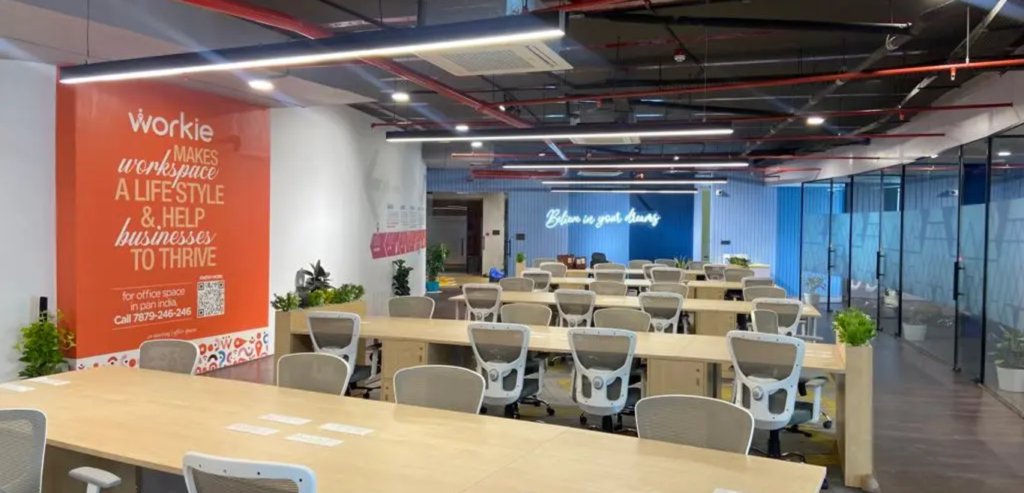
In the modern corporate ecosystem, business agility is inextricably linked to financial health. Historically, commercial real estate has been viewed as a rigid cost center—a necessary operational liability characterized by long-term commitments, heavy upfront capital expenditures, and static footprints.
However, modern corporate finance and operational strategies increasingly treat real estate not merely as a place to house employees, but as a dynamic tool for business expansion and risk mitigation. A central pillar of this modern strategy is the concept of revenue diversification with managed offices. By transitioning from traditional, inflexible leases to agile workplace solutions, enterprises can dramatically alter their financial structures.
Capital that was previously locked into deposits, interior fit-outs, and facility management can be liberated and redirected toward revenue-generating activities, research and development, and the exploration of new markets. Simultaneously, the geographic flexibility offered by these spaces allows businesses to test new regions and launch new product divisions without the burdensome overhead that typically discourages such expansion.
For organizations looking to establish a presence in rapidly growing business hubs, finding the right strategic location becomes paramount. Areas with robust infrastructure and dense talent pools provide the ideal testing ground for new corporate initiatives.
This comprehensive guide explores the principles of financial agility through real estate, the strategic advantages of establishing an office space in thriving business districts, and how companies can leverage agile infrastructure to safeguard their bottom line while pursuing new avenues of growth.
The Financial Mechanics of Real Estate Agility
To understand how real estate decisions influence revenue generation, it is essential to examine the fundamental differences between traditional commercial leasing and managed office models.
The Burden of Traditional Capital Expenditure (CapEx)
Traditional commercial leases typically require substantial upfront capital. Organizations must often provide sizable security deposits, fund extensive interior design and fit-outs, purchase furniture, and invest in IT infrastructure.
Because this capital is tied up in physical assets and localized improvements, it becomes inaccessible for core business operations. The opportunity cost of this trapped capital is significant; funds that could have been used to acquire new businesses, launch new product lines, or expand marketing efforts are instead absorbed by facility requirements.
Transitioning to Operational Expenditure (OpEx)
Managed offices fundamentally restructure this financial dynamic by converting real estate from a capital expenditure (CapEx) into an operational expenditure (OpEx). In a managed office environment, the workspace provider absorbs the upfront costs of outfitting the space, installing enterprise-grade IT infrastructure, and maintaining the facility. The occupying business pays a predictable, all-inclusive periodic fee.
This shift to an OpEx model preserves corporate liquidity. By preserving cash reserves, business leaders retain the strategic freedom to invest in diversification. Whether an organization intends to develop software products to complement a service-based business model or acquire a complementary startup, the liquidity preserved through managed real estate acts as the financial fuel for these initiatives.
Revenue diversification with managed offices is therefore achieved not by the office space itself generating direct revenue, but by the financial leverage and operational freedom the space provides to the organization.
Key Takeaways: Financial Mechanics
- Traditional leasing models trap critical capital in non-revenue-generating physical assets.
- Managed offices shift real estate costs from CapEx to OpEx, enhancing corporate liquidity.
- Preserved capital can be directly reallocated to strategic initiatives that drive top-line revenue diversification.
Noida as a Strategic Hub for Corporate Expansion
When an enterprise decides to pursue revenue diversification through geographic or operational expansion, the choice of location is critical. The destination must offer a balanced mix of accessibility, infrastructure, talent availability, and commercial viability.
For many domestic and multinational enterprises, the National Capital Region (NCR) serves as a primary target, with a specific focus on establishing an office space Noida.
Infrastructure and Connectivity
Noida has systematically developed into one of the most structured and well-connected corporate destinations in Northern India. Businesses evaluating long-term expansion strategies are increasingly recognising why Sector 136 is emerging as Noida’s next-generation business district.
- Characterized by wide expressways, reliable power infrastructure, and extensive metro connectivity, the city facilitates seamless commuting for a vast workforce.
- The integration of Noida into the broader NCR transit network ensures that businesses located here can draw talent not only from within the city limits but also from neighboring regions.
Access to a Diverse Talent Pool
Revenue diversification often requires hiring specialized talent. If an organization aims to diversify into artificial intelligence, digital marketing, or advanced customer support, it needs immediate access to professionals skilled in those exact domains.
Noida is home to numerous educational institutions and serves as a magnet for young professionals from across the country. The presence of major IT parks, manufacturing hubs, and media houses has created a multifaceted talent pool, making a Noida office space for rent a strategic acquisition for companies looking to build versatile, multi-disciplinary teams.
Corporate Ecosystem Synergies
Establishing a corporate office in Noida places a business within a dense ecosystem of potential partners, vendors, and clients. The proximity to other enterprises fosters B2B networking opportunities that can organically lead to new revenue streams.
Companies often find that being situated in a recognized business district elevates their brand prestige, aiding in client acquisition and making the exploration of new market verticals more seamless.
Key Takeaways: Noida as a Strategic Hub
- Noida provides world-class transit and power infrastructure conducive to uninterrupted business operations.
- The region offers access to a highly diverse and specialized talent pool necessary for launching new business divisions.
- Securing a corporate office in a recognized hub enhances brand visibility and facilitates vital B2B networking.
Strategies for Revenue Diversification With Managed Offices
With a foundational understanding of the financial benefits and locational advantages, enterprises must actively implement strategies to turn spatial agility into tangible revenue streams. Revenue diversification with managed offices can take several distinct forms.
Agile Market Entry and Satellite Offices
When a company relies on a single geographic market, its revenue is highly vulnerable to localized economic downturns. Expanding into new territories is a classic diversification strategy, but setting up a traditional headquarters in a new city carries substantial financial risk if the market does not respond favorably.
Managed offices allow organizations to establish a professional presence in a new region with minimal commitment. A company can set up a satellite team to test local demand, build regional client relationships, and gauge market viability.
If the expansion is successful, the enterprise can easily scale its footprint within the same managed facility. If the market proves unviable, the company can exit the region at the end of a short-term agreement without the burden of breaking a multi-year traditional lease or selling off office furniture.
Incubating New Product and Service Divisions
Innovation requires focus, and often, new product teams perform best when physically separated from the legacy operations of the parent company. This separation prevents the innovative division from being bogged down by the existing corporate bureaucracy.
Enterprises frequently utilize a corporate office Noida setup within a managed workspace to house these specialized “skunkworks” teams. Because managed offices provide immediate, plug-and-play functionality, an organization can spin up an entirely new division in a matter of weeks rather than the months it takes to source and outfit a traditional office.
Facilitating Mergers and Acquisitions (M&A)
Acquiring other companies is a rapid method of revenue diversification. However, post-acquisition integration is often fraught with logistical challenges, particularly regarding where to house the newly acquired workforce.
Managed offices provide an elegant solution by offering neutral, highly equipped spaces where newly merged teams can collaborate, align their operations, and integrate their distinct corporate cultures before long-term, consolidated real estate decisions are finalized.
Key Takeaways: Diversification Strategies
- Managed offices enable low-risk, agile entry into new regional markets.
- Off-site managed spaces are ideal for incubating new, independent product divisions without bureaucratic interference.
- Flexible workspaces streamline the logistical integration phases of corporate mergers and acquisitions.
Operational Resilience and Risk Mitigation
Revenue diversification is not solely about increasing income; it is equally about protecting the organization against market volatility. Risk mitigation is a crucial component of long-term financial strategy, and flexible real estate plays a vital role in building enterprise resilience.
Dynamic Scalability
Business cycles are inherently unpredictable. A division that experiences rapid growth may require doubling its headcount within a single quarter, while another division facing headwinds may need to consolidate.
A flexible workspace in Noida allows a business to dynamically scale its real estate footprint in direct proportion to its operational needs. Enterprises can add desks, acquire private executive suites, or reduce their square footage based on real-time performance metrics.
This ensures that the company never pays for idle, unoccupied space, nor does it suffer productivity losses due to overcrowding.
Mitigating Facility Management Liabilities
Managing a traditional commercial facility introduces a host of operational liabilities. Enterprises must dedicate internal resources to oversee housekeeping, security, IT maintenance, cafeteria operations, and regulatory compliance regarding building codes.
By utilizing a managed office, these responsibilities are transferred entirely to the workspace provider. As discussed in the article benefits of choosing managed office space, outsourcing facility management allows enterprise teams to focus on growth initiatives rather than day-to-day infrastructure concerns.
This operational offloading ensures that enterprise leaders and human resources personnel can maintain a singular focus on driving the business forward and managing the employee experience, rather than troubleshooting facility infrastructure issues.
Business Continuity Planning
In the event of unforeseen disruptions—such as localized power grid failures, natural events, or infrastructure issues at a primary headquarters—having access to distributed managed offices ensures business continuity.
Enterprises can rapidly relocate critical personnel to fully operational, secondary managed sites to ensure that customer service, IT support, and revenue-generating operations continue without interruption.
Key Takeaways: Operational Resilience
- Flexible workspaces allow businesses to dynamically align their real estate costs with actual operational requirements.
- Transferring facility management to a provider eliminates administrative distractions, allowing leaders to focus on core business objectives.
- Distributed managed offices serve as highly effective fallback locations for robust business continuity planning.
Enabling Enterprise Agility With Lets Connect India
To successfully execute these agile real estate strategies, enterprises require partners capable of delivering premium, enterprise-grade infrastructure combined with localized expertise. Lets Connect India provides customized, managed workspace solutions designed to support corporate growth and operational flexibility.
By offering premium facilities, Lets Connect India caters to enterprises seeking to establish a professional, branded presence without the operational friction associated with traditional leasing. Their managed spaces are engineered to accommodate the evolving needs of modern businesses, offering everything from private enterprise suites for established corporations to flexible setups for project-based teams.
The approach taken by Lets Connect India focuses on creating an environment where productivity and professional well-being are prioritized. Through comprehensive facility management, advanced technological integrations, and ergonomic design, the brand ensures that businesses can operate efficiently from day one.
For organizations aiming to optimize their footprint, Lets Connect India statements emphasize their commitment to delivering spaces that adapt to business cycles, ensuring that clients can seamlessly scale their operations up or down as their revenue diversification strategies dictate.
Key Takeaways: Enabling Enterprise Agility
- Lets Connect India offers specialized, enterprise-grade managed office solutions tailored for scalable growth.
- The brand focuses on eliminating operational friction through comprehensive, end-to-end facility management.
- Customizable environments allow corporations to maintain their unique brand identity within a flexible infrastructure framework.
Illustrative Scenarios: Managed Offices in Action
To clearly demonstrate the practical application of these principles, it is helpful to examine hypothetical, illustrative scenarios of how businesses might leverage managed offices to achieve their strategic goals.
Scenario A: The Expanding Tech Enterprise
Consider a mid-size enterprise software company currently generating all of its revenue from the financial sector. To diversify its revenue streams, the company’s board decides to develop a specialized software solution for the healthcare industry.
Rather than crowding the new development team into their existing, already at-capacity headquarters, the company secures a custom-built suite within a flexible workspace in Noida. This isolated environment allows the new healthcare software team to operate with a startup mentality, fostering rapid innovation.
The company utilizes the preserved capital—money saved by avoiding a new, traditional commercial lease—to aggressively fund the marketing and initial rollout of the healthcare software. Within a year, the new product line generates a parallel revenue stream, successfully diversifying the company’s income portfolio.
As the healthcare division grows, the company seamlessly adds additional workstations within the same managed facility to accommodate new hires.
Scenario B: The Multinational Market Entry
For example, an international logistics and supply chain corporation may wish to establish a strong operational hub in Northern India to capture new regional revenue. Wary of committing to a ten-year lease in an unfamiliar market, the corporation seeks a corporate office Noida setup through a managed space provider.
They initially contract a space for a 50-person core team of market analysts, regional sales directors, and HR personnel. The fully furnished, tech-enabled office allows the team to begin operations the moment they land in the city.
Over the next two years, as the corporation secures regional contracts and establishes its supply chain network, the office requirements expand to 200 employees. Because they partnered with a scalable managed office provider, the corporation simply expands into an adjacent wing of the facility, matching their real estate expenditure perfectly with their corresponding revenue growth in the new region.
Key Takeaways: Illustrative Scenarios
* Dedicated managed spaces are highly effective for isolating and accelerating new product development teams.
* Multinational corporations can utilize managed offices to enter new regions swiftly and scale operations in tandem with local market success.
* Agile infrastructure directly supports the financial flexibility required to fund aggressive revenue diversification efforts.
Frequently Asked Questions (FAQs)
1. What is meant by revenue diversification with managed offices?
Revenue diversification with managed offices refers to the strategic use of flexible, operational-expenditure-based real estate to preserve capital, which is then redirected into creating new income streams, entering new geographic markets, or launching new product lines.
2. How does an office space Noida support corporate expansion?
Noida boasts robust infrastructure, excellent connectivity to the broader NCR, and a highly skilled workforce. Establishing an office here provides companies with the necessary resources and B2B ecosystem to expand operations efficiently and tap into new market verticals.
3. What is the difference between CapEx and OpEx in commercial real estate?
CapEx (Capital Expenditure) refers to the heavy, upfront costs associated with traditional leasing, such as deposits and interior fit-outs. OpEx (Operational Expenditure) refers to paying a predictable, recurring fee for a fully managed and furnished space, keeping capital fluid and available for business use.
4. Why is a flexible workspace in Noida preferred over a traditional lease for new product teams?
A flexible workspace allows a company to set up a new division immediately without long-term commitments. If the new product succeeds, the space can be scaled up; if the initiative pivots or closes, the company can downsize without breaking expensive lease agreements.
5. How do managed offices mitigate business risks?
Managed offices mitigate risk by removing the liabilities of facility management, reducing long-term financial commitments, and providing dynamic scalability. Businesses only pay for the space they actively need, safeguarding their bottom line during economic fluctuations.
6. Can a corporate office Noida located in a managed facility maintain brand identity?
Yes. Premium managed office providers offer enterprise solutions that can be heavily customized. Companies can incorporate their branding, distinct layouts, and specific IT security protocols to ensure the space reflects their corporate identity.
7. How do managed offices assist during mergers and acquisitions?
During an M&A transition, companies often face a surplus of employees or redundant office spaces. Managed offices provide an agile, interim solution to house consolidated teams and facilitate cultural integration while long-term real estate portfolios are evaluated.
8. Are managed spaces suitable for large multinational corporations?
Absolutely. Many large enterprises utilize managed offices to establish satellite branches, house specialized departments, or manage overflow workforce, benefiting from the enterprise-grade infrastructure and data security measures these modern spaces provide.
9. What should a business look for when searching for Noida office space for rent?
Businesses should evaluate the location’s proximity to public transit (like the metro), the quality of internet and power infrastructure, the flexibility of the lease terms, and the inclusivity of the facility management services provided.
10. How does Lets Connect India facilitate operational agility?
Lets Connect India provides customized, fully managed workspace environments that handle all aspects of facility operations. Their solutions enable businesses to scale seamlessly, reduce upfront real estate costs, and focus entirely on their core growth and revenue strategies.
Conclusion
Navigating the complexities of modern business requires an approach where every operational decision, including commercial real estate, acts as a catalyst for growth. Revenue diversification with managed offices is a powerful strategic framework that allows enterprises to shift away from restrictive, capital-heavy leases in favor of dynamic, operational-expenditure models.
By doing so, organizations preserve vital liquidity, enabling them to aggressively pursue new markets, innovate new products, and build operational resilience against market volatility. Choosing the right geographic location, such as securing an office space Noida, further amplifies these benefits by providing access to world-class infrastructure and a versatile talent pool.
As enterprises continue to prioritize agility, the reliance on flexible, managed environments will only deepen, cementing real estate as a foundational element of strategic financial planning.For organizations ready to transform their real estate strategy into a competitive advantage, embracing adaptable infrastructure is the critical next step.
Empower your enterprise with workspaces designed for growth, resilience, and operational excellence. Discover how Lets Connect India can elevate your corporate presence and provide the agile environment necessary to drive your business forward.