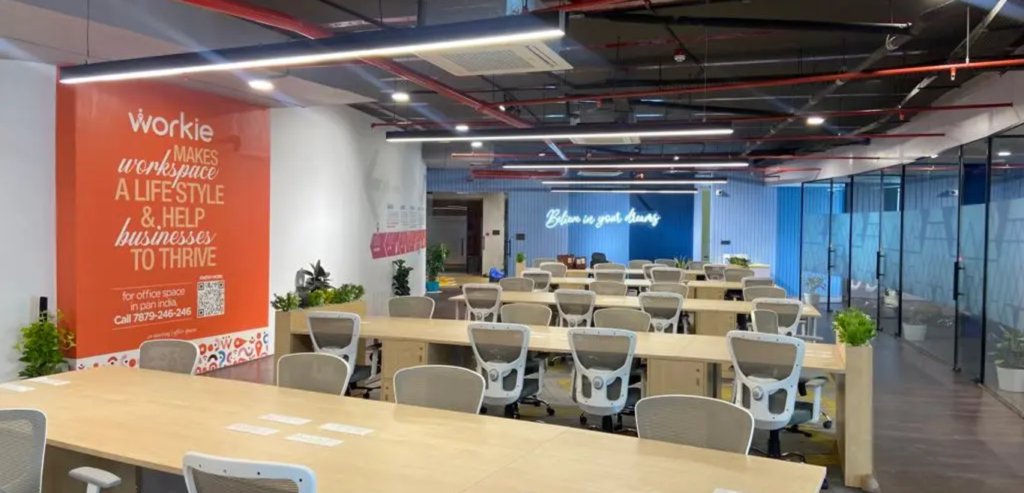
The modern professional landscape has fundamentally shifted away from isolated cubicles and rigid corporate structures. Today, the emphasis rests heavily on agility, community, and the free exchange of ideas.
Nowhere is this transformation more evident than in the bustling commercial hubs of the National Capital Region (NCR). Unlocking creative collaboration with Noida shared office space has become a primary strategy for startups, freelancers, and established enterprises looking to foster innovation while optimizing their operational footprint.
Traditional office environments often inadvertently silo departments and limit cross-functional communication. In contrast, shared workspaces are architecturally and philosophically designed to dismantle these barriers.
By bringing diverse professionals under one roof, shared environments create a fertile ground for organic networking and problem-solving. A flexible workspace in Noida provides far more than just a desk and a Wi-Fi connection; it offers an ecosystem engineered for productivity and synergy.
Choosing the right operational base is a critical decision that impacts everything from overhead costs to employee retention and mental well-being. Opting for an affordable coworking space does not mean compromising on quality. Instead, it allows businesses to redirect capital toward growth initiatives rather than locking funds into long-term commercial real estate leases.
This comprehensive guide explores the mechanics of creative collaboration within shared working environments, the distinct advantages of coworking Noida ecosystems, and how platforms like Let’s Connect India are redefining the modern workday.
Evolution of Coworking in Noida
The concept of the workplace has undergone a radical evolution. Historically, securing commercial real estate required signing multi-year leases, purchasing expensive furniture, and independently managing complex facilities like IT infrastructure, security, and sanitation. For early-stage companies and independent professionals, these barriers to entry were often insurmountable.
The introduction of shared workspaces democratized access to premium office environments. Noida, with its rapid infrastructure development and influx of technology, media, and service-oriented companies, quickly became a focal point for this real estate revolution. The shift from traditional leases to a flexible workspace in Noida represents a broader cultural movement toward an asset-light business model.
In these modern setups, the burden of facility management is shifted entirely to the workspace provider. This allows occupants to focus exclusively on their core competencies. Furthermore, the design of these spaces evolved from standard, monotonous desk rows into dynamic environments featuring hot desks, dedicated cabins, soundproof pods, and expansive communal lounges.
This architectural diversity is specifically intended to cater to different working styles—whether a professional requires deep, uninterrupted focus or highly interactive group brainstorming.
Key Takeaways:
- Shared office spaces remove the traditional barriers to entry for premium commercial real estate, offering asset-light operational models.
- The evolution of coworking spaces has shifted the burden of facility management from the tenant to the workspace provider.
- Modern workspaces incorporate diverse architectural designs—ranging from private pods to open lounges—to accommodate various professional needs and working styles.
Decoding Creative Collaboration in Shared Office Spaces
At the heart of the coworking philosophy is the belief that proximity breeds synergy. Creative collaboration with Noida shared office space is driven by the organic intersections of diverse industries, skill sets, and perspectives. When professionals from distinct sectors occupy the same physical environment, the potential for knowledge sharing expands exponentially.
This phenomenon is often referred to as the “watercooler effect”—the informal, unscripted conversations that occur in communal areas. In a traditional corporate office, these interactions typically happen between colleagues in the same or adjacent departments. In a shared office, however, these encounters cross industry lines.
For illustrative purposes, consider a scenario where a freelance graphic designer is utilizing a hot desk next to a founder of a financial technology startup. A casual conversation in the communal kitchen could easily evolve into a professional collaboration, where the designer is hired to revamp the startup’s user interface. This type of spontaneous networking is incredibly difficult to replicate in isolated remote work settings or traditional corporate silos.
Furthermore, creative collaboration is stimulated by the energy of the environment. Being surrounded by other driven, focused professionals creates a psychological momentum that can boost individual productivity and inspire creative problem-solving. It cultivates an atmosphere where continuous learning and peer-to-peer mentorship become natural byproducts of the daily routine.
Key Takeaways:
- Shared workspaces facilitate cross-industry interactions that are rare in traditional, single-company offices.
- Informal, unscripted conversations in communal areas frequently lead to professional partnerships and knowledge exchange.
- The collective energy of a shared environment can enhance individual focus, motivation, and creative output.
The Financial Advantage: Leveraging an Affordable Coworking Space
Operational efficiency is a cornerstone of sustainable business growth. One of the most compelling arguments for transitioning to a shared office model is the financial flexibility it affords. An affordable coworking space allows businesses of all sizes to exercise precise control over their overhead expenses.
In a traditional office lease, a company pays for spatial capacity rather than actual usage. If a company secures an office for fifty employees but currently only employs twenty, they are paying a premium for unused square footage. Shared workspaces operate on a fundamentally different model. Businesses can rent exactly the number of desks or cabins they need at any given moment.
This financial agility is crucial during periods of rapid scaling or unforeseen economic contraction. If a company needs to onboard ten new team members, they can simply upgrade their membership tier rather than searching for a new building to lease. Conversely, if a business needs to downsize its physical footprint, it can do so without breaking complex lease agreements or incurring hefty penalties.
Moreover, the monthly fee for a shared workspace typically consolidates multiple operational expenses. High-speed internet, electricity, heating and cooling, cleaning services, security, and even basic pantry supplies are rolled into a single, predictable monthly invoice. This consolidation drastically reduces the administrative burden on operations teams and ensures that capital is allocated efficiently.
Key Takeaways:
- Affordable coworking spaces allow businesses to pay only for the space and resources they actively use, preventing wasted capital on empty square footage.
- Flexible terms enable rapid scaling up or down without the financial penalties associated with breaking traditional commercial leases.
- Consolidated billing for utilities, maintenance, and amenities simplifies financial planning and reduces administrative overhead.
Key Features of a Flexible Workspace in Noida
A true flexible workspace in Noida is defined by its ability to adapt to the fluctuating demands of its occupants. Flexibility extends beyond just the lease terms; it is physically built into the environment.
First and foremost, these spaces offer a variety of seating configurations.
- Hot desking allows members to choose a new workspace every day, which is ideal for solo entrepreneurs or remote workers who thrive on environmental variety.
- Dedicated desks provide a stable base for individuals who require multiple monitors or prefer to leave their equipment overnight.
- For teams dealing with sensitive data or requiring a localized company culture, private, lockable cabins are available within the broader shared ecosystem.
Another critical feature is access to professional infrastructure that might otherwise be cost-prohibitive. High-definition video conferencing rooms, fully equipped presentation spaces, and soundproof telephone booths ensure that professionals can conduct client meetings and global calls with absolute professionalism.
Furthermore, a flexible workspace prioritizes accessibility and convenience. Operating hours are often extended to accommodate individuals working across different global time zones. Secure access protocols, high-speed redundant internet networks, and ergonomic furniture are standard inclusions designed to remove any friction from the workday, allowing members to walk in, plug in, and immediately begin working.
Key Takeaways:
- Flexible workspaces offer varied configurations, including hot desks, dedicated seats, and private cabins, to suit different operational requirements.
- Access to premium infrastructure, such as high-tech meeting rooms and soundproof booths, elevates the professionalism of small teams and freelancers.
- Extended operational hours and seamless IT infrastructure are designed to accommodate global working hours and eliminate operational friction.
Fostering Networking and Community Building
While the physical amenities of a shared office are important, the community aspect often serves as the primary differentiator between a standard desk rental and a transformative workspace. The best coworking Noida environments actively engineer opportunities for their members to connect, collaborate, and grow together.
Community managers play a pivotal role in this ecosystem. Unlike traditional facility managers who focus solely on building maintenance, community managers act as professional matchmakers and cultural ambassadors. They learn the specific skills, needs, and goals of the members and actively facilitate introductions. If a marketing agency needs a videographer, a proactive community manager can seamlessly connect them with a freelance videographer working two desks away.
Beyond individual introductions, shared workspaces host a variety of structured events to foster community. Skill-sharing workshops, industry seminars, pitch nights, and informal networking mixers are regular occurrences. These events provide continuous educational opportunities and allow members to showcase their expertise to a captive, relevant audience.
By participating in this micro-economy, businesses can source vendors, find new clients, and even recruit talent directly from within their own office building. This built-in community transforms the workspace from a simple cost center into a valuable strategic asset.
Key Takeaways:
- Community managers act as professional facilitators, actively connecting members with complementary skills and business needs.
- Structured events like workshops and networking mixers provide continuous learning and professional development opportunities.
- The shared office environment acts as a micro-economy where businesses can efficiently source talent, vendors, and new clientele.
Designing Physical Spaces for Mental Creativity
The architecture and interior design of an office profoundly impact cognitive function, mood, and productivity. Creative collaboration with Noida shared office space is heavily supported by environments that are intentionally designed to optimize human performance.
Lighting is a critical component of workspace design. Spaces that maximize natural sunlight help regulate circadian rhythms, reduce eye strain, and elevate overall mood and alertness. When artificial lighting is necessary, modern workspaces utilize layered, adjustable lighting rather than harsh, fluorescent overheads, creating an inviting and comfortable atmosphere.
Acoustics also play a vital role. A completely silent room can feel stifling and isolating, while an overly loud room shatters concentration. Shared spaces utilize acoustic paneling, strategic furniture placement, and white noise systems to create an ambient buzz—a level of background noise that masks individual conversations but provides a sense of energetic activity.
Furthermore, color psychology is frequently employed to define different zones. Breakout areas and communal lounges might feature vibrant, stimulating colors to encourage conversation and energy, while quiet zones and private cabins may utilize muted, cool tones to promote deep focus and calm. Biophilic design—the incorporation of indoor plants, natural wood textures, and water features—is also prevalent, serving to reduce stress and reconnect urban workers with natural elements.
Key Takeaways:
- Maximizing natural light and utilizing layered artificial lighting improves mood, alertness, and cognitive function.
- Strategic acoustic design creates a productive ambient buzz that masks disruptive conversations without feeling stiflingly silent.
- Zone-specific color psychology and biophilic design elements help lower stress and naturally guide the required energy levels for different tasks.
How Let’s Connect India Facilitates Synergistic Work Cultures
In the competitive landscape of NCR real estate, finding a partner that truly understands the nuances of professional synergy is paramount. Let’s Connect India stands out as a premier facilitator of these dynamic work environments, specifically tailored to the needs of modern professionals.
Let’s Connect India approaches the concept of coworking not merely as a real estate transaction, but as a holistic professional service. Their spaces are engineered to maximize the principles of creative collaboration. By providing a seamless blend of aesthetic appeal, robust technological infrastructure, and proactive community management, they create an environment where businesses can thrive without the friction of facility management.
The focus at Let’s Connect India is on creating a frictionless professional experience. Members benefit from highly reliable, secure internet networks, meticulously maintained facilities, and an atmosphere that balances professional rigor with creative freedom. Their flexible terms ensure that whether a business is taking its first tentative steps or scaling rapidly to meet market demand, the workspace can adapt to those needs instantly.
By curating a diverse community of ambitious professionals, Let’s Connect India elevates the standard of coworking Noida, ensuring that every member has the opportunity to network, innovate, and grow within a supportive and highly functional ecosystem.
Key Takeaways:
- Let’s Connect India treats shared workspaces as a holistic professional service rather than a simple real estate transaction.
- The spaces are designed to provide a frictionless experience through robust technology, pristine facilities, and proactive community management.
- Their focus on flexible, scalable solutions makes them an ideal partner for businesses at any stage of growth.
Overcoming Remote Work Challenges with Coworking in Noida
The global shift toward remote work highlighted several unexpected challenges. While working from home eliminated commutes, it also blurred the critical boundaries between personal and professional life. For many, the lack of a dedicated workspace resulted in chronic burnout, feelings of severe isolation, and a stagnation of creative thought.
A flexible workspace in Noida offers the perfect antidote to remote work fatigue. It provides a physical destination that re-establishes a healthy daily routine. The simple act of commuting to a shared space, even a few days a week, helps professionals mentally transition into “work mode,” allowing them to fully disconnect and recharge when they return home.
Furthermore, remote work inherently limits spontaneous collaboration. Video calls must be scheduled, and text-based communication often lacks the nuance of face-to-face interaction. Coworking spaces reintroduce the human element to the workday.
Being physically present among peers combats the loneliness of solopreneurship and remote employment, offering vital social interaction that is essential for long-term mental well-being and job satisfaction.
Key Takeaways:
- Shared workspaces help re-establish healthy boundaries between professional responsibilities and personal life, combating burnout.
- Commuting to a dedicated office environment aids in mental compartmentalization, improving focus during work hours and relaxation at home.
- Physical presence in a coworking community provides essential social interaction, mitigating the isolation often associated with remote work.
The Future of Collaborative Workspaces
The trajectory of the modern workplace indicates that flexible, shared environments are not a temporary trend, but the new standard. As businesses continue to prioritize agility and employee satisfaction, the demand for creative collaboration with Noida shared office space will only intensify.
Future workspaces will likely become even more integrated with advanced technology. We can anticipate seamless digital access controls, personalized climate and lighting settings controlled via smartphone apps, and meeting rooms equipped with augmented and virtual reality capabilities to bridge the gap between physical and global remote teams.
Additionally, the focus on wellness within the workplace will expand. Shared offices will increasingly incorporate ergonomic innovations, dedicated wellness rooms, meditation zones, and fitness facilities.
The ultimate goal of the future workspace is to provide an environment that not only facilitates business transactions but actively contributes to the holistic well-being and continuous development of the professionals who inhabit it.
Key Takeaways:
- Flexible workspaces are becoming the permanent standard for businesses prioritizing agility and employee satisfaction.
- Future shared offices will heavily integrate advanced technologies, including app-controlled environments and AR/VR meeting capabilities.
- Workplace wellness will become a central focus, with increased inclusion of meditation zones, fitness facilities, and ergonomic innovations.
Frequently Asked Questions (FAQs)
1. What defines creative collaboration with Noida shared office space?
Creative collaboration in this context refers to the natural sharing of ideas, skills, and resources among professionals from diverse industries who share a physical workspace. In Noida’s dynamic market, these spaces are designed to facilitate cross-pollination through open communal areas, shared amenities, and community-driven events, allowing organic networking that sparks innovation.
2. How does an affordable coworking space impact business growth?
By eliminating the need for large, upfront capital expenditures required for traditional office leases (such as deposits, furniture, and IT setup), an affordable coworking space frees up funds. Businesses can then reinvest this capital directly into growth drivers like marketing, product development, or hiring new talent, accelerating their expansion without being weighed down by heavy real estate overheads.
3. What amenities should I expect in a flexible workspace in Noida?
A premium flexible workspace typically includes high-speed and secure Wi-Fi, ergonomic seating, centralized air conditioning, daily housekeeping, and printing facilities. Beyond the basics, you should expect access to bookable meeting rooms, soundproof phone booths, communal cafeterias or pantries with complimentary beverages, and lounge areas designed for casual networking or relaxed work.
4. Is coworking in Noida suitable for established enterprises?
Absolutely. While often associated with startups and freelancers, established enterprises increasingly utilize coworking spaces. They use them to house specialized project teams, establish satellite offices in new geographic markets without long-term risk, or provide flexible working options to improve employee retention and reduce their overall real estate footprint.
5. How does Let’s Connect India promote networking?
Let’s Connect India fosters networking by curating a diverse community and utilizing proactive community managers who understand the synergies between members. They provide the physical infrastructure—such as inviting breakout zones and cafes—that encourages informal conversations, creating an environment where members can easily connect, collaborate, and share business opportunities.
6. Can shared offices ensure data and physical security?
Yes. Reputable shared workspaces prioritize security at multiple levels. Physical security usually includes biometric or keycard access controls, CCTV surveillance in common areas, and lockable private cabins or storage lockers. On the digital front, they provide secure, enterprise-grade internet networks with dedicated bandwidth and firewall protections to ensure member data remains confidential.
7. Are meeting rooms included in shared office spaces?
Meeting rooms are a standard feature in coworking environments, though the way they are accessed depends on the membership plan. Many flexible workspaces provide members with a certain allotment of “meeting room credits” per month. These rooms are typically equipped with whiteboards, smart TVs, and video conferencing hardware to ensure professional presentations and client meetings.
8. How do flexible leases work?
Unlike traditional commercial leases that lock tenants in for several years, flexible leases operate on much shorter terms—often month-to-month, quarterly, or annually. This structure allows members to scale their space up or down as their team size changes. You are not penalized for outgrowing your space; you simply transition your membership to accommodate more desks or a larger private cabin.
9. What types of professionals use coworking spaces in Noida?
The demographic is highly diverse. You will find freelance developers, graphic designers, digital marketing agencies, legal consultants, e-commerce startups, and remote employees of multinational corporations. This rich diversity is exactly what powers the community aspect, as it creates a micro-economy where members can frequently hire one another for specialized services.
10. How do I choose the best coworking space for my team?
Choosing the right space requires evaluating your specific operational needs. Consider the location and its accessibility for your team and clients. Assess the physical layout to ensure it offers the right balance of collaborative open spaces and private, quiet areas. Additionally, evaluate the quality of the tech infrastructure and the overall vibe of the community to ensure it aligns with your company culture.
Conclusion
The transition toward shared working environments represents a fundamental upgrade in how modern business is conducted. Embracing creative collaboration with Noida shared office space empowers professionals to break free from the constraints of traditional, isolated work models.
By prioritizing community, architectural flexibility, and strategic networking, these environments serve as powerful catalysts for innovation and business growth.
Whether you are a solo entrepreneur seeking to escape the isolation of remote work or a growing enterprise looking to optimize overhead through an affordable coworking space, the benefits are undeniable. A flexible workspace in Noida offers the agility necessary to navigate an unpredictable economic landscape while fostering a vibrant, supportive professional community.
If you are ready to elevate your work experience and position your business within a thriving ecosystem of innovators, it is time to rethink your real estate strategy. Discover how seamless, productive, and collaborative your workday can be. Explore the premium, adaptable solutions at Let’s Connect India today, and secure the perfect workspace to fuel your next phase of growth.